Test report DSG-7747 · Rev D · tested November 18, 2026
Supply Chain & PolicyDevice under test
Xi Defends Free Trade in Shenzhen Speech Before Trump Meeting
Xi Jinping told the APEC CEO Summit in Shenzhen that closing off leads to backwardness, one day before meeting Trump, and pledged a super-large open market for global firms.
- Read
- 3 min
- Words
- 640
- Node
- 3nm
- Operator
- Marcus Bennett
Spec summary
- Xi spoke on the 18th at the 2026 APEC CEO Summit in Shenzhen, one day before meeting Trump
- "Openness brings progress, while closing off inevitably leads to backwardness," Xi said
- 2026 marks the 25th anniversary of China's accession to the WTO
- Xi pledged full market access and business operations in manufacturing, plus a wider-open service sector
- Washington recently moved to block indirect AI chip access via data centers in third countries
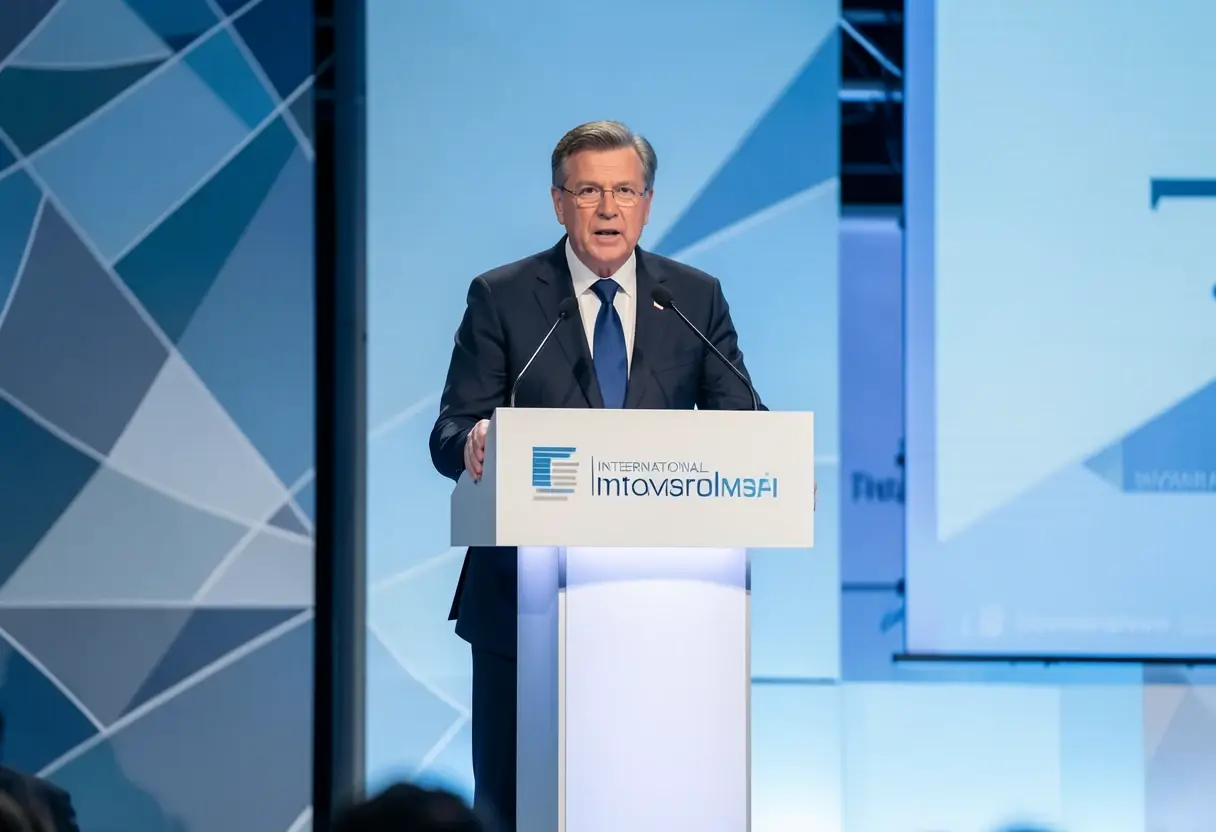
Chinese President Xi Jinping put free trade and multilateralism at the center of his message on the 18th, one day before sitting down with U.S. President Donald Trump. Speaking to the 2026 Asia-Pacific Economic Cooperation CEO Summit at the Qianhai International Conference Center in Shenzhen, Xi sharply criticized what he called rampant unilateralism and protectionism, in a rebuke aimed at Washington. He also used the occasion to project China once again as a global leader capable of filling the role of the United States.
"Openness brings progress, while closing off inevitably leads to backwardness," Xi said, according to China's state-run Xinhua News Agency. He called for firmly defending the rules-based multilateral trading system centered on the World Trade Organization, supporting free and open trade and investment, and keeping global industrial and supply chains stable and running smoothly.
The remarks amounted to a criticism of the Trump administration's tariff war against countries around the world. They also cast China as the defender of free trade and the multilateral trading system. The timing matters. The speech came at a delicate moment of rising tension between the two countries, as Washington tightens export controls on advanced technology destined for China.
Most recently, the U.S. moved to block indirect access to artificial intelligence chips through data centers in third countries, in the wake of the so-called Jensen Huang scandal.
What did Xi list as priorities?
Xi told the summit that the international situation is marked by a mix of turmoil and change. The world economy lacks growth momentum, he said, while unilateralism and protectionism are on the rise.
He listed three concrete priorities:
- Creation of a Free Trade Area of the Asia-Pacific
- Building of comprehensive connectivity networks
- Closer cooperation in trade digitalization, cross-border e-commerce and smart customs
He also restated China's role in the international order. "The more complex the external situation becomes, the more we must firmly defend the international order and promote an equal and orderly multipolar world and a universally beneficial and inclusive economic globalization," Xi said. Differences should be resolved through dialogue and negotiation, he added, and challenges met through unity and cooperation.
What does this change for global companies?
Xi marked the 25th anniversary of China's accession to the WTO. He said China has fully carried out the commitments it made when it joined and has shared opportunities with other countries while achieving its own development.
"No matter how the international situation changes, we will work with countries around the world to pursue mutual benefit and win-win outcomes," Xi said.
He pledged wider opening of the Chinese market and encouraged global companies to invest in the country. "China will provide the global business community with a super-large open market," Xi said. He described China as the world's second-largest consumer market with the largest middle class in the world and enormous potential for investment and consumption.
On reform, Xi said China would press ahead on several fronts. These include lowering tariffs, expanding market access and exploring deeper changes in rules, management and standards.
"In manufacturing, we will fully allow not only market access but also actual business operations, and we will steadily expand the opening of the service sector, providing a more stable, predictable and high-quality environment for global companies to invest and do business in China," Xi said.
The speech set the frame for his meeting with Trump the following day. Xi positioned China as the stable partner for global business, while Washington deepens its restrictions on technology exports. For multinationals, the direct offer is a manufacturing regime with full market access and a gradually opening service sector. Whether that offer holds against the backdrop of export controls and tariff disputes is the question the Trump meeting will begin to answer.
via en.sedaily.com (Source)
More from Marcus Bennett
Show full bio
News editor covering regulation, policy and their impact on hardware layer of artificial intelligence at Die Signal.
681 articles
Same lot · LOT-362E
- DSG-61723nmAnalysts Warn China Could Curb Rare Earths Over U.S. Chip Rules
- DSG-697520nmTen Nations Sign San Francisco Declaration to Lock Down AI Supply Chain
- DSG-142320nmChina Accuses U.S. of 'Abusing' Semiconductor Export Controls
- DSG-336728nmNvidia board weighs Huang exit and $500 billion exposure
- DSG-798628nmQuad Leaders Set to Name Economic Coercion as Summit Focus