Test report DSG-1423 · Rev F · tested October 10, 2026
Supply Chain & PolicyDevice under test
China Accuses U.S. of 'Abusing' Semiconductor Export Controls
A Xinhua dispatch accuses the United States of abusing semiconductor export controls and disrupting "global semiconductor industrial, supply chains," adding to years of Beijing's pushback against Washington's chip technology restrictions.
- Read
- 3 min
- Words
- 520
- Node
- 20nm
- Operator
- Marcus Bennett
Spec summary
- China's state news agency Xinhua issued a dispatch accusing the U.S. of abusing export controls on semiconductors
- U.S. semiconductor export controls have been administered by the Commerce Department's Bureau of Industry and Security since 2022
- China's commerce ministry has imposed export licensing requirements on gallium and germanium in retaliation
- The U.S. Foreign Direct Product Rule extends export controls to chip-related products made in South Korea, Japan, Taiwan, and the Netherlands
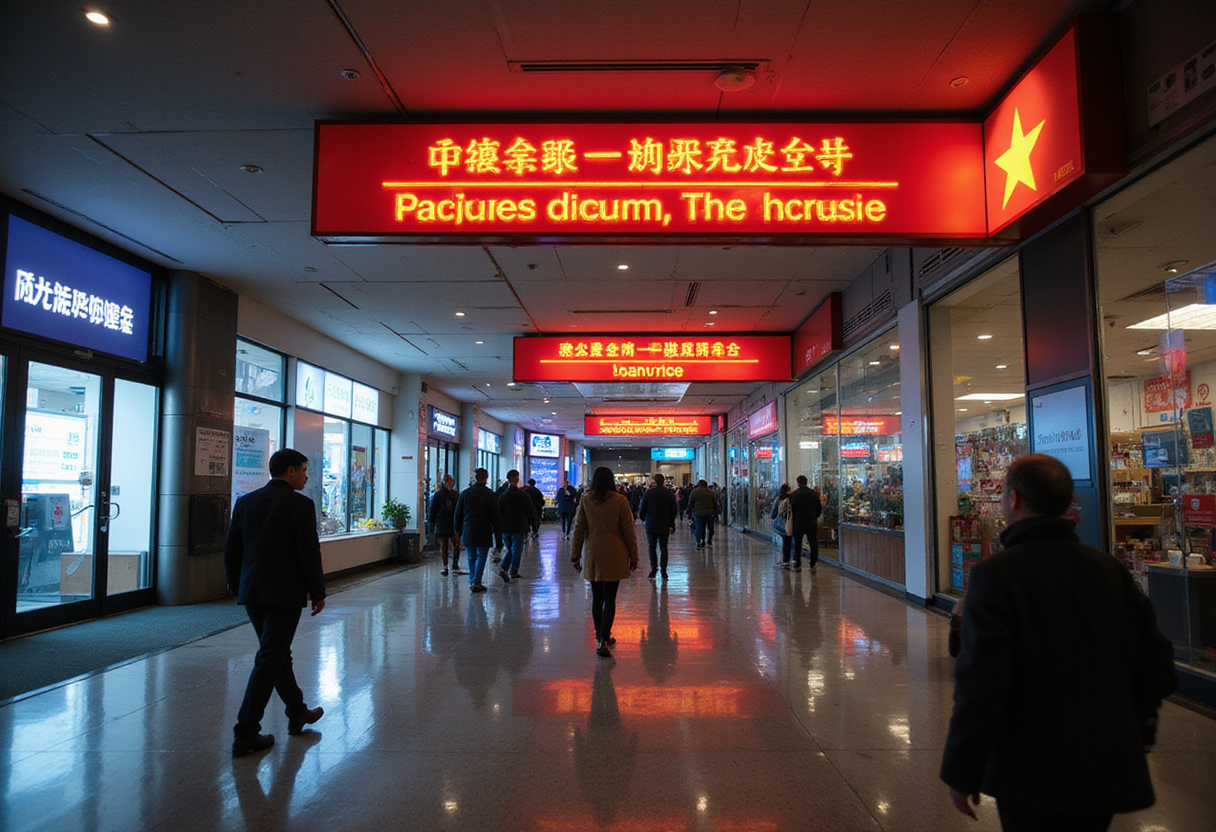
A Xinhua dispatch from China's state news agency accuses the United States of abusing export controls and disrupting "global semiconductor industrial, supply chains." The headline-level statement, distributed through the agency's English service, adds to years of official Chinese pushback against Washington's chip technology restrictions.
The report frames the U.S. measures as illegitimate economic warfare rather than national security policy. It does not specify which controls or which supply chains are at issue.
What is China claiming?
The Xinhua headline uses the word "abuse." Beijing has applied similar language to U.S. measures on solar panels, steel, and telecommunications equipment over the past decade. The term implies illegitimacy under international trade rules, not mere policy disagreement.
The framing sets up potential action at the World Trade Organization or other multilateral venues. China has lodged complaints through these channels in prior disputes with Washington.
What controls are in place?
The Commerce Department's Bureau of Industry and Security administers the U.S. semiconductor export control regime. The rules have accumulated since 2022 across multiple policy rounds. Major categories include:
- Sales of high-end AI accelerators to Chinese customers
- Exports of advanced lithography equipment, including EUV systems
- Transfers of electronic design automation software
- Foreign-made products containing U.S. technology, under the Foreign Direct Product Rule
The Foreign Direct Product Rule extension has drawn particular criticism. It brings non-U.S. companies in South Korea, Japan, Taiwan, and the Netherlands under U.S. controls when their products include certain American-origin inputs.
How has China responded?
Beijing has matched U.S. restrictions with its own measures. The commerce ministry introduced export licensing requirements for gallium and germanium, two metals critical to semiconductors and defense manufacturing. The same ministry opened antitrust investigations into U.S. companies and approved state-backed investment funds targeting domestic chip production.
The Ministry of Industry and Information Technology oversees subsidies for equipment makers and foundries. China's state investment vehicle for chip development, the so-called Big Fund, has gone through multiple recapitalization rounds.
What is the industry impact?
Chip industry groups have tracked the consequences across the value chain. Equipment vendors report lost revenue in restricted Chinese fabs. Chip designers operate under dual compliance regimes. The fragmentation has accelerated Chinese investment in domestic capacity, though gaps remain in advanced lithography, leading-edge logic, and high-bandwidth memory.
Global semiconductor sales have continued to grow despite the controls. The split market has driven regional specialization, with Chinese fabs focused on mature process nodes and U.S., Taiwanese, and Korean producers dominating advanced production.
What signal does this send?
The Xinhua dispatch reinforces Beijing's rhetorical position. It does not announce new measures. Chinese messaging around U.S. controls has remained consistent since the first major restrictions: the rules are illegitimate, economically harmful, and unlikely to achieve stated U.S. objectives.
The phrase "abuse" recurs in Chinese state media each time Washington expands the controls or announces enforcement actions. Trade press analysts read the repetition as a signal that Beijing will continue framing the dispute in legalistic terms while pursuing its own industrial policy independently.
via Google News: Semiconductor export controls (Source)
More from Marcus Bennett
Show full bio
News editor covering marketplaces and e-commerce at Die Signal.
274 articles
Same lot · LOT-C1C6
- DSG-599614nmBeijing Denounces US Chip Curbs as Threat to Global Supply Chains
- DSG-823828nmThe Semiconductor Sanction Paradox: U.S. Chip Controls and China's Rise
- DSG-310310nmChina Responds to US Semiconductor Export Controls, OECD Report
- DSG-117620nmUS Reportedly Weighs Sweeping New Chip Export Controls
- DSG-798345nmEast Asia Forum publishes on US chip export controls