Test report DSG-5999 · Rev B · tested November 4, 2026
AI Datacenter InfrastructureDevice under test
Verizon to complete nationwide Ericsson AI controller rollout by year-end
Verizon will complete a nationwide Ericsson Intelligent Controller rollout by year-end, with AI rApps already lifting downlink throughput nearly 9% and agents resolving tasks in 90 seconds.
- Read
- 4 min
- Words
- 728
- Node
- 45nm
- Operator
- Amara Osei
Spec summary
- Verizon will complete nationwide rollout of Ericsson Intelligent Controller by year-end.
- AI-controlled massive MIMO and traffic steering delivered nearly 9% downlink and up to 8% uplink throughput gains.
- AT&T uses the same EIAP platform for its $14 billion network overhaul.
- AI agents cut tasks that took hours down to 90 seconds, per CTO Yago Tenorio.
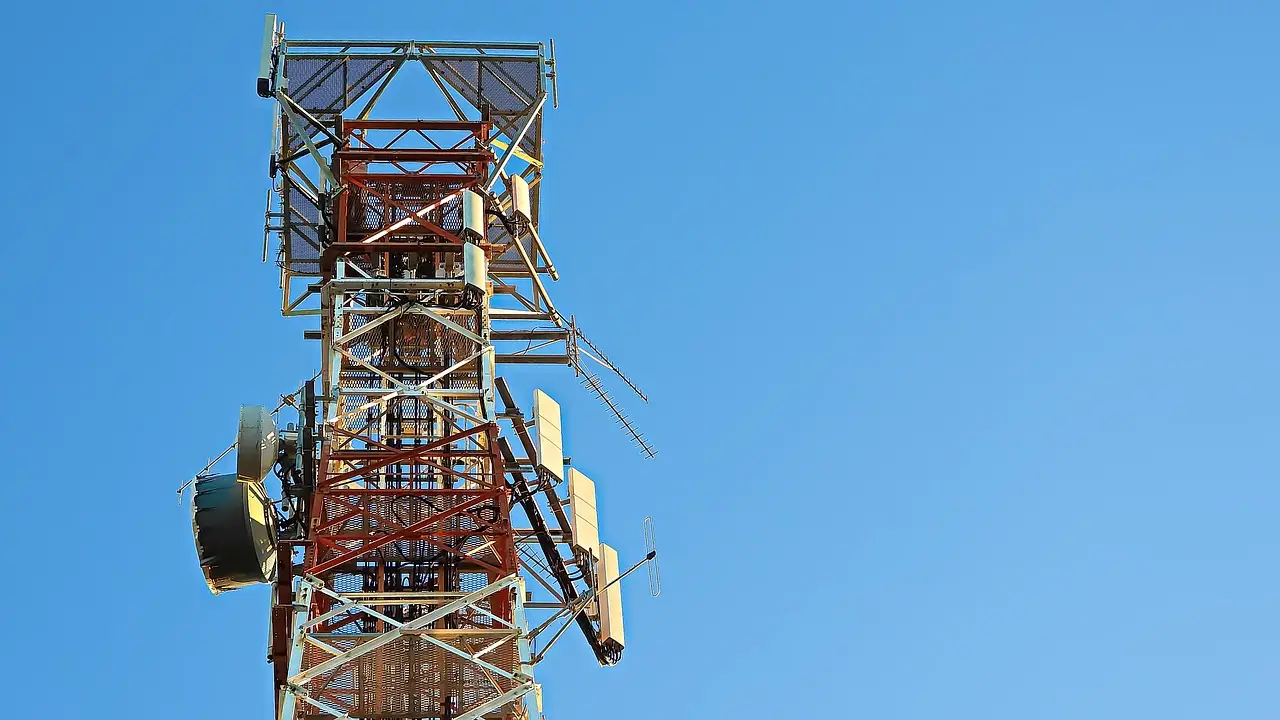
Verizon will finish a nationwide rollout of Ericsson's Intelligent Controller (EIC) by year-end, deploying AI-native rApps across its open RAN environment as part of a broader drive toward autonomous network control.
The operator announced the work with long-standing vendor Ericsson on November terms that include running microservices-based rApps developed jointly by both companies. rApps operate in non-real time and give operators more control over open RAN environments; a more advanced variant, xApps, operates in near-real time.
What results has the AI work already produced?
Verizon has already implemented an AI-assisted connected mode inter-radio access technology handover methodology from its 4G LTE network to its 5G standalone network for fixed-wireless access devices. The carrier said the move eliminates "the need for manual intervention on handover failures."
Matt Butz, VP of network planning at Verizon, said in a statement that the work has already delivered measurable gains:
- AI-controlled massive MIMO antennas and traffic steering produced a near 9% improvement in downlink data radio bearer throughput.
- The same work delivered up to an 8% improvement in uplink user equipment throughput.
The two companies also plan to test and deploy new rApps, including a cell anomaly detector, a root cause explainer and an anomaly general optimizer. Verizon said these steps will accelerate its path toward so-called level-four network autonomy.
TM Forum defines level-four autonomy as "decision-making based on intent-driven, predictive analysis, and the capability to perform closed-loop management of service-driven and customer experience-driven networks via AI modeling and continuous learning."
In short: AI models would run the network's corrective loops with minimal human input.
How does EIC fit the wider vendor landscape?
EIC forms part of Ericsson's broader Intelligent Automation Platform (EIAP), an open platform designed to support multi-vendor and multi-technology systems running 4G and 5G RAN. Several operators worldwide use EIAP, including AT&T, which bases its $14 billion network overhaul program on the platform.
The EIC deployment builds on recent joint work between Verizon and Ericsson:
- A pre-standard "6G" field call in the 7 GHz band at a site in California.
- Verizon Business tapping Ericsson to power international private 5G services.
- Ericsson's participation in the Verizon-led 6G Innovation Forum launched last year.
What did Verizon's CTO say about AI agents?
Verizon CTO Yago Tenorio previewed the AI RAN work in an exclusive interview with SDxCentral earlier this year. He said the carrier wants specialized AI agents to tackle more complex automation tasks, including root-cause analysis that explains why a network segment underperforms and then supplies a fix.
"We're using that to iterate and train the AI to get better at our job using that," Tenorio said. "The next step is to graduate the agents from university and have them specialize in different tools that we operate in a system that we currently have in prototype, so I want to put that in production in the next three months."
Tenorio played down the significance of autonomy "level" classifications. "The important point is it'll be like a complex network of agents and sub-agents that are monitoring the network 24/7 spotting patterns and anomalies, and then calling a network of sub-agents specialized on different tasks to come up with a root-cause analysis and a solution autonomously," he said.
The early work has already compressed resolution times sharply. Tenorio said "real-life tasks" that previously took hours to resolve are now "done in 90 seconds."
"I want that in production before the end of the year," he said. "We'll probably start with the radio, but very quickly will take on transport and core, so hopefully within the next six months my agents will graduate from university, and they will find a job in operations."
Has Verizon worked with other vendors on AI-RAN?
Yes. Verizon previously tapped Samsung and Qualcomm for a multi-vendor deployment using AI-RAN management applications running on a RAN intelligent controller. That work included deploying a Samsung-developed network-efficiency-managing rApp.
The Ericsson deal now extends the same strategy — RIC-hosted automation apps from multiple vendors — to a nationwide footprint.
By year-end, Verizon expects the EIC platform live across the country, with production AI agents monitoring the radio network around the clock.
via tmforum.org (Original)
More from Amara Osei
Show full bio
Staff writer covering money, funding and market shifts around hardware layer of artificial intelligence at Die Signal.
593 articles
Same lot · LOT-360B
- DSG-555810nmO2 and Nokia complete UK's first live AI-RAN deployment
- DSG-56587nmVerizon signs $2bn-plus AWS AI infrastructure deal
- DSG-456914nmTexas Instruments Expands MCU Portfolio for Edge AI Deployment
- DSG-882328nmQuectel Announces FCM665D Module Aimed at Edge AI Workloads
- DSG-894845nmAMD Projects $1.4 Trillion AI Accelerator Market by 2030