Test report DSG-3852 · Rev C · tested September 30, 2026
Foundries & ManufacturingDevice under test
TSMC Targets 1.4nm Trial Production in Q1 2027 as Gap Widens
TSMC plans 1.4nm trial production for Q1 2027 as AI demand drives 3nm output to record levels, leaving Samsung struggling to close the process-node gap.
- Read
- 2 min
- Words
- 460
- Node
- 20nm
- Operator
- Priya Raman
Spec summary
- TSMC has scheduled 1.4nm trial production for Q1 2027
- AI accelerator demand is driving TSMC's 3nm output to record levels
- Samsung Foundry's yield and execution problems may prevent it from ever closing the gap with TSMC
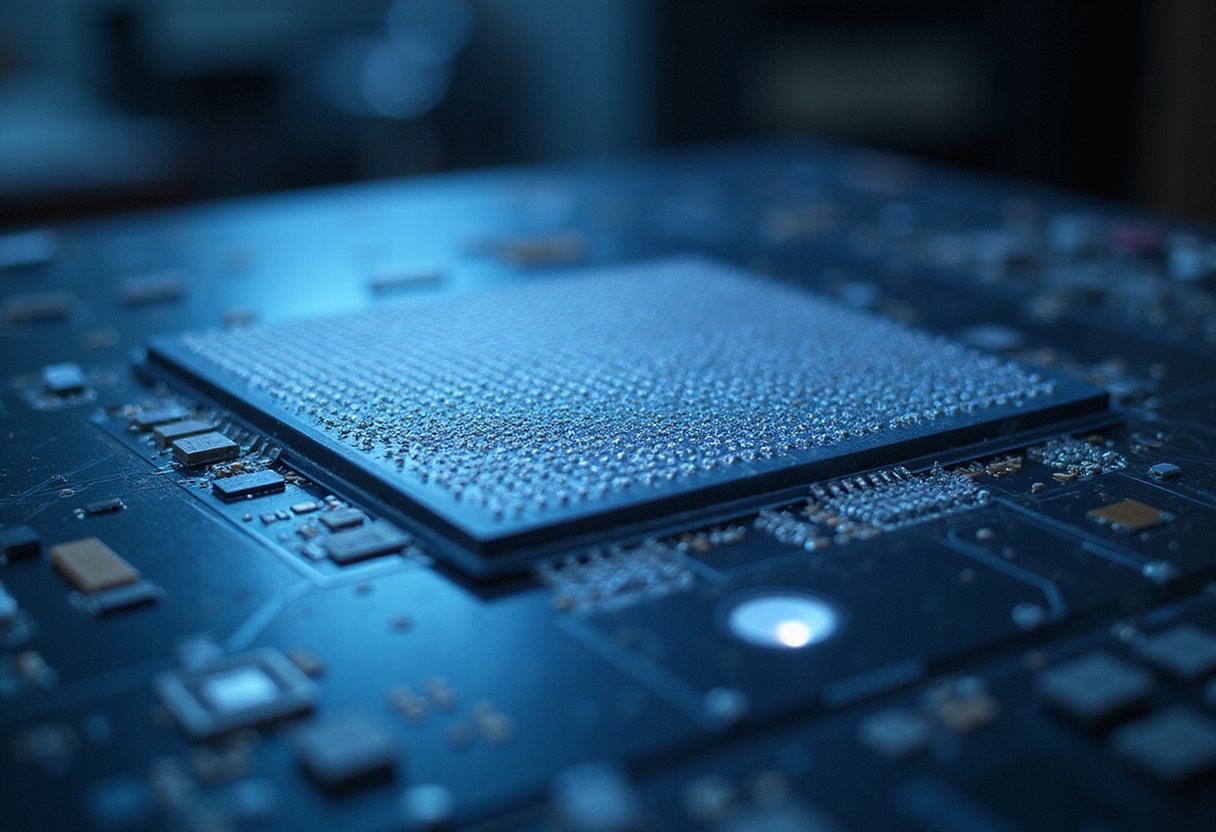
TSMC has scheduled trial production on its 1.4nm process node for the first quarter of 2027, according to a report from Wccftech. The timeline underlines the pace at which the world's largest contract chipmaker is pushing past its rivals, most notably Samsung Foundry, which continues to struggle to match TSMC's cadence on advanced nodes.
The 1.4nm milestone forms part of TSMC's long-term roadmap following its A16 (1.6nm) generation. Trial runs in early 2027 would keep the company on a roughly two-year rhythm from node to node, a schedule no competitor has sustained at comparable volume and yield.
Samsung's Persistent Gap
Samsung Foundry has repeatedly aimed to catch TSMC at the leading edge, but execution problems have kept the Korean manufacturer a generation or more behind in commercial terms. Yield issues on its own 3nm-class processes, which use gate-all-around transistors, have slowed customer adoption, while TSMC's N3 family has attracted the bulk of high-performance design wins.
The report argues that TSMC's steady progress at advanced nodes is the structural reason Samsung may never fully close the gap. Each node transition compounds the advantages of the leader: better yields attract more orders, more orders fund faster development, and the cycle repeats. Breaking that loop requires flawless execution over multiple generations — something Samsung has not yet demonstrated.
AI Boom Lifts 3nm Output
Meanwhile, the AI boom is propelling TSMC's 3nm output to new heights. Demand from designers of AI accelerators and flagship mobile processors has pushed N3-family capacity utilization to record levels, the report notes.
That demand pattern matters for the broader market. Advanced packaging and leading-edge logic have become the binding constraints in AI hardware supply chains, and TSMC sits at the choke point. Higher 3nm volumes translate directly into more silicon available for AI training and inference products through 2025 and beyond.
What Q1 2027 Means
A Q1 2027 target for 1.4nm trial production is aggressive but consistent with TSMC's recent track record of hitting roadmap dates. Risk production typically precedes volume manufacturing by 12 to 18 months, which would place high-volume 1.4nm shipments in the 2028 timeframe.
For Samsung, the math is unforgiving. To compete at that point, the Korean foundry would need to master its own equivalent node while simultaneously fixing the yield and customer-trust deficits accumulated across the 3nm and 2nm generations.
For fabless customers and system OEMs, TSMC's schedule provides planning certainty: designers targeting the 1.4nm class can align their roadmaps to trial silicon in early 2027. For the wider semiconductor supply base — equipment vendors, materials suppliers, and packaging partners — the timeline signals where the next round of capacity investment will concentrate.
via Google News: TSMC (Source)
More from Priya Raman
Same lot · LOT-C1D0
- DSG-491445nmSamsung Foundry Revenue Rose in Q2 2026 but Trailed TSMC
- DSG-35237nmTSMC Secures Approval for Sub-1.4 nm Manufacturing Plants
- DSG-909210nmWells Fargo Identifies Equipment Makers as 2nm Scale-Up Winners
- DSG-22987nmSamsung Foundry Reaches 60 Percent Yield on 2nm Process
- DSG-826714nmTSMC Starts Pilot Production of 1.4nm Chips on A14 Node