Test report DSG-6530 · Rev E · tested November 9, 2026
Foundries & ManufacturingDevice under test
TSMC Pushes Back on Reports of a 3D DRAM Entry
TSMC denies plans to enter 3D DRAM despite reports Nvidia requested it. Foundry holds 70% market share but faces process, patent and customer-conflict barriers to memory entry.
- Read
- 3 min
- Words
- 511
- Node
- 3nm
- Operator
- Elena Vasquez
Spec summary
- TSMC holds more than 70% of the global foundry market.
- The Information reported on the 6th that Nvidia asked TSMC to produce 3D DRAM, citing two insiders.
- TSMC publicly denied memory plans on the 8th, saying it remains focused on its core foundry business.
- Advanced DRAM entry would require years of R&D and billions of dollars even via acquisition, per Tom's Hardware.
- TSMC and SK hynix announced a high-bandwidth memory partnership in 2024.
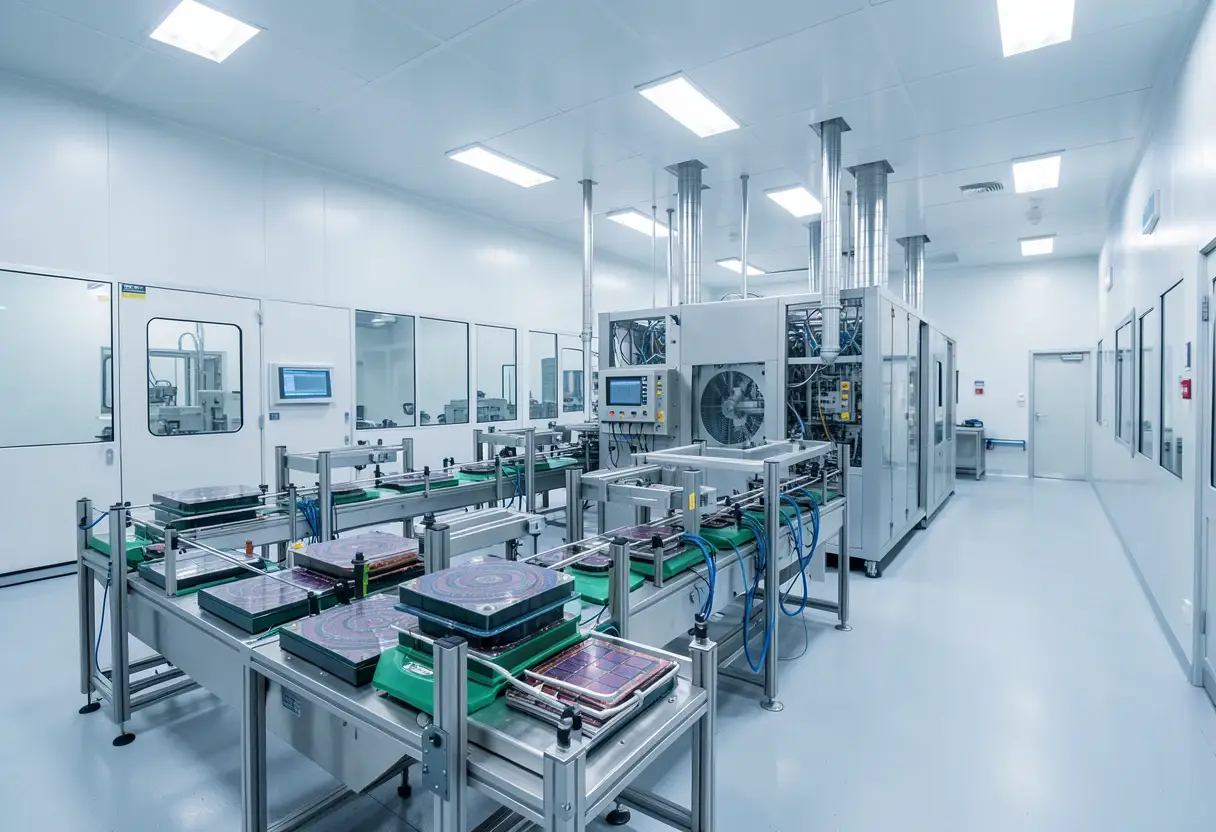
TSMC says it's staying out of the memory business — at least for now. On the 8th, responding to reports that Nvidia had asked the foundry to build next-generation DRAM, TSMC told Bloomberg and other outlets it is "concentrating on its core foundry business." Its mission, the company added, remains providing technology and manufacturing capacity to the global logic chip industry.
The denial follows a report from The Information on the 6th, which cited two people familiar with the matter and said TSMC had begun drawing up plans to produce 3D DRAM at the request of Nvidia, its largest customer.
Why would TSMC even consider memory?
The pressure is real. AI data centers are draining memory supply and pushing prices up, which has Nvidia and other major chip companies hunting for new sources of DRAM. According to the report, TSMC's options include building new plants or acquiring and converting existing facilities. Timing and method remain undecided.
The stakes for incumbents are easy to size up. TSMC holds more than 70% of the global foundry market and manufactures Nvidia's GPUs, plus much of the industry's advanced packaging. If it entered memory, it would become a direct competitor to Samsung Electronics (005930.KS), SK hynix (000660.KS) and Micron Technology — the three companies currently leading 3D DRAM development.
3D DRAM stacks memory cells vertically to raise storage density. It's the next battleground in memory, and right now the Korean and American trio owns that roadmap.
What stands in the way?
Plenty, according to industry officials. Logic chips and DRAM use fundamentally different manufacturing processes, so TSMC would need separate technology development and separate production lines — not a retooling of what it already runs.
Tom's Hardware made the cost concrete: even if TSMC acquired an existing memory maker, advanced DRAM processes would still require years of R&D and billions of dollars in investment. The outlet also noted that while TSMC works with memory makers on advanced packaging, it hasn't secured the specialized technology and capacity to produce DRAM on its own.
Patents are a second wall. Winbond chairman Chao Yu-jun told reporters on the 7th that — speaking as personal speculation — a direct TSMC move into DRAM would be difficult because of process technology and patent issues.
Then there's TSMC's long-standing policy of not competing with its own customers. It has built cooperative ties with memory manufacturers, including a 2024 partnership with SK hynix to develop next-generation high-bandwidth memory. Producing DRAM itself would put the foundry up against existing partners.
Is the door fully closed?
Not entirely. TSMC has produced commodity memory chips in the past, so the capability isn't hypothetical. Industry watchers say room remains for the company to revisit the business depending on how AI chip demand and memory supply-and-demand conditions evolve.
For now, though, the message to practitioners is the simplest one: TSMC sees logic and packaging as the business, and memory as someone else's problem — no matter what its biggest customer reportedly wants.
via en.sedaily.com (Source)
More from Elena Vasquez
Show full bio
Senior reporter covering people, launches and day-to-day practice in hardware layer of artificial intelligence at Die Signal.
589 articles
Same lot · LOT-3610
- DSG-828214nmSamsung to Use TSMC Technology for Nvidia's Next-Gen Memory Chips
- DSG-743428nmSamsung to Use TSMC 3-Nanometer Lines for Nvidia Custom HBM
- DSG-762145nmSamsung to Build Nvidia's Next-Gen Memory Chips on TSMC Technology
- DSG-534045nmSamsung Turns to TSMC for First Time to Build HBM for NVIDIA
- DSG-671565nmTSMC's Next Strategic Move Could Reshape Chip Industry Supply Chains