Test report · tested November 23, 2026
Foundries & ManufacturingDevice under test
TSMC October Revenue Up 59.7% as Stock Sits 34.5% Off Its High
Taiwan Semiconductor's October revenue hit NT$586.89 billion, up 59.7% year over year, while its ADRs trade 34.5% below their 52-week high at $319.34. One investor is buying.
- Read
- 3 min
- Words
- 622
- Segment
- Foundries & Manufacturing
- Operator
- Marcus Bennett
Spec summary
- TSMC's October revenue rose 59.7% year over year to NT$586.89 billion.
- The ADRs closed at $319.34 on November 20, about 34.5% below the 52-week high of $487.47.
- Q4 guidance of $52.3-54.3 billion implies 58% growth at the midpoint.
- The stock trades at about 14x forward earnings with a PEG ratio of 0.577.
- The new ADR dividend of $1.366286 is 99.8% higher than the $0.683789 paid in March 2025.
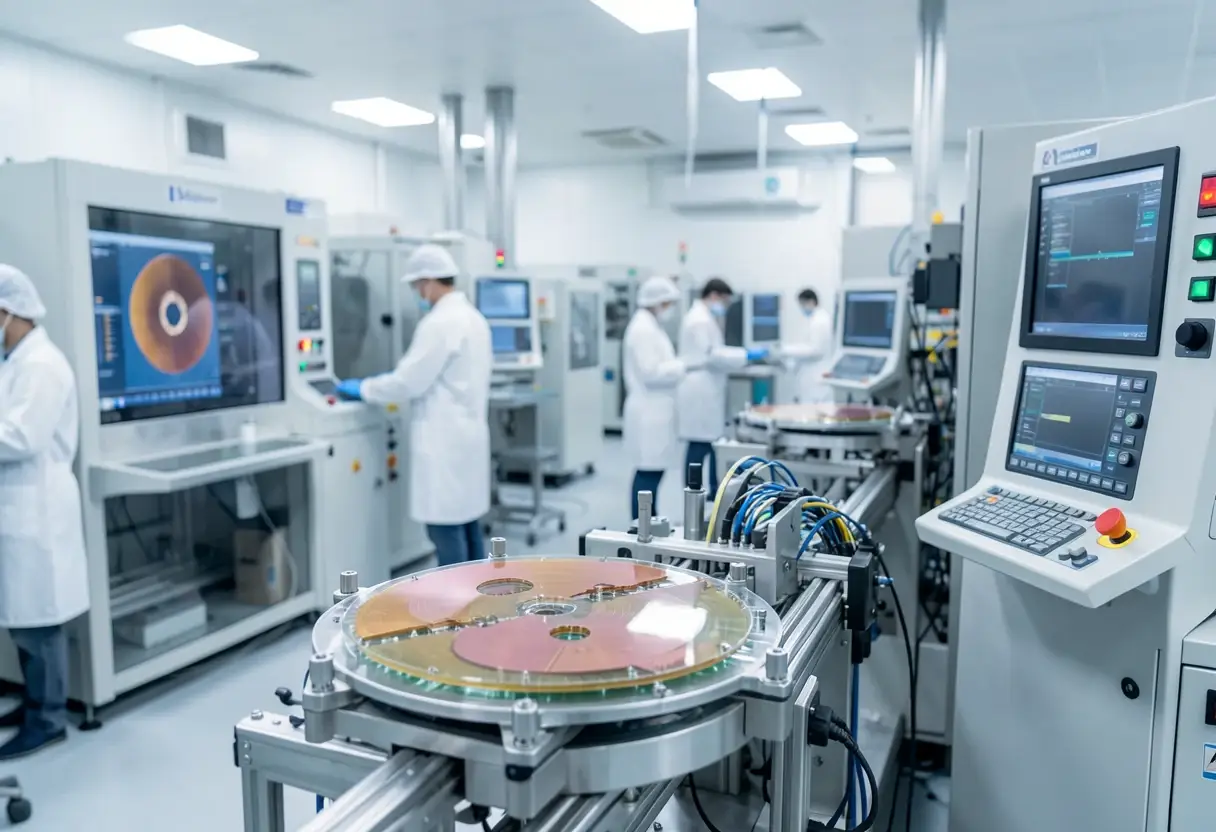
Taiwan Semiconductor Manufacturing (NYSE: TSM) closed at $319.34 on November 20, roughly 34.5% below its 52-week high of $487.47. Over the same period, the business accelerated. October revenue rose 59.7% year over year to NT$586.89 billion, and one 24/7 Wall St. contributor has responded by buying the selloff rather than waiting it out.
The core argument is simple: TSMC is a tollbooth on the entire AI chip market. GPUs, custom accelerators or TPUs could each win the next architecture cycle, and TSMC would still manufacture the silicon. Management stated the position plainly on the third-quarter call: "All the AI players are working with TSMC."
The numbers back that claim:
- High-performance computing generated 68% of revenue in the quarter.
- Nodes at 7nm and below produced 79% of wafer revenue.
- October revenue climbed 14.7% from September alone.
- Revenue through October grew 43.3% year over year.
That is the mechanism. The investor owns the foundry instead of guessing which chip designer wins, collecting a toll from every participant.
What does the growth cost?
The valuation is the second pillar of the case. TSMC trades at about 14x forward earnings with a PEG ratio of 0.577. Third-quarter EPS of $4.60 beat the $4.46 consensus, marking three consecutive reported beats. Gross margin came in at 66.4%, and return on equity reached 45.5%. Companies posting those figures rarely trade at such multiples.
Fourth-quarter guidance of $52.3 billion to $54.3 billion implies 58% year-over-year growth at the midpoint. Executives added that "demand is higher than supply."
Is the dividend doing its part?
Yes. The newly declared ADR payment of $1.366286 is 99.8% higher than the $0.683789 paid in March 2025. At the annualized forward rate of $5.465144, the yield works out to about 1.71% at the current price. Management has committed to a "sustainable and steadily increasing cash dividend," backed by $126 billion in cash and marketable securities.
What are the risks?
Taiwan Strait tensions top the list. The investor acknowledges the inability to model a military or trade shock, and most of TSMC's leading-edge capacity sits on one island. Margins carry pressure as well. Gross margin fell 1.3 percentage points from the second quarter due to the 2nm ramp. Management expects dilution from overseas fabs to rise from about 2% to a range of 3% to 4% as U.S. plants come online.
Both risks are accepted because the footprint is spreading out. Arizona's second fab should begin volume production in the third quarter of 2027, and management is weighing Texas as another site. Even with the dilution, fourth-quarter gross margin guidance of 65% to 67% leaves wide cushions.
What comes after 2nm?
TSMC expects N2 capacity to more than double in 2027. Chief Executive C.C. Wei said A14, the node that follows, already attracts more customer activity than 2nm did at the same stage. He called it "a bigger node than our current N2 technologies." Asked directly about AI demand, he answered: "We did not see any sign of a slowdown."
That statement, paired with the October revenue print, frames the disconnect the buyer is exploiting. The business grew faster while the market knocked the stock down. The investor plans to keep collecting shares of the tollbooth while it sits on sale.
The position remains a bet on geography as much as technology. If Taiwan Strait tensions escalate, no margin cushion fully protects a company whose leading-edge capacity concentrates on one island. If they do not, the buyer holds a foundry growing near 60% at 14x forward earnings with a doubling dividend.
via 247wallst.com (Source)
More from Marcus Bennett
Show full bio
News editor covering regulation, policy and their impact on hardware layer of artificial intelligence at Die Signal.
752 articles