Test report · tested November 22, 2026
AI Datacenter InfrastructureDevice under test
Trump Threatens "Tremendous Tax" on Overseas Data Center Builders
Trump threatened a "tremendous tax" on U.S. firms building data centers abroad, naming no rate, date or legal mechanism. Five exposed stocks fell up to 6.63%.
- Read
- 4 min
- Words
- 766
- Segment
- AI Datacenter Infrastructure
- Operator
- Priya Raman
Spec summary
- Trump announced the threat at a White House news conference on November 20, 2026, without naming a rate, mechanism or start date.
- Digital Realty fell 6.63%, the steepest of five exposed stocks; the S&P 500 was already down about 9% since November 4.
- Google announced at least $15 billion for Finnish data centers in September 2026 — the project Trump has publicly singled out.
- Roughly half of global data center capacity under construction is outside the U.S.; AWS holds a $578 billion contracted backlog.
- Equinix holds 48 projects across 32 markets, with no customer above 2.5% of revenue.
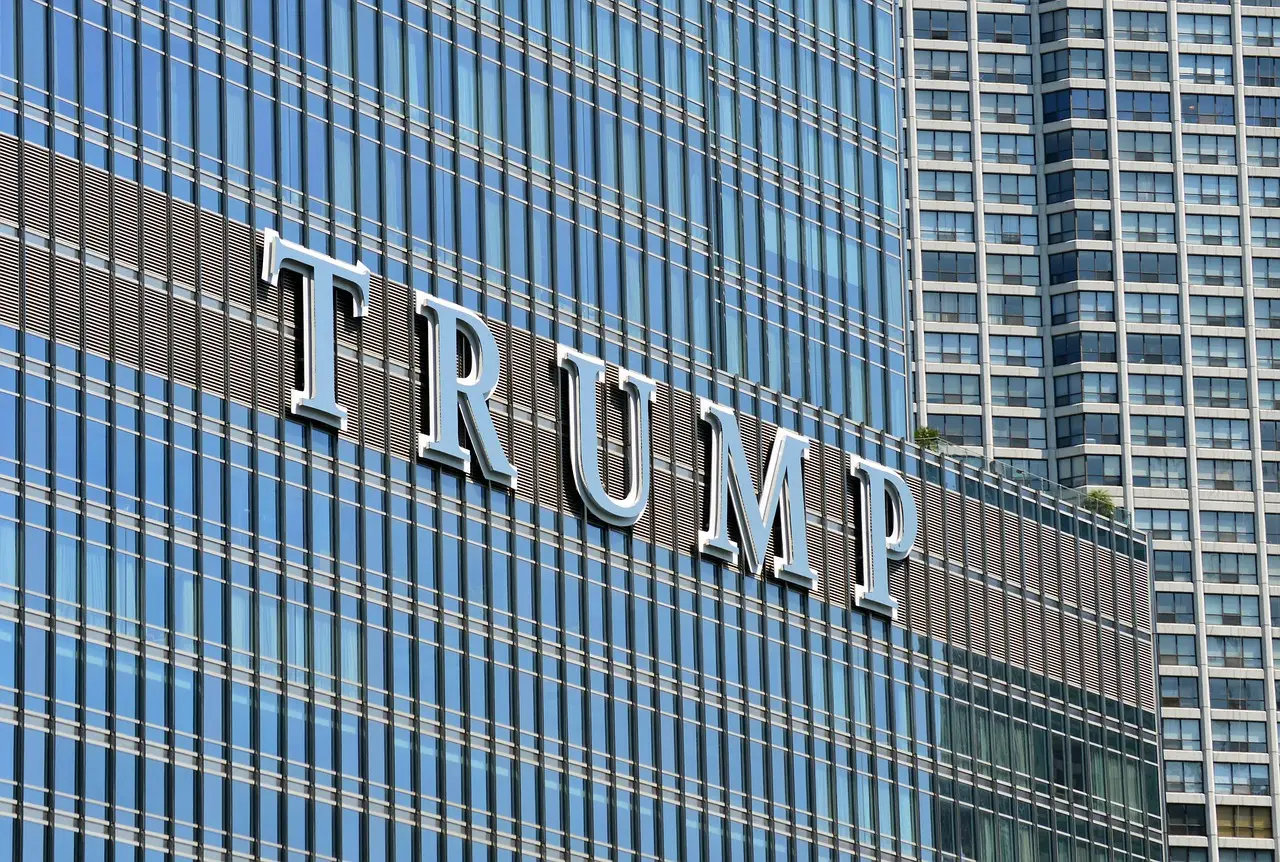
President Trump said on Friday, November 20, 2026, that the United States will not let American companies build data centers outside the country, and that firms doing so will face a "tremendous tax" and heavy penalties. He named no company, no tax rate, no start date, and no legal mechanism. He also said he had not yet told his own staff about the idea.
The White House did not immediately respond to a request for comment. The threat arrived on a day of broad technology selling, with the S&P 500 already down roughly 9% since November 4.
Which stocks fell, and by how much?
All five U.S.-listed stocks with clear exposure declined on the day:
- Alphabet (NASDAQ: GOOG, GOOGL): down 2.70% to $265.29
- Microsoft (NASDAQ: MSFT): down 2.77% to $484.52
- Amazon (NASDAQ: AMZN): down 4.10% to $246.82
- Equinix (NASDAQ: EQIX): down 4.89% to $968.22
- Digital Realty (NYSE: DLR): down 6.63%, the steepest decline of the five
It remains unclear how much the president's remarks contributed to those declines. After the close, Equinix traded up 0.82% as of roughly 6:20 p.m. ET — a quote that can change before trading resumes on Monday, November 23.
What did Trump commit to, and what did he leave out?
He mentioned three separate tools in the same remarks: a ban, a tax, and penalties. Each would follow a different legal path. It is unclear whether any of them would require action by Congress.
The stated reason was China. Trump said data centers built abroad would all end up in China's hands, and he tied that to his view that the U.S. fell behind when it let American companies manufacture semiconductors overseas.
He also told communities to make developers pay them rather than stop projects, citing a Louisiana project where developers paid teachers $50,000 to win approval.
Several basic questions went unanswered. He did not say whether a tax would reach foreign subsidiaries or only U.S. parent companies, whether rented space would count the same as owned buildings, or whether existing overseas sites would be exempt.
Where does each company's exposure sit?
Alphabet carries the most direct political exposure. In September 2026, Google announced at least $15 billion for data centers and digital infrastructure in Finland, calling it the company's largest capital commitment in Europe. Trump then posted that he wanted Google to rethink the plan.
Alphabet is worth $3.35 trillion and spent $51.355 billion on capital expenditures in a single quarter, so Finland is one project among many — though it is also the one project the president has already singled out.
Microsoft added 24 new data centers across five continents in its September quarter. Amazon expects roughly $220 billion of capital spending in 2026. Both companies build abroad because AI inference (the work of serving live requests) must run close to customers' data, and data residency laws in many countries require that data to stay inside national borders.
Equinix and Digital Realty rent space and power to other companies' servers worldwide, so a ban or tax would strike directly at their main business model.
Why does the threat miss its stated target?
Trump did not explain how a tax on American builders would keep computing capacity out of China's hands. If projects get blocked in the U.S. and taxed overseas, it is hard to see where new capacity would go.
Overseas building is substantial. Companies have announced more than $2 trillion in specific U.S. projects, but roughly one-half of the world's data center capacity under construction sits outside the United States.
What does the threat mean for data center stocks?
The bull case rests on contracted demand. Microsoft said: "Customer demand continues to exceed available supply." Amazon's cloud unit, AWS, holds a $578 billion backlog of contracted business. The bear case is that a real tax could prompt U.S. allies to retaliate against American technology companies.
The group's contracted demand still looks durable, because a threat made out loud does not change any signed contract. Equinix appears best positioned, with 48 projects across 32 markets and no single customer above 2.5% of revenue.
Digital Realty appears worst positioned, because much of its record leasing comes from large cloud companies expanding abroad. That view should change if a written executive order or bill names a tax rate, a list of companies, or a start date. Until then, the market is pricing an announcement with no enforcement detail behind it.
via 247wallst.com (Source)
More from Priya Raman
Show full bio
Correspondent covering money, funding and market shifts around hardware layer of artificial intelligence at Die Signal.
731 articles
Same lot
- Nvidia Slips to Third as $500 Billion AI Financing Wobbles
- Nasdaq Wipes Out 2025 Gains as AI Selloff Turns Indexes Negative
- Western Digital Falls 12% to $261, 65% Below Its June Record
- Micron Falls 13% to $603, Half Off Its June Record, as Memory Selloff Spreads
- Anthropic's $64.4B IPO Meets Nvidia's 24% Slide in One 48-Hour Test