Test report · tested November 22, 2026
Memory & StorageDevice under test
Micron Falls 13% to $603, Half Off Its June Record, as Memory Selloff Spreads
Micron fell 13% to $603, half its June record, as Western Digital, SanDisk and Seagate dropped over 12%. Barron's calls memory stocks cheap at 3.8 times earnings; history allows 74% busts.
- Read
- 4 min
- Words
- 760
- Segment
- Memory & Storage
- Operator
- Priya Raman
Spec summary
- Micron fell 13% to about $603 on Friday, 50% below its June 25 record close of $1,213.56.
- Western Digital fell 12%, SanDisk 15% and Seagate 12%; the VanEck Semiconductor ETF lost 9%.
- Barron's values Micron at 3.8 times forward earnings versus 15-20 times for typical S&P 500 stocks.
- Micron's three prior busts ran 50%, 54% and 74%; the current decline has lasted about five months.
- Micron reports fiscal first-quarter results on Dec. 17.
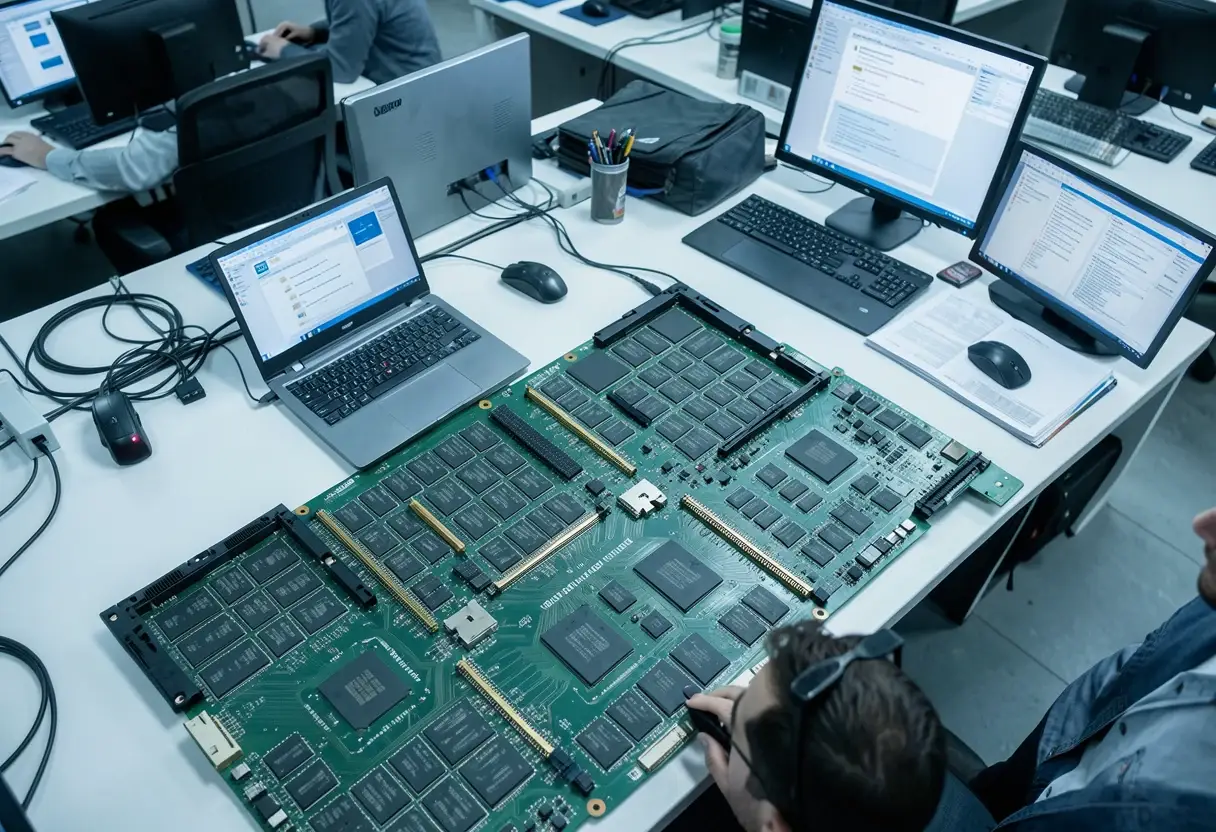
Micron Technology (NASDAQ: MU) fell 13% to about $603 on Friday, its second day of losses, and now sits 50% below its June 25 record close of $1,213.56. Western Digital dropped 12%, SanDisk 15% and Seagate Technology 12%. Prices were recorded at about 12:31 p.m. Eastern. Before the open, Barron's called memory stocks "agonizingly cheap." Cheap is a claim. This article tests it.
Why are memory stocks falling?
The selling is sector-wide. All four large U.S. memory and storage stocks fell 12% or more, and the VanEck Semiconductor ETF (SMH) lost 9%. AMD fell another 7% before the bell.
The damage started in Asia. Samsung Electronics closed down about 7% in Seoul and SK Hynix about 6%, as the KOSPI lost 5.2% and Taiwan's market finished its worst week since 1991. SK Hynix's U.S.-listed shares (SKHY) fell 11%.
Anthropic, which went public Thursday, dropped 13% on its second trading day. Barron's wrote that the IPO failed to rescue the AI trade, and that chip and memory stocks have faced pressure for months over mounting debt, doubts about AI spending durability, and the leadership crisis at Nvidia.
Two factors weigh on SanDisk specifically:
- TrendForce, a research firm, now expects NAND flash contract prices to start falling in the first quarter of 2027.
- Its 8-for-1 stock split took effect after Thursday's close, so Friday's drop is measured from a split-adjusted close of about $94.
What is the case that Micron is cheap?
Barron's writer Jack Denton put Micron at 3.8 times expected earnings over the next year, SK Hynix's U.S. shares at 3.1, and Samsung at 2.5. Many S&P 500 stocks trade at 15 to 20 times. He noted Micron's multiple spent much of early 2026 between 4.5 and more than 11, and that the average analyst price target implies almost 150% upside.
Friday's drop pushed those figures lower. At $603, Micron trades at 8 times the $75.28 per share in adjusted earnings reported over its last four quarters, and 3.4 times the $176.50 analysts expect for the fiscal year ending next August, per a TIKR consensus. Management has said more than 75% of 2027 output is already committed to customers. Even after the drop, the stock is up 111% in 2026.
Why does history argue against buying?
Memory profits swing hard. A memory stock's price-to-earnings ratio (share price divided by per-share earnings) is lowest when earnings peak. The record is not comforting.
In 2018, Micron set its high on May 29, nearly four months before reporting that cycle's best quarter of $3.53 per share. The stock fell 54% to $29.02 by Dec. 24, 2018, and quarterly earnings kept falling for over a year, to $0.45 per share, down 87%. In 2022, the stock fell 50% between Jan. 14 and Sept. 26, while quarterly results swung from a $2.59 profit to a $1.91 loss. From December 2014 to May 2016, the decline was 74%.
Micron's last two busts ended after declines of 50% and 54%, which suggests much of a typical bust is already priced in. That reading has limits: the prior bust ran to 74%, and three cycles is a small sample. Denton conceded the point: "There's always a chance that bad news could make the stocks even cheaper."
What would mark a bottom?
In both recent busts, the stock stopped falling long before earnings did. The December 2018 low came 15 months before the cycle's weakest quarter; the September 2022 low came six months before the largest quarterly loss. One year after those lows, the stock was up 91% and 39%.
This decline has run about five months, against seven in 2018 and eight in 2022. Earnings still rise: $33.19 per share last quarter, up from $3.03 a year earlier. A close at Friday's price would be Micron's lowest since May, below the $656.39 of Nov. 5, the day the stock fell 17%.
The peers have fallen further from their June records: Western Digital 65%, Seagate 58%, SanDisk 72%.
What comes next?
Barron's flagged two earnings reports next week as the next read on AI spending: Hewlett Packard Enterprise on Monday and Analog Devices on Tuesday. Micron reports fiscal first-quarter results on Dec. 17. That report will show whether the bust investors are pricing exists in the numbers yet.
via 247wallst.com (Source)
More from Priya Raman
Show full bio
Correspondent covering money, funding and market shifts around hardware layer of artificial intelligence at Die Signal.
731 articles
Same lot
- Memory Chip Stocks Plunge as Shortage Outlook Stretches to 2030
- Micron, SanDisk and SK Hynix Drop as AI Chip Selloff Deepens
- Sandisk, Micron, SK Hynix Fall 3% After NVIDIA CEO Exit
- Micron, SK Hynix Shares Slip as China's CXMT Advances Next-Gen DRAM
- Micron is the better AI-memory buy after China's DRAM shock