Test report · tested November 22, 2026
Supply Chain & PolicyDevice under test
SpaceX Seeks FCC Nod for 1 Million Satellites: Catastrophe Unproven
SpaceX seeks FCC permission for up to 1 million solar-powered satellites, nearly 100 times Starlink. Scientists warn of 150x launch emissions, but the catastrophe label rests on an unreviewed preprint.
- Read
- 4 min
- Words
- 830
- Segment
- Supply Chain & Policy
- Operator
- Priya Raman
Spec summary
- SpaceX applied to the FCC for up to 1 million solar-powered LEO satellites, roughly 100 times Starlink's 9,600 live satellites
- A preprint awaiting peer review estimates launch emissions above 150 times 2025 levels and reentry NOx 70 to 150 times higher
- No FCC approval, launch schedule, or peer-reviewed catastrophe finding exists in available reporting
- Futurism and hi-Tech.ua reported the scientists' warning on November 22, 2026
- Orbital satellites travel at about 17,000 mph, and Hugh Lewis called the plans premature and possibly naïve
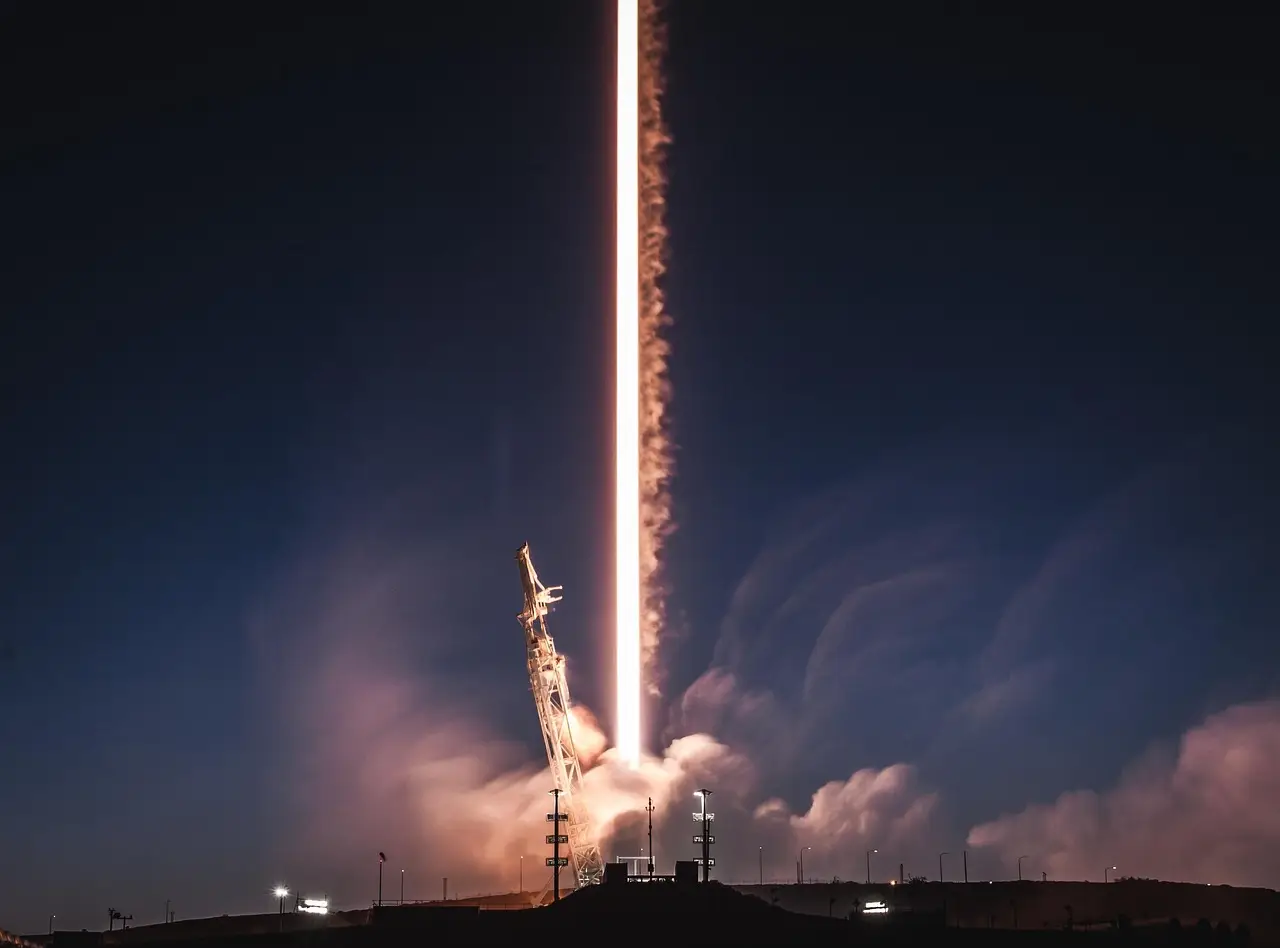
SpaceX has asked the Federal Communications Commission (FCC) for permission to launch up to 1 million solar-powered satellites into low Earth orbit. On November 22, 2026, Futurism and hi-Tech.ua reported scientists' warnings under headlines framing the plan as an environmental catastrophe. That label runs ahead of the evidence.
The filing is real. The warnings are real. The worst-case outcomes remain projections from a preprint awaiting peer review.
What did SpaceX actually ask for?
Reports name the system the SpaceX Orbital Data Center System. Elon Musk's company requested a ceiling of up to 1 million satellites, solar-powered, in low Earth orbit (LEO, the band below roughly 2,000 kilometers). The word "up to" matters. An application sets a maximum, not a build order, and regulators often grant less than requested.
No available reporting confirms FCC action, a launch schedule, satellite dimensions, price, capacity, altitude, or launch count. Any article quoting those figures as fact is guessing.
How big is 1 million satellites?
The proposed constellation would be nearly 100 times larger than SpaceX's existing Starlink network, which reports put at about 9,600 live satellites. A fleet two orders of magnitude larger than anything ever flown changes the physics of the problem, not just the arithmetic.
- Satellites requested: up to 1,000,000 (reported, not approved)
- Starlink live today: about 9,600
- Launch emissions vs 2025: more than 150 times higher (preprint estimate)
- Reentry nitrogen oxides: 70 to 150 times higher (preprint estimate)
- Orbital speed: about 17,000 miles per hour
Two of those rows come from modeling, not measurement. Nobody has launched a million satellites, so every emissions figure rests on assumptions about mass, lifespan and launch cadence, and those assumptions matter as much as the totals.
What do the models actually claim?
The preprint estimates the constellation could lift rocket-launch emissions by more than 150 times 2025 levels. Reentry nitrogen oxides could rise 70 to 150 times. Scientific American walked through the same estimates.
A 150-fold jump over 2025 means 150 times the rocket-launch slice of pollution, not 150 times all human emissions, and launch emissions are a niche source today. On the reentry side, satellites burn up at end of life, and the heat forms nitrogen oxides from the air itself. The range is wide because small changes in lifespan and mass swing the total, and the authors' own uncertainty shows in it. Peer review will test these figures. Until then, treat them as a warning flag, not a settled measurement.
What are the scientists saying?
Coverage warns of nitrogen oxides, black carbon (soot deposited high in the atmosphere), aluminum and other metals entering the upper atmosphere. Hugh Lewis, professor of astronautics at the University of Birmingham, said: "I think these plans are somewhat optimistic, premature, and possibly naïve from safety and sustainability perspectives." He stopped short of predicting a specific disaster.
Aaron Boley, professor of physics and astronomy at the University of British Columbia and co-director of the Outer Space Institute, told Scientific American: "It's one thing to make a data center. It's another thing to make a data center and then put it into orbit." Samantha Lawler, astronomer at the University of Regina, was blunter: "Having a million satellites is completely unsafe for collisions."
These are opinions from experts in orbital sustainability. Neither claims a measured catastrophe. Axios has also reported stargazing concerns, a sign the critique now reaches astronomy and public opinion.
What is proven and what is not?
- SpaceX's FCC application for up to 1 million LEO satellites: established as reported
- Solar power for the satellites: established as reported
- The 150x and 70-150x emissions figures: modeled only, preprint pending review
- FCC approval: not confirmed
- Exactly 1 million satellites will launch: not confirmed
- An environmental catastrophe: not confirmed, no peer-reviewed finding
Tim Whitehouse of Public Employees for Environmental Responsibility called approving a million orbiting data centers without environmental review reckless. A formal review would force SpaceX to file numbers on materials, launch counts and reentry plans, replacing preprint assumptions with data.
What does this mean for cloud buyers?
The immediate effect is zero compute and considerable uncertainty. No launch schedule or capacity figure exists, so nobody can book an orbital instance and procurement teams should not plan around one. Apollo and Goldman have priced a $44 billion SpaceX GPU debt deal, and reports said creditors pressed for limits on sending chips to space, a commercial hurdle no regulator needs to impose. If orbital capacity ever ships, upstream launch and reentry footprints would raise carbon-accounting questions current reporting methods cannot answer.
The FCC can seek public comment, request technical detail, approve part of the request, or decline it. No decision or deadline has been reported. Watch four signals: the FCC docket, peer review of the preprint, SpaceX disclosure on mass and altitude, and lender behavior. Only filed numbers and reviewed studies should move anyone's view of the risk.
via shattered.io (Source)
More from Priya Raman
Show full bio
Correspondent covering money, funding and market shifts around hardware layer of artificial intelligence at Die Signal.
731 articles
Same lot
- SpaceX Orbital Data Center Model Points to 150x Launch Emissions Rise
- Deutsche Bank Lifts SpaceX 2028 Forecast $18 Billion on Compute Scarcity
- Google's Trillium TPUs Reach Orbit as Space Data Centers Take Shape
- SpaceX Targets 10 GW of Data Center Capacity in 2027
- SpaceX's $24B Texas AI supercomputer heads to December hearing