Test report DSG-1080 · Rev C · tested October 30, 2026
Supply Chain & PolicyDevice under test
South Korea Q3 GDP beats forecasts as chip exports lift growth
South Korea’s Q3 GDP rose 1.0% quarter on quarter, beating 0.7% expectations. Chip exports drove growth, but private consumption fell 0.2% and policy remains split.
- Read
- 4 min
- Words
- 706
- Node
- 20nm
- Operator
- Priya Raman
Spec summary
- Q3 GDP grew 1.0% quarter on quarter and 3.4% year on year, beating 0.7% and 3.0% forecasts.
- Semiconductors drove about half of growth; exports rose 2.3% and facilities investment jumped 4.1%.
- Private consumption fell 0.2%, the first decline in nearly four years.
- Exports exceeded $800 billion in January through September and are tracking toward $1 trillion for the year.
- The Bank of Korea forecast 0.3% in August; annual growth would reach about 3.7% if Q4 holds at Q3 levels.
By Priya Raman
South Korea’s third-quarter gross domestic product (GDP) rose 1.0% quarter on quarter, exceeding the 0.7% median forecast in a Reuters poll. Advance Bank of Korea estimates released on Tuesday showed acceleration from 0.6% growth in the second quarter, indicating that the artificial intelligence (AI) trade supplied substantial momentum even as domestic demand weakened.
Year-on-year GDP growth reached 3.4%, above the 3.0% forecast. AI chip demand lifted exports and investment. Private consumption moved in the opposite direction.
What drove the 1.0% quarterly gain?
- Exports increased 2.3% during the quarter. Demand came from chips, machinery and electrical equipment.
- Facilities investment, or capital spending on production assets, jumped 4.1%, led by semiconductor manufacturing equipment.
- A Bank of Korea official estimated: “Semiconductors are driving about half of the economy’s growth.”
That official estimate identifies the concentration behind the headline result, linking the quarter’s performance to a single global demand cycle rather than broad-based domestic expansion.
The 1.0% gain compared with the central bank’s 0.3% August forecast for the quarter. Its August outlook projected 3.3% growth for the full year.
The beat supports exporters and semiconductor shares while global AI demand remains firm. It also leaves them exposed to any wobble in global chip orders.
How large is the export contribution?
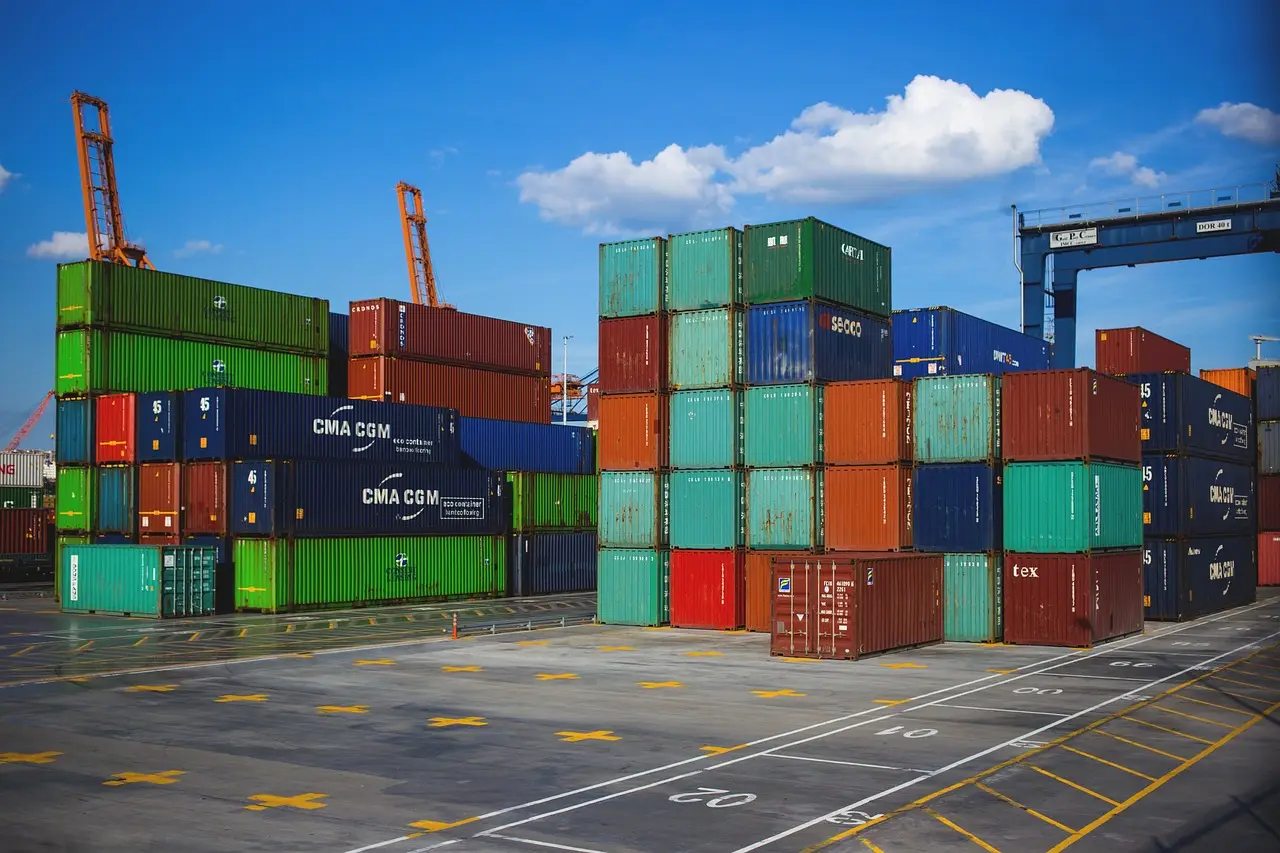
Exports topped $800 billion from January through September. That total already exceeded South Korea’s full-year export record in the previous year. The country remains on track to become only the fourth nation, after the United States, China and Germany, to pass $1 trillion in annual exports.
The milestone remains conditional because nine-month performance does not settle fourth-quarter shipments, although exports have already surpassed the previous year’s record for the full year.
If fourth-quarter output holds at the third-quarter level, annual GDP growth would reach about 3.7%. That conditional arithmetic contrasts with the central bank’s earlier 3.3% annual forecast. It does not establish a new full-year forecast.
Why did household spending retreat?
Private consumption fell 0.2%, the first decline in nearly four years. Financial services activity dropped amid a stock-market slump. Car purchases fell because of strikes at major automakers. These two channels explain why the export-led expansion did not translate into a broad household spending gain.
The central bank expects a gradual recovery. Chip companies’ fourth-quarter dividend payouts and employee bonuses due early next year should lift household incomes. One economist cautioned that a soft labour market and restrictive interest rates limit the scope for a strong rebound despite expected dividend and bonus income.
Consumer sentiment also slipped in October. Expected dividend and bonus income remains prospective, not an observed boost.
What did the market reaction reveal?
The Korea Composite Stock Price Index (KOSPI) rallied strongly during the session. Its move triggered a sidecar, a temporary halt to program trading that the Korea Exchange applies when index futures move sharply. The mechanism is intended to cool momentum-driven orders. It did not reverse the session’s broader advance.
The market’s dependence on the AI cycle now cuts both ways. Exporters and chip-related shares retain support while global AI demand holds. A wobble in that trade would affect the same companies and the wider index.
The rally therefore shows concentration in the AI trade, rather than a broad-based improvement in domestic demand, and leaves Korean assets vulnerable to the same external shock.
What does the central bank do next?
The Bank of Korea held rates last week after back-to-back hikes in July and September. It retained a hawkish stance, meaning a preference for tighter policy. The GDP beat gives officials little reason to soften that stance immediately. However, weak household spending remains the main argument against further tightening.
A hawkish bias should support the won, South Korea’s currency, and keep pressure on short-end bond yields, or returns on shorter-dated debt. Weak consumption could keep household-sensitive sectors lagging.
The policy choice is therefore narrow but consequential, because export strength argues against easing while household weakness argues for caution and neither signal removes dependence on AI demand.
via Google News: AI chip (Source)
More from Priya Raman
Show full bio
Correspondent covering money, funding and market shifts around hardware layer of artificial intelligence at Die Signal.
467 articles
Same lot · LOT-C204
- DSG-90117nmSouth Korea Q3 GDP rises 1.0% as AI chip demand lifts exports
- DSG-55997nmSouth Korean Exports on Track for 16th Straight Monthly Increase
- DSG-894710nmTSMC Third-Quarter Revenue Climbs 51% on AI Chip Demand
- DSG-689820nmSamsung Forecasts Record $80B Q3 Profit on AI Chip Demand
- DSG-50777nmSamsung Targets 100 Trillion Won Q3 Profit as Won Strength Looms