Test report DSG-4101 · Rev D · tested October 10, 2026
Memory & StorageDevice under test
SK Hynix Commits $38 Billion to Two New DRAM and NAND Plants
SK Hynix has pledged $38 billion to construct two new factories, expanding capacity for both DRAM memory and NAND flash storage production.
- Read
- 2 min
- Words
- 403
- Node
- 10nm
- Operator
- Priya Raman
Spec summary
- SK Hynix has pledged $38 billion for new fabrication capacity.
- The investment funds two new factories.
- One plant will produce DRAM, the other NAND flash.
- No construction sites, volumes or timelines were disclosed.
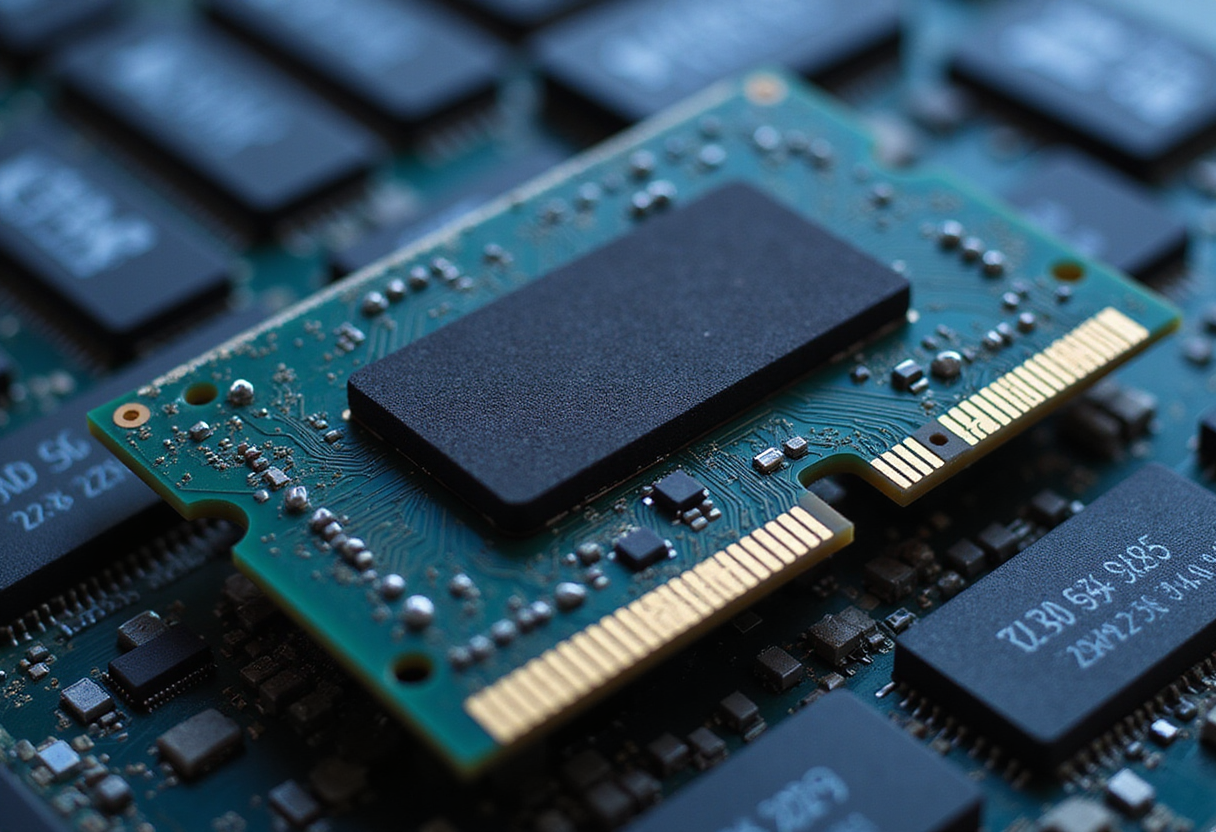
SK Hynix has pledged $38 billion to build two new semiconductor factories, one for DRAM production and one for NAND flash, according to a report by Engadget. The commitment ranks among the largest single capacity investments the Korean memory manufacturer has announced to date.
The plan calls for two separate fabrication facilities. One plant will produce DRAM, the memory used in PCs, servers and data-center systems. The second will produce NAND flash, the storage technology behind SSDs and other solid-state devices. Together, the two factories would expand SK Hynix's footprint across both major memory categories.
Why is the company spending $38 billion?
Memory manufacturers fund new fabrication plants years in advance of output. Construction timelines for advanced semiconductor facilities typically run multiple years from groundbreaking to volume production, and capital budgets of this scale signal long-term demand expectations rather than near-term supply changes. The $38 billion figure covers the cost of the two planned factories, Engadget reports.
For context on scale:
- The investment spans two plants, not one, splitting across the DRAM and NAND product lines.
- Both factories represent new capacity rather than upgrades to existing lines.
- The pledge positions SK Hynix to keep pace with rivals that have announced comparable multi-tens-of-billions capacity programs.
What does the expansion mean for the memory market?
SK Hynix sits among the top three global memory producers, competing with Samsung and Micron in DRAM and with Samsung, Kioxia, Western Digital and Micron in NAND. Any capacity addition of this magnitude affects industry supply calculations, since memory pricing depends heavily on how much fabrication capacity manufacturers bring online and when.
The decision to build both a DRAM plant and a NAND plant indicates the company expects sustained demand growth across both memory types. Data-center buildouts, AI-related hardware demand and storage requirements all draw on DRAM and NAND output, and manufacturers have responded with successive rounds of capital spending.
What remains unknown?
Engadget's report did not specify the construction sites, the production volumes each factory will target, the process technology the plants will run, or the timeline for groundbreaking and first output. Those details will determine when the $38 billion translates into actual wafer supply, and industry watchers will track permit filings and equipment orders as leading indicators.
What is confirmed: the size of the pledge, the number of factories, and the split between DRAM and NAND capacity.
via Google News: DRAM chip (Source)
More from Priya Raman
Same lot · LOT-C1C6
- DSG-71977nmSK Hynix Commits $38 Billion to Korean Chip Fab Expansion
- DSG-55333nmSK Hynix commits $38 billion to new memory chip plants
- DSG-106210nmSK Hynix weighs US chip manufacturing, Taipei Times reports
- DSG-46625nmSK hynix Target Price Held at 3.4 Million Won on Memory Demand
- DSG-67193nmSK Hynix Eyes Opportunity Inside Intel's $100B U.S. Fab Plan