Test report · tested November 22, 2026
Memory & StorageDevice under test
SanDisk's 377.9% Revenue Surge Gives It the Cleaner Setup Into 2027
SanDisk's revenue jumped 377.9% to $11.03B with a sixth straight EPS beat, while SK hynix grew 327.9% but carries unaudited results and won-currency risk into year-end.
- Read
- 3 min
- Words
- 577
- Segment
- Memory & Storage
- Operator
- Grace Kim
Spec summary
- SanDisk fiscal Q1 revenue reached $11.03B, up 377.9% year over year; EPS of $49.51 beat the $46.27 consensus.
- SanDisk's 8-for-1 stock split took effect November 19, 2026.
- SK hynix posted $78.88B revenue, up 327.9%, with operating income up 632.1% to $62.83B.
- SK hynix pre-tax profit fell 58.7% sequentially on unitemized non-operating charges; results are unaudited.
- SanDisk trades near 9 times earnings, carries no debt and spent $5.0B on buybacks last quarter.
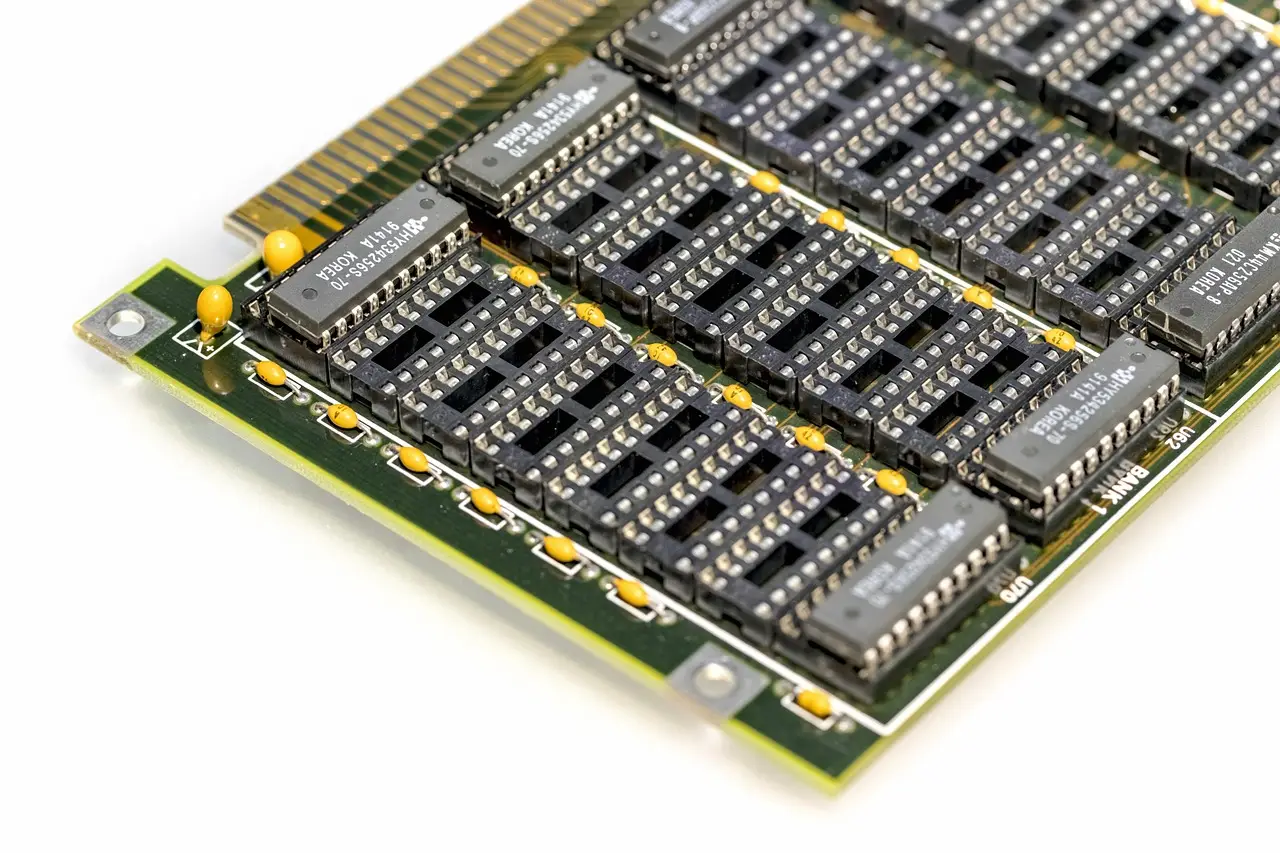
SanDisk grew fiscal Q1 revenue 377.9% year over year to $11.03B, and its 8-for-1 stock split took effect November 19, 2026 — the two bookends of a quarter that, on the numbers, leaves the NAND specialist with a cleaner near-term setup than its far larger rival SK hynix through the end of the year.
Both companies reported in late October, and both are riding AI infrastructure spending. The scale gap is stark: SK hynix carries an $840.57B market cap against SanDisk's $107.45B, and sells DRAM, HBM (high bandwidth memory, the stacked chips used in AI accelerators) and NAND, while SanDisk sells NAND flash alone.
SanDisk posted non-GAAP EPS of $49.51 against a $46.27 consensus — its sixth consecutive beat. Datacenter revenue jumped 61% sequentially to $4.80B as three U.S. hyperscalers took more supply. Consumer revenue slid 29% to $397M as retail buyers adjusted to higher pricing. CEO David Goeckeler cited "robust and growing demand for our products driving outpaced growth in our data center business."
SK hynix's headline numbers were bigger. Revenue hit $78.88B, up 327.9%, while operating income rose 632.1% to $62.83B — profit growing almost twice as fast as sales, a measure of how much pricing power AI memory currently carries. Server DDR5 drove DRAM sales and HBM4 shipments began in earnest, with management expecting HBM4 to become the mainstream product starting in the fourth quarter. One blemish: pre-tax profit fell 58.7% sequentially on non-operating charges the company did not itemize, and the results remain unaudited.
What separates the two setups?
- Growth engine: SanDisk runs on enterprise SSDs (TLC and QLC flash); SK hynix runs on HBM4 and server DDR5.
- Soft spot: Consumer retail storage drags SanDisk; non-operating charges cloud SK hynix's numbers.
- Key dependency: SanDisk leans on its Kioxia partnership; SK hynix reports in Korean won, exposing ADS holders to currency risk.
SanDisk guided fiscal Q2 revenue to $12.2B–$12.6B with non-GAAP gross margin of 84.5%–85.5%, meaning management expects near-record margins to hold. About 60% of Q1 growth came from volume rather than price. Its New Business Model (NBM) contracts already cover roughly 50% of fiscal 2027 bits and two-thirds of fiscal 2028.
SK hynix expects demand to outrun supply through 2030 and has secured long-term agreements covering much of its 2027–2028 capacity. That's longer contracted AI memory visibility. Its filings, however, include no formal guidance.
What does this change for investors?
Through December, the balance favors SanDisk. It trades at about 9 times earnings, carries no debt and spent $5.0B on buybacks last quarter. Its growth logic is direct: AI inference needs more flash storage. Stretch the horizon to 2027 and 2028, and SK hynix's contracted capacity offers the longer view.
Both stocks have cooled regardless. SanDisk fell 44.69% over the past month even with a 218.12% year-to-date gain, while SK hynix dropped 14.73%.
What to watch next
SanDisk management flagged fiscal Q3 as "normally our weakest sequential quarter." Watch whether NBM coverage climbs and whether high bandwidth flash samples arrive on schedule next calendar year. For SK hynix, track the M15X fab ramp and whether audited results explain the non-operating swings.
One caveat cuts both ways: if NBM renewals or Datacenter growth slow sharply, the near-term case for SanDisk weakens with it.
via 247wallst.com (Source)
More from Grace Kim
Show full bio
Market editor covering regulation, policy and their impact on hardware layer of artificial intelligence at Die Signal.
749 articles
Same lot
- SanDisk, Micron Face Different Early-2027 Worst Cases After Record Quarters
- SK Hynix Posts 79.7% Operating Margin as HBM and DRAM Prices Surge
- SanDisk Falls 8% as TrendForce Calls 2027 NAND Price Decline
- Sandisk, Micron, SK Hynix Fall 3% After NVIDIA CEO Exit
- SanDisk Falls 7% as AI Selloff Spreads Into Memory Stocks