Test report DSG-7014 · Rev A · tested October 10, 2026
Foundries & ManufacturingDevice under test
Samsung Projects Foundry Customer Base to Quadruple by 2029
Samsung expects its foundry customer base to grow fourfold by 2029, The Korea Times reports, setting a five-year target for its contract chipmaking arm.
- Read
- 2 min
- Words
- 377
- Node
- 10nm
- Operator
- Elena Vasquez
Spec summary
- Samsung expects its foundry customer count to quadruple by 2029.
- The projection covers a five-year horizon from 2024.
- The Korea Times reported the figure based on Samsung's own forecast.
- Samsung Foundry competes primarily with TSMC for external chip manufacturing orders.
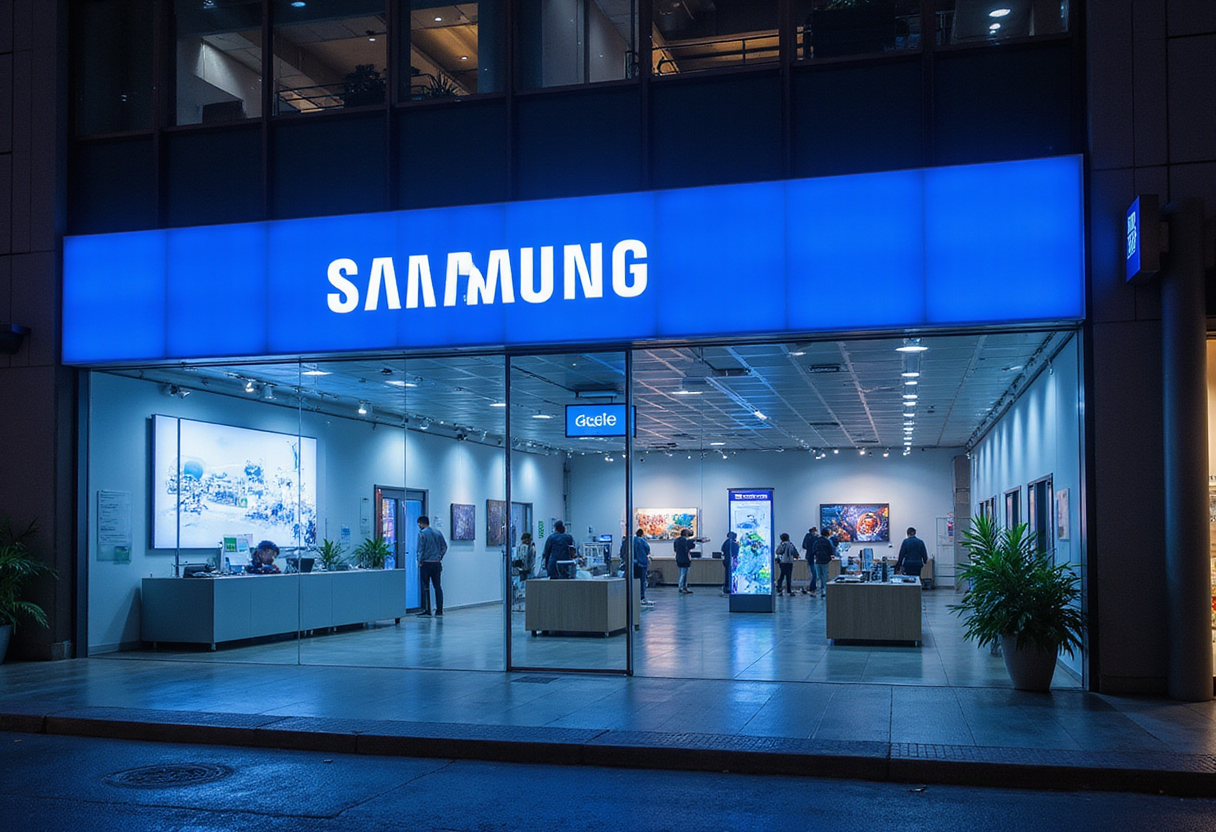
Samsung expects the number of customers using its foundry services to quadruple by 2029, according to a report by The Korea Times.
The projection sets a concrete benchmark for the contract chipmaking arm of the South Korean technology group: a fourfold expansion of its customer base over a five-year horizon. Samsung has not specified the exact current customer count, but the target signals an aggressive push to win additional external clients for its semiconductor fabrication plants.
Why does the customer count matter?
Foundry revenue scales directly with the number of design firms that commit wafer orders to a manufacturer. Samsung Foundry competes against Taiwan's TSMC, the global market leader, and a growing customer list is a standard measure of competitive traction in contract chipmaking.
A fourfold increase by 2029 would mark a substantial shift for the division, which has historically lagged its Taiwanese rival in external orders despite Samsung's position as one of the world's largest semiconductor producers overall.
What is Samsung's foundry position?
Samsung operates one of the world's two leading logic-chip fabrication businesses. Its foundry arm manufactures processors and other chips for external customers, separately from the semiconductors Samsung designs in-house.
The company's roadmap targets advanced process nodes, the cutting-edge manufacturing technologies that determine transistor density, power consumption and performance of finished chips. Winning customers at these nodes has been the central competitive battleground with TSMC in recent years.
What does the 2029 timeline imply?
The five-year window aligns with standard semiconductor industry planning cycles. Design wins secured today typically translate into volume production several years later, as customers qualify their chips on a manufacturer's process technology before committing to mass fabrication.
By setting a 2029 deadline, Samsung is effectively forecasting that customer qualification activity underway now and in the coming years will convert into an expanded production base by the end of the decade.
Who reported the figure?
The Korea Times published the projection, attributing it to Samsung's own expectations for the foundry business. The report frames the target as the company's forward-looking assessment of customer growth through 2029.
Further detail on which customers, process nodes or regional markets will drive the expansion was not specified in the report.
via Google News: Semiconductor foundry (Source)
More from Elena Vasquez
Show full bio
Senior reporter covering industry trends and analytics at Die Signal.
251 articles
Same lot · LOT-C1C6
- DSG-491445nmSamsung Foundry Revenue Rose in Q2 2026 but Trailed TSMC
- DSG-468914nmSamsung's 2nm Yield Nears 60% in Push Against TSMC
- DSG-682614nmSamsung Foundry sets 66% HPC share, fourfold customer target by 2029
- DSG-452414nmTSMC Lifts Foundry 2.0 Share to 42% as Market Hits $96.6 Billion
- DSG-385220nmTSMC Targets 1.4nm Trial Production in Q1 2027 as Gap Widens