Test report DSG-7586 · Rev C · tested October 10, 2026
Memory & StorageDevice under test
Samsung Flags $80 Billion Quarterly Profit on AI Chip Demand
Samsung has disclosed $80 billion in quarterly profit, the largest single-quarter result any technology company has reported, driven by AI demand for semiconductors.
- Read
- 3 min
- Words
- 577
- Node
- 5nm
- Operator
- Marcus Bennett
Spec summary
- Samsung disclosed $80 billion in quarterly profit
- Result marks the highest single-quarter figure ever reported by any technology company
- AI-driven demand for advanced semiconductors was the primary driver
- Headline first published by Reuters
- Figure roughly doubles the typical $20–40 billion quarterly profit range for top tech firms
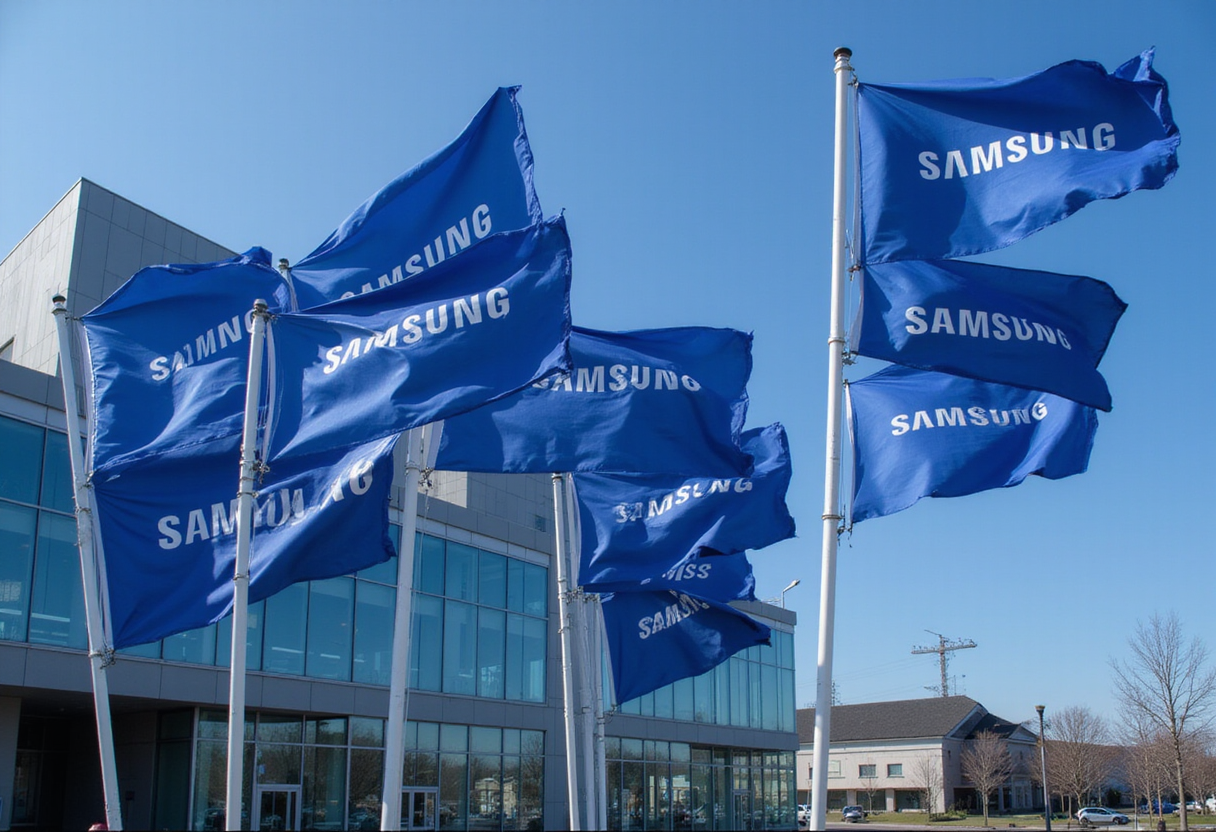
Samsung Electronics has disclosed $80 billion in quarterly profit, the largest single-quarter figure ever reported by any technology company, driven by demand for AI-related semiconductors. The headline, reported by Reuters, marks a sector benchmark that exceeds quarterly results posted by the largest U.S. platform and chip companies.
What does the result tell us about AI chip economics?
Samsung ranks among the top global suppliers of DRAM, NAND flash, and foundry services. Its quarterly profit tracks closely with memory contract pricing, foundry utilization, and component demand from cloud and data center buyers.
AI training and inference workloads consume high-bandwidth memory, advanced packaging, and leading-edge logic at scale. The result signals that suppliers positioned across these categories have captured outsized revenue and margin gains during the current build cycle.
How does $80 billion compare with prior tech sector peaks?
Quarterly profits for major technology companies typically range between $20 billion and $40 billion. The disclosed figure roughly doubles that benchmark.
The gap reflects memory's higher operating leverage relative to software or services. A given percentage of revenue growth at a memory supplier produces a larger jump in operating profit than the same growth at a platform company.
Software and cloud operators convert revenue at higher gross margins, but they spend heavily on personnel, sales, and data center operations. Memory suppliers run heavier capex but report stronger incremental margins when contract prices rise.
What supply constraints drove the figure?
Industry capacity for high-bandwidth memory and advanced packaging has remained tight through recent quarters. Memory suppliers, foundries, and outsourced semiconductor assembly and test providers have signaled multi-year capex plans to close the gap.
Pricing for memory SKUs tied to AI accelerators has carried a premium over standard parts. Contract negotiations now run further in advance, with buyers reserving capacity multiple years out.
Equipment vendors across lithography, deposition, and metrology have flagged record order backlogs. Wafer output has not kept pace with memory and foundry demand, which keeps allocation tight.
What is Samsung's role in the AI supply chain?
Samsung supplies memory products used in AI accelerators built by chip designers, alongside foundry services at advanced process nodes. The company has invested in high-bandwidth memory generations, EUV-enabled logic, and 2.5D and 3D packaging.
Competitors including SK Hynix, TSMC, and Micron compete for the same demand pool. Memory pricing dynamics, foundry allocation, and packaging throughput all influence how revenue converts into operating profit.
Samsung's memory mix — HBM, DDR5, and enterprise SSD — directly serves AI server builders. Its foundry business targets advanced-node customers seeking alternatives to the dominant foundry.
What risks could cut the cycle short?
Concentration in AI demand exposes suppliers to a small number of hyperscale buyers. Any pause in data center capex, a transition in accelerator architecture, or a slowdown in model training investment could compress volumes.
Geopolitical exposure adds another layer. Korean, U.S., and Chinese export controls affect equipment flows, customer mix, and product roadmap across the memory and foundry segments.
Currency fluctuations also matter. Samsung reports in Korean won, so a strengthening won compresses the dollar-denominated value of its profits.
What comes next?
The disclosed profit provides a baseline for sector expectations. Subsequent quarters will test whether AI demand sustains current contract pricing or whether added capacity begins to normalize margins.
For now, the result confirms that suppliers positioned in HBM, foundry, and advanced packaging capture the bulk of the AI infrastructure spend.
via Google News: HBM memory (Source)
More from Marcus Bennett
Show full bio
News editor covering marketplaces and e-commerce at Die Signal.
274 articles
Same lot · LOT-C1C6
- DSG-980065nmSamsung Posts Record $80 bn Quarterly Profit on AI Chip Demand
- DSG-285520nmSamsung Reports 783% Profit Jump to Record $80 Billion
- DSG-561814nmAI chip demand drives Samsung to record $80bn profit
- DSG-65483nmSamsung Reports Record $80 Billion Profits on AI Chip Surge
- DSG-852220nmSamsung Posts 783% Profit Jump to Record $80 Billion on AI Demand