Test report · tested November 22, 2026
Memory & StorageDevice under test
Samsung Falls 7% to 183,100 Won as Analyst Who Set 70,000 Won Target Warns
Samsung fell 7.01% to 183,100 won and SK hynix 5.92% as foreign and institutional investors sold. Analyst Lee Joo-wan warns 'the real collapse hasn't even started yet.'
- Read
- 3 min
- Words
- 613
- Segment
- Memory & Storage
- Operator
- Amara Osei
Spec summary
- Samsung Electronics closed at 183,100 won on December 20, down 7.01%; SK hynix fell 5.92% to 1,113,000 won
- Foreign investors sold a net 1.1411 trillion won on the main board; institutions sold a net 951.3 billion won
- Analyst Lee Joo-wan set fair values of 70,000 won for Samsung and 200,000 won for SK hynix in October
- KB Securities forecasts DRAM average selling prices up 40% in 2027 and NAND up 30%
- DRAM spot prices fell 5% and NAND spot prices 20% over the past month while contract prices rose
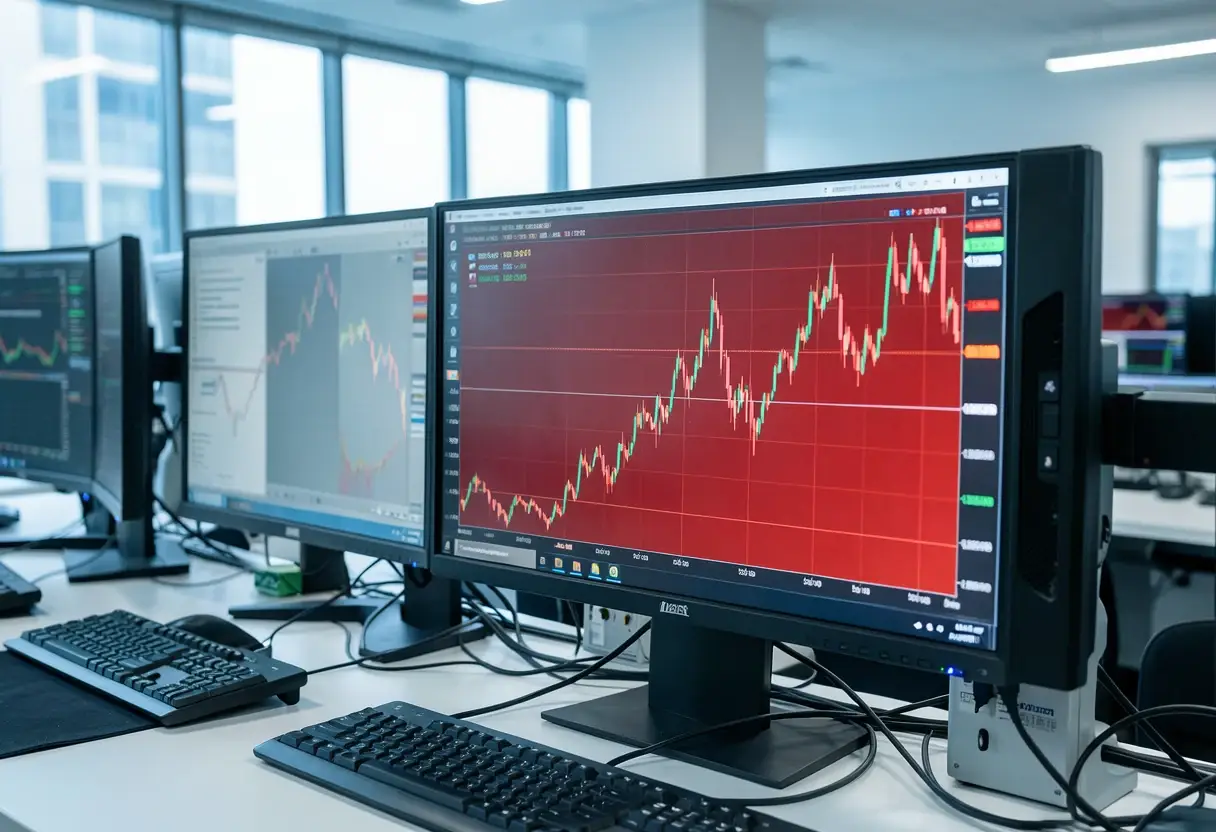
Samsung Electronics closed down 7.01% at 183,100 won on December 20, and an analyst who set the stock's fair value at 70,000 won in October says the decline has further to run. SK hynix fell 5.92% to 1,113,000 won the same session, according to Korea Exchange data.
The drop came on heavy selling by foreign and institutional investors. Foreigners sold a net 1.1411 trillion won on the main board; institutions sold a net 951.3 billion won. Retail investors bought a net 1.595 trillion won. JPMorgan and Morgan Stanley ranked among the top sellers of both stocks.
Overnight weakness in U.S. technology shares compounded the pressure. On December 19 the Nasdaq fell 2.25%, the S&P 500 dropped 2.02%, and the Philadelphia Semiconductor Index lost 2.42%. Doubts about AI spending and concern over U.S. export curbs on chips to China dampened investor appetite.
What did the bearish analyst say?
Lee Joo-wan, a doctorate-holding analyst who in October put fair values for Samsung Electronics and SK hynix at 70,000 won and 200,000 won respectively, said on the YouTube channel Jisik Hankkeut on December 18 that "the real collapse hasn't even started yet."
"A full-blown plunge in memory makers' share prices happens only once prices start falling," he said, predicting that brokerages would sharply cut their two-year profit estimates if memory prices decline late this year or early next year.
Lee argued that chipmakers' improving earnings rest on higher product prices, not larger output. "Production and shipment volumes are the same now as a year ago," he said. "For a manufacturer, flat output means the company has not grown at all."
"Right now earnings have improved purely because prices went up," he added, warning that any production expansion would increase supply and intensify downward pressure on prices.
He also criticized Nvidia, the AI market leader. "A company cannot create demand," he said. "Nvidia has been forcibly creating supplier-side demand in this market for three years, and that is why there is a bubble now." He added that software competition will matter more than hardware in AI going forward, and called on Korean companies to strengthen R&D and design capabilities.
Why does KB Securities disagree?
KB Securities said in a December 20 report that the decline in chip stocks is excessive given solid AI memory demand. Kim Dong-won, head of the brokerage's research center, with researchers Lee Chang-min and Kang Da-hyun, forecast that the average selling price of DRAM at Samsung Electronics and SK hynix will rise 40% in 2027 from a year earlier, with NAND up 30%.
The report projects global DRAM demand growth of 25% next year against supply growth of 18%. The share of major customers' DRAM demand that can be met will stay at about 70%. Demand for server DRAM will rise 56% and for enterprise solid-state drives 54%, supporting memory price increases.
KB Securities also addressed the recent drop in spot prices. DRAM spot prices fell 5% and NAND spot prices fell 20% over the past month, while contract prices rose; the gap between the two widened to more than 20%. Spot prices reflect sluggish PC and smartphone demand, the report said, while contract prices — which determine actual earnings at Samsung Electronics and SK hynix — reflect demand for AI server memory.
The brokerage concluded that concerns over external risks are already largely priced in, and that market pessimism surrounding the two companies may be close to a peak.
The market now weighs Lee's price-collapse scenario against KB's 40% DRAM forecast.
via en.sedaily.com (Source)
More from Amara Osei
Show full bio
Staff writer covering money, funding and market shifts around hardware layer of artificial intelligence at Die Signal.
777 articles
Same lot
- SK hynix Falls 7.6% as Nvidia Uncertainty and NAND Price Slide Hit KOSPI
- Samsung, SK hynix Slide 4-5% as Anthropic Debut Drains AI Funds
- NAND Prices Down 20% Since October, BofA Note Sinks Korean Chip Stocks
- CoreWeave Earnings Lift Samsung, SK hynix; Nvidia Diverges After Hours
- Samsung and SK Hynix Stocks Fall 30% as Market Doubts AI Boom