Test report · tested November 22, 2026
AI Datacenter InfrastructureDevice under test
Redwood Energy Targets 1 TWh of Used EV Batteries for AI Data Centers
Redwood Energy will sell second-life EV battery storage to AI data centers, targeting 1 TWh of U.S. supply by 2040. A Crusoe installation in Nevada is the only confirmed deployment so far.
- Read
- 4 min
- Words
- 734
- Segment
- AI Datacenter Infrastructure
- Operator
- Marcus Bennett
Spec summary
- Redwood Energy targets ~1 TWh of used EV battery capacity available in the U.S. by 2040 (1,000 GWh).
- Business Insider and Motor1.com reported the unit on November 20, 2026.
- CTO Colin Campbell spent 17 years at Tesla; Redwood was founded by Tesla cofounder JB Straubel in 2017.
- One confirmed deployment: a battery installation for Crusoe in Nevada.
- Redwood is developing systems combining packs from more than 100 EV models.
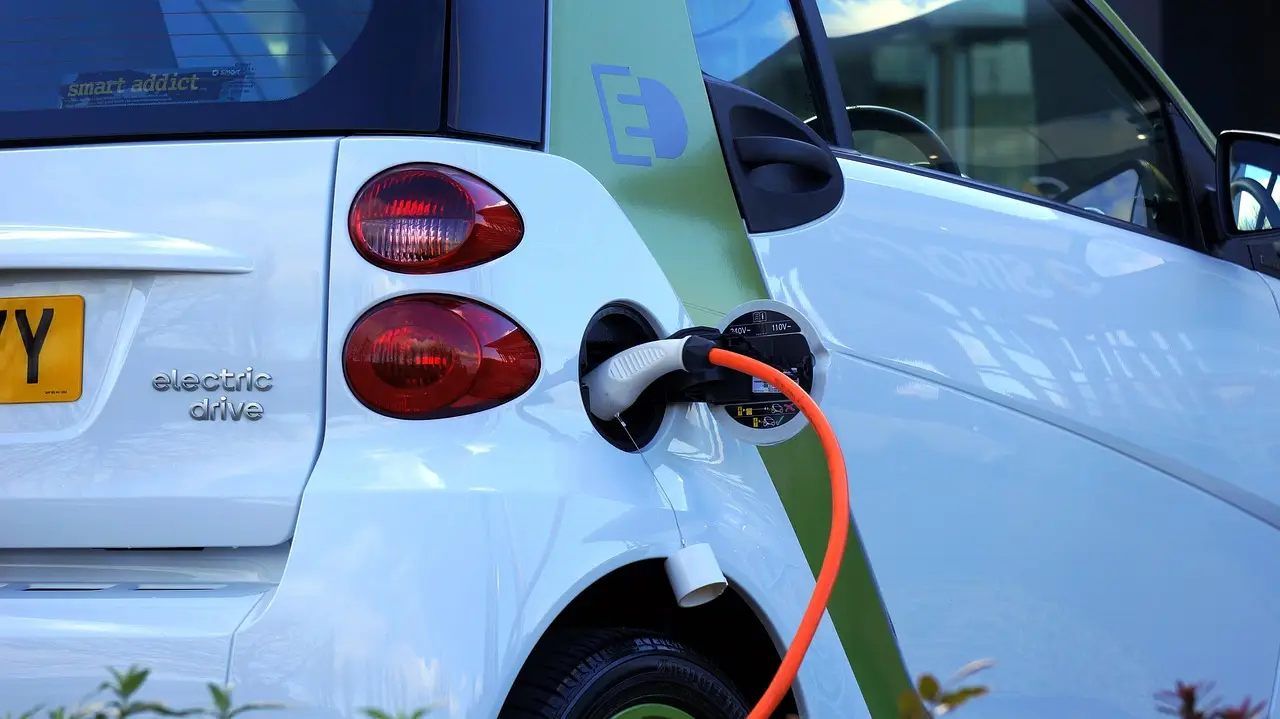
Roughly 1 terawatt-hour of used electric-vehicle battery capacity could become available in the United States by 2040, according to Redwood Materials — and the company has built a new unit, Redwood Energy, to sell it as stationary storage for AI data centers. Business Insider and Motor1.com reported the plan on November 20, 2026. One deployment already exists: a battery installation for Crusoe in Nevada.
Who is behind the pitch?
Colin Campbell, chief technology officer of Redwood Materials, leads the effort. He spent 17 years at Tesla before joining Redwood, which Tesla cofounder JB Straubel founded in 2017. The company built its original business extracting metals and minerals from used EV batteries. Redwood Energy keeps retired packs intact instead of shredding them and puts them to work storing electricity.
The framing deserves one caveat. Campbell is pitching his own employer's growth line, not issuing a disinterested forecast. Neither outlet's reporting includes an attributable on-record quote from Campbell or Straubel, a price per kilowatt-hour, a revenue figure, a valuation, or a contract value. This article therefore quotes no one directly. The claim is still checkable in principle: capacity numbers, deployments, and customers either appear over the next 24 months or they do not.
What does the verified record show?
The reporting confirms a narrow set of facts:
- Redwood Energy repurposes used EV batteries for AI data centers, factories, and other facilities.
- Redwood deployed a battery installation for Crusoe in Nevada.
- Redwood is developing systems that combine packs from more than 100 different EV models.
- The company estimates about 1 TWh of used EV-battery capacity in the U.S. by 2040 — 1,000 GWh, or 1,000,000 MWh.
- Starting in the early 2030s, second-life packs could supply roughly half of U.S. energy-storage demand, by Redwood's estimate.
Spread evenly over 2026 to 2040, 1 TWh works out to roughly 71 GWh per year. That arithmetic is illustrative only. Real supply will arrive on a back-loaded curve, because most EVs on the road today have not reached end of life, and that timing is the heart of Campbell's pitch: the supply wave may overlap with the AI power squeeze.
Several circulating claims lack confirmation. A secondary summary attached specific battery counts, megawatt and megawatt-hour figures, and a GPU count to the Nevada site, and called it the largest second-life deployment worldwide and North America's largest off-grid data center. None of that appears in the primary reporting, so treat it as unverified until Redwood or Crusoe publishes specs.
Why 100+ EV models in one system is the hard part
Each EV model carries its own voltage, chemistry, cell format, thermal design, and battery management software. New stationary storage uses uniform cells bought in bulk. Second-life storage inherits whatever the road left behind, and packs from different automakers — or even the same model — age differently depending on climate and charging habits. Pairing them without careful power electronics wastes capacity or creates hot spots. Every retired pack also needs a health assessment before deployment, and data center buyers demand warranties a financier will accept. Redwood's recycling arm already handles a wide spread of pack types; whether that knowledge converts into a warrantable storage product remains the open question.
Why AI sites want storage, not just generation
AI data centers pull large, fast-changing loads, and interconnection queues stretch for years in many regions. Storage lets an operator smooth the draw, ride through short outages, and squeeze more work from limited supply. Second-life batteries compete with new lithium cells, on-site gas generation, and grid-only supply. They reuse existing packs but carry mixed ages and testing overhead. Policy pressure — from Texas permit fights to state debates over data center tax breaks — pushes operators toward solutions that reduce strain on public grids, though safety codes tuned for new, uniform systems pose another regulatory hurdle for mixed reused packs.
What could go wrong
No verified price exists, so nobody outside Redwood can say whether it undercuts new storage. If reuse proves profitable, rivals and automakers will chase the same feedstock. And data center construction tracks AI capital spending, which can swing — though the underlying grid constraints would survive a slowdown. Watch for named customers beyond Crusoe, rival reuse announcements clustering in 2027, and the early-2030s supply surge as the first real test.
via shattered.io (Source)
More from Marcus Bennett
Show full bio
News editor covering regulation, policy and their impact on hardware layer of artificial intelligence at Die Signal.
752 articles
Same lot
- Tesla's $10.1 Billion 'Project Crystal Sun' Solar Plant Filed for Texas
- AirTrunk Signs 1GW Renewable Energy Exclusivity Deal in NSW
- Tesla Puts €3 Billion Price Tag on Cybercab Plant Near Berlin
- 403 U.S. hyperscale data centers used an estimated 82 TWh a year
- Caterpillar rises 7.2% after Anthropic takes over $3.4 billion orders