Test report DSG-3213 · Rev D · tested October 13, 2026
Processors & AcceleratorsDevice under test
Nvidia's China AI-Chip Share Falls as Huawei Closes Gap, Report Finds
A new report finds Nvidia's China AI-chip share falling as Huawei closes the gap, but the published material omits percentages, revenue figures, and timeframe.
- Read
- 3 min
- Words
- 699
- Node
- 45nm
- Operator
- Priya Raman
Spec summary
- A new report finds Nvidia's share of China's AI-chip market has fallen.
- The report identifies Huawei as the primary competitor closing the gap.
- No share percentages, revenue figures, or timeframe appear in the published material.
- US export controls restrict Nvidia's highest-end AI chip sales to Chinese customers.
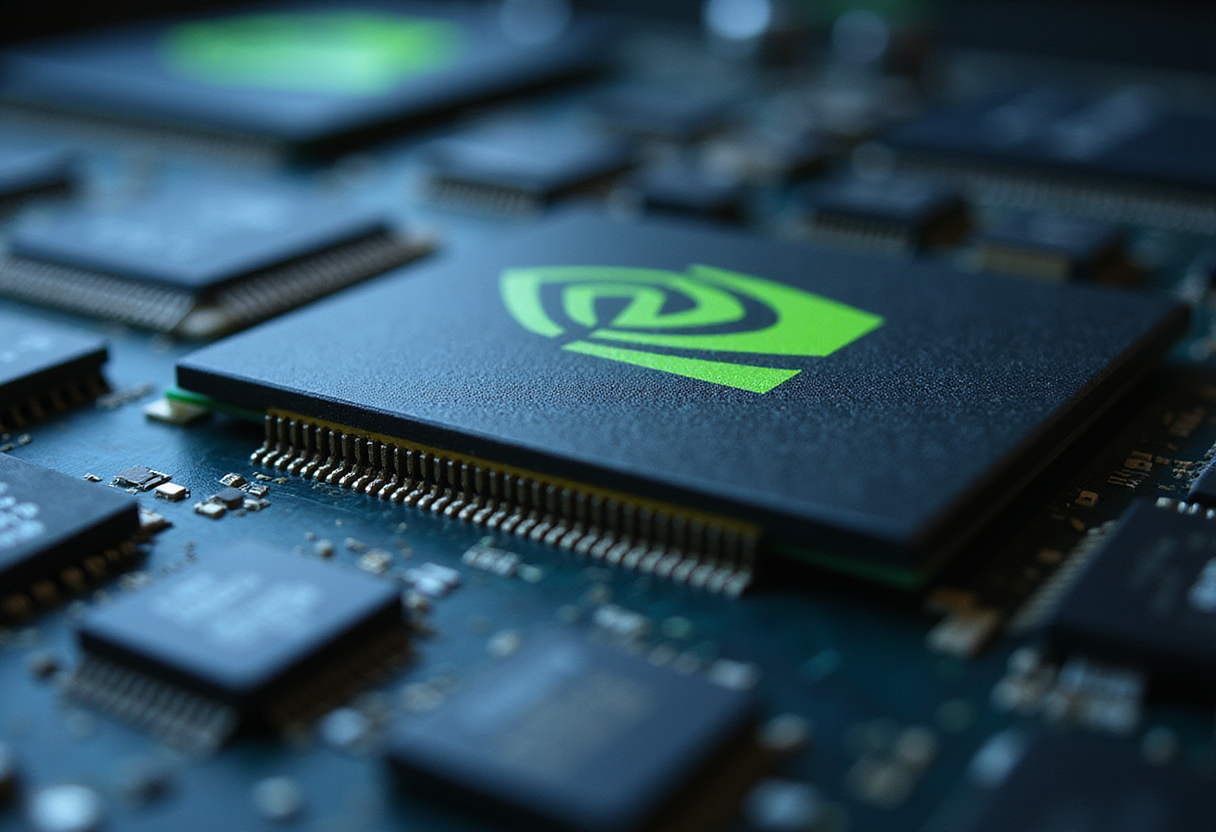
A new report finds that Nvidia's share of China's AI-chip market has fallen, with Huawei closing the gap on the US supplier. The report's appearance, first carried by The Lufkin Daily News, marks one of the clearest signals yet that Washington's export controls and Beijing's domestic substitution push are reshaping the competitive order. What the report does not say matters just as much as what it does.
What does the report actually claim?
The core finding is simple. Nvidia, the dominant global supplier of AI accelerators (specialized processors that train and run artificial-intelligence models), is losing ground in China. Huawei, the sanctioned Chinese telecoms and technology group, is gaining it. The report does not, at least in the material now public, attach precise percentage figures to either trend.
That absence of numbers deserves scrutiny. Market-share claims without published methodology, sample size, or time window are difficult to verify. Investors and procurement teams should treat the directional finding as credible but unquantified until the underlying data appears. Every promise in this story carries a caveat.
Why is Nvidia's position eroding?
Two forces explain the shift. Neither is new.
- US export controls. Washington has restricted Nvidia's sales of its highest-end AI chips to Chinese customers. The company responded with modified, compliance-approved variants for the Chinese market. These downgraded parts have drawn criticism from Chinese buyers for delivering less compute per dollar.
- Domestic substitution. Beijing has pushed state-backed and private buyers toward domestic silicon. Huawei's Ascend line of AI processors stands as the principal beneficiary.
Nvidia chief executive Jensen Huang has repeatedly warned that export restrictions hand the Chinese market to local competitors. The report's finding, if confirmed by independent data, would validate that warning. It would also validate the counterargument from Washington: that the controls were designed to slow China's AI buildout, not to protect Nvidia's revenue.
Can Huawei actually replace Nvidia?
Huawei faces real constraints. US sanctions cut the company off from leading-edge fabrication at TSMC, the Taiwanese chip manufacturer. Huawei has leaned on domestic foundries, and its Ascend accelerators trail Nvidia's top parts on raw performance and on the maturity of the software ecosystem (CUDA, Nvidia's proprietary programming layer, anchors most AI development worldwide).
A rough comparison: Huawei is where Nvidia stood roughly a decade ago in AI accelerators, but under far tighter supply constraints. Closing a gap in market share is not the same as closing a gap in capability. Chinese buyers may be purchasing Huawei chips for policy reasons, price reasons, or simple availability. The report does not distinguish among these motives.
The gap matters for training the largest frontier models. Chinese AI laboratories that need maximum compute still seek Nvidia hardware, sometimes through gray-market channels. Those channels carry legal risk and inflated prices, which the report does not address.
What is not said?
Several omissions stand out.
- No revenue figures for either company's China AI-chip business.
- No unit shipments or share percentages.
- No timeframe for the reported shift.
- No breakdown by customer segment: cloud giants, startups, or state laboratories.
Without these details, the report establishes direction, not magnitude. A fall from 90 percent share to 80 percent is a different story from a fall to parity. Skepticism is warranted on both the bullish and bearish readings.
What comes next?
Watch three indicators in the coming quarters. First, Nvidia's disclosed China revenue in its financial filings, which the company reports by geography. Second, Huawei's Ascend production volumes, which the company rarely discloses but which supply-chain analysts estimate. Third, any policy shift in Washington on the performance thresholds that define which Nvidia chips may ship to China.
The report's finding fits a pattern already visible in procurement decisions by major Chinese cloud providers. If the trend holds, Nvidia loses its last large growth market outside the United States, and Huawei gains a protected home arena in which to iterate. Both outcomes carry consequences for the global semiconductor supply chain.
For now, the headline is directionally significant and quantitatively thin. Readers should demand the numbers before pricing this shift into any thesis.
via Google News: AI chip (Source)
More from Priya Raman
Show full bio
Correspondent covering money, funding and market shifts around hardware layer of artificial intelligence at Die Signal.
282 articles
Same lot · LOT-C1C9
- DSG-527220nmNvidia Loses China AI-Chip Share as Huawei Closes Gap, Report Finds
- DSG-68623nmNvidia Loses China AI-Chip Share as Huawei Closes Gap
- DSG-439910nmNvidia loses AI chip share in China as Huawei closes the gap
- DSG-73467nmHuawei Claims Its AI Chips Now Outsell Nvidia in China
- DSG-148228nmNvidia Loses Ground in China as Huawei Closes AI Chip Gap