Test report DSG-1482 · Rev E · tested October 13, 2026
Processors & AcceleratorsDevice under test
Nvidia Loses Ground in China as Huawei Closes AI Chip Gap
Nvidia's share of China's AI chip market is falling as Huawei narrows the performance gap, a Reuters report finds — reshaping procurement for Chinese AI buyers.
- Read
- 2 min
- Words
- 390
- Node
- 28nm
- Operator
- Elena Vasquez
Spec summary
- Nvidia's share of China's AI chip market has fallen, per a Reuters report
- Huawei is closing the performance gap with Nvidia in AI processors
- US export restrictions forced Nvidia to sell reduced-spec chips in China, opening the door to domestic rivals
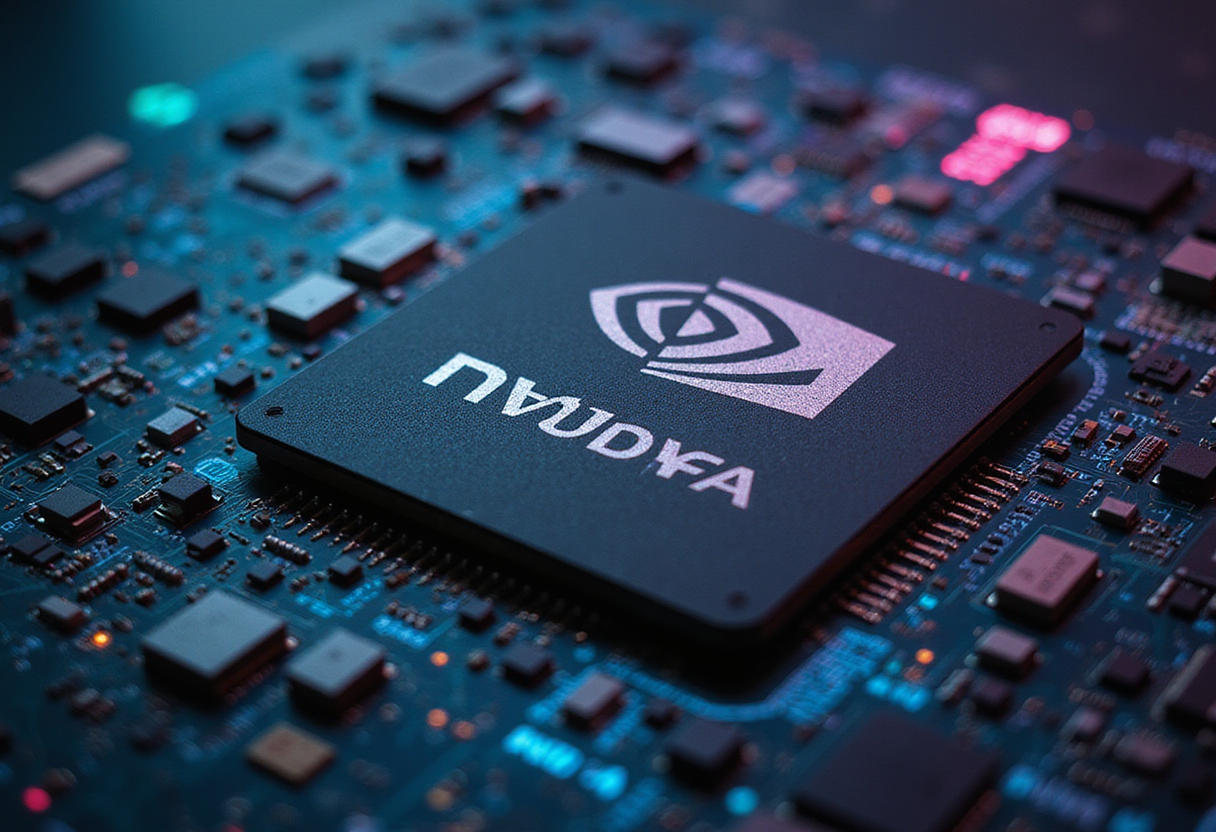
By Elena Vasquez
Nvidia's share of China's AI chip market has fallen, and Huawei is the one gaining ground, according to a Reuters report picked up by Investing.com. For anyone supplying or buying accelerators in China, that's the headline that matters: the market Nvidia once treated as effectively locked up is now genuinely contested.
The report doesn't frame this as a one-off dip. It describes a closing gap — Huawei is steadily narrowing the distance between its own AI silicon and Nvidia's offerings, and Chinese buyers are responding.
What's driving the shift?
Washington's export controls did much of the groundwork here. Since the US began restricting Nvidia's most advanced data-center GPUs from Chinese customers, the company has had to sell cut-down, compliance-friendly variants into that market. Those chips sit well below the performance of the flagship parts Nvidia sells elsewhere, which hands domestic vendors an opening they didn't have before.
Huawei has moved into it. Its Ascend line of AI processors has become the most credible local alternative for Chinese cloud providers and AI labs that can't legally buy Nvidia's best hardware — or that face political pressure to source domestically regardless.
What does it change for practitioners?
For Chinese buyers, a shrinking performance gap means the cost of choosing domestic silicon keeps dropping. Porting workloads to Ascend still takes engineering effort, but the trade-off between compliance, availability, and capability is no longer the walkover it was a couple of years ago.
For Nvidia, China was long a multi-billion-dollar revenue pillar. Every point of share that migrates to Huawei is revenue that doesn't come back easily — procurement relationships in this sector tend to stick once software stacks and supply chains are built around them.
For the wider market, it's a signal worth watching: if Huawei can hold momentum in its home market, it strengthens the case that a second, China-centered AI hardware ecosystem is consolidating rather than fragmenting.
The bottom line
Nvidia still leads — nobody in the report disputes that. But "leads" and "dominates" are different verbs, and this report says the industry has moved from one toward the other in its most important contested market. Export-control policy set the stage; Huawei's execution is now doing the rest.
via Google News: AI chip (Source)
More from Elena Vasquez
Show full bio
Senior reporter covering people, launches and day-to-day practice in hardware layer of artificial intelligence at Die Signal.
294 articles
Same lot · LOT-C1C9
- DSG-152245nmNvidia's China AI-Chip Share Slides as Huawei Closes Gap
- DSG-49517nmHuawei chairman: Ascend has passed Nvidia in China AI chip market
- DSG-83975nmHuawei unveils new chip technologies in escalating AI race with Nvidia
- DSG-68623nmNvidia Loses China AI-Chip Share as Huawei Closes Gap
- DSG-81705nmHuawei says AI chip demand outstrips supply as Nvidia challenge grows