Test report DSG-8109 · Rev D · tested November 16, 2026
AI Datacenter InfrastructureDevice under test
Alphabet’s AI and Defense Buildout Faces a $205 Billion Test
Alphabet combines 103% Cloud revenue growth with reported Pentagon talks and a 7.2% SpaceX stake, while 2026 capital spending of $195 billion-$205 billion has pushed free cash flow negative.
- Read
- 4 min
- Words
- 869
- Node
- 14nm
- Operator
- Amara Osei
Spec summary
- Alphabet plans $195 billion-$205 billion of 2026 capital spending; third-quarter free cash flow was negative $9.1 billion.
- Third-quarter 2026 revenue reached $127.6 billion, up 25%, while Google Cloud revenue rose 103% to $30.7 billion.
- Alphabet holds a 7.2% SpaceX stake; Google reportedly holds Pentagon talks on the $185 billion Golden Dome initiative.
- Alphabet completed its $32 billion Wiz acquisition in March 2026.
- Alphabet received 1,057 U.S. AI patents in 2025; Isomorphic Labs raised $2.1 billion in May and was valued above $40 billion in October talks.
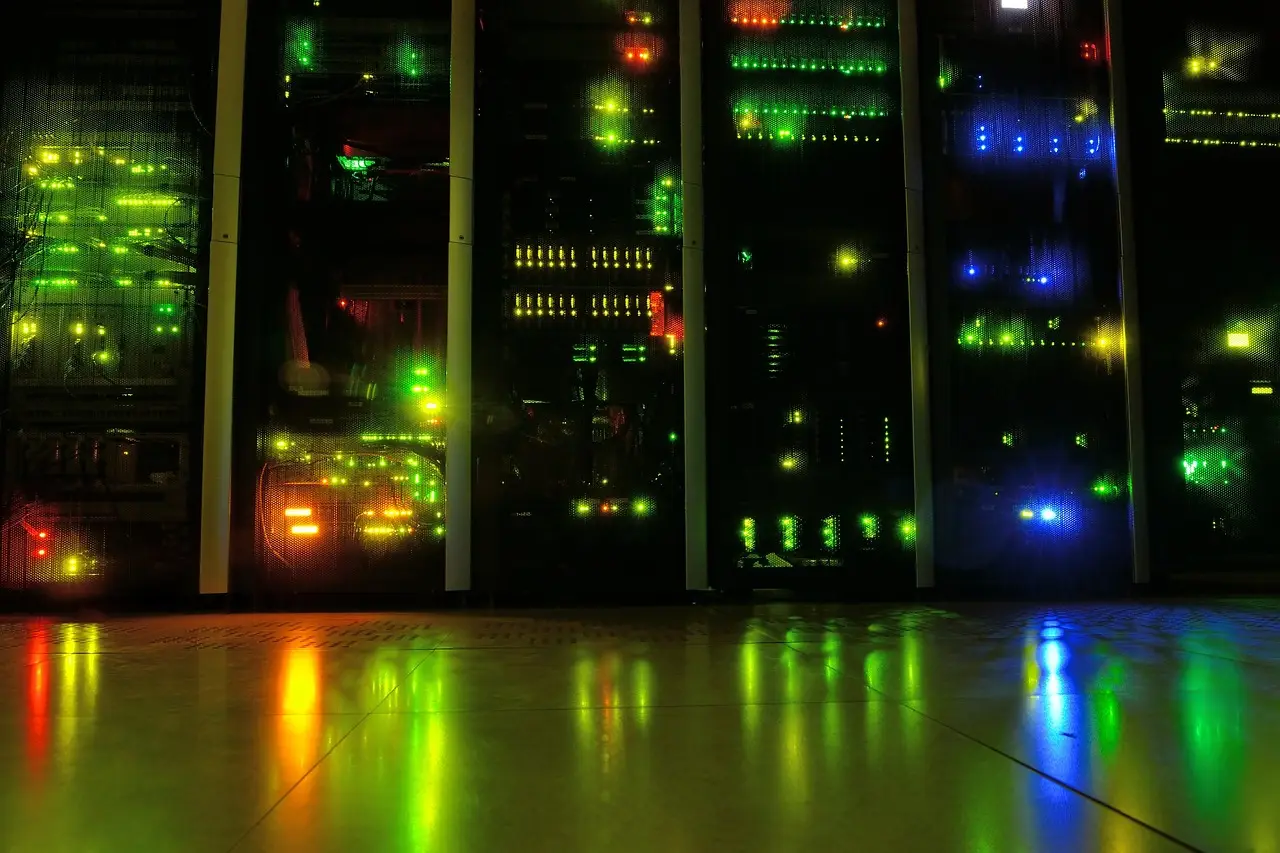
Alphabet projects full-year 2026 capital spending of $195 billion to $205 billion to expand data-center capacity, while third-quarter free cash flow stood at negative $9.1 billion.
What do Alphabet’s 2026 financials show?
Alphabet held $265.1 billion in cash and marketable securities against that spending plan. Enterprise cloud-migration demand supported revenue despite higher infrastructure costs, while Alphabet’s Google Cloud backlog stands at $561 billion.
- Third-quarter consolidated revenue rose 25% year over year to $127.6 billion. Google Services generated $96.3 billion, with core search and advertising up 12%.
- Google Cloud revenue increased 103% to $30.7 billion, and Cloud operating profit reached $11.1 billion.
- Alphabet’s operating margin expanded to 31.8%, quarterly net income reached $26.2 billion, and its revenue run rate reached roughly $500 billion.
The business combines high-margin digital advertising with enterprise cloud infrastructure, but investors still need to determine whether AI infrastructure spending will produce proportional long-term returns.
Takeaway: Alphabet’s revenue base supports the buildout, but the return on AI infrastructure remains the financial test.
What does reported Pentagon outreach change?
Reports cited in the analysis indicate early discussions between Google and the Pentagon about a role in the $185 billion Golden Dome missile-defense initiative. The talks concern protecting command-and-control data pipelines through Google’s networking, cloud storage and cybersecurity infrastructure.
Google spinoff Aalyria Technologies is also involved in consortium discussions focused on resilient military communications. Alphabet’s 7.2% beneficial ownership stake in SpaceX links it to $6.45 billion in related Space Force contracts already secured by SpaceX.
The proposed role would extend a consumer-search company into a national-security supplier, reverse Google’s 2018 withdrawal from Project Maven and place Alphabet inside a sovereign defense program.
Takeaway: The $185 billion initiative remains a reported discussion, not a confirmed Alphabet award.
What hardware and research back the AI strategy?
Google unveiled its eighth-generation TPU 8tx and TPU 8i Max accelerators in November 2026 for agentic-AI workloads. They joined the TPU 8t and TPU 8i chips, succeeding the Ironwood generation and targeting lower inference latency and power consumption.
On the Willow quantum processor, Google Quantum AI researchers reported 99.99% accuracy in magic-state cultivation and a marked reduction in quantum error rates. They also combined AI agents with formal mathematical proofs to reduce quantum-computing resource requirements, with potential applications in materials science and cryptography.
The work targets practical fault-tolerant quantum computing through advances in error reduction and resource efficiency.
Takeaway: Alphabet is pairing commercial accelerators with longer-term fault-tolerance research.
How does the Wiz deal change cybersecurity?
Alphabet completed its $32 billion Wiz acquisition in March 2026. Integration with Google Cloud created one platform for protecting multicloud and AI workloads from code through runtime. Wiz continues securing workloads running on Amazon Web Services, Microsoft Azure and Oracle Cloud while expanding enterprise adoption.
TPU 8tx adds chip-level protection for sensitive enterprise and government data. Mandiant contributes threat intelligence used to detect and neutralize AI-driven cyberattacks. The analysis links these controls to Alphabet’s ability to qualify for contracts such as Golden Dome.
Takeaway: The Wiz integration gives Google Cloud a unified security offering spanning code, runtime, hardware and threat intelligence.
What does Alphabet own in AI patents?
In 2025, Alphabet ranked second globally with 1,057 U.S. AI patents granted. It also holds the largest U.S.-based portfolio of generative AI patent families. The filings cover large language models, custom tensor processors and quantum error correction, with protections intended to prevent direct replication of Alphabet’s hardware and algorithmic work.
Alphabet also open-sources selected foundational research tools while patenting commercial system architectures, a strategy designed to attract developers while retaining long-term monetization rights.
Takeaway: The patent portfolio covers both generative AI software and the custom silicon used to run it.
How is management allocating capital?
CEO Sundar Pichai and Google Cloud chief Thomas Kurian run an execution-focused organization that has shifted sentiment from internal activism toward commercial and national-security engagement. Pichai pairs long-range research programs with operating discipline across the global workforce, while management directs capital toward computing, cloud security and autonomous mobility.
Google DeepMind and Isomorphic Labs retain scientific autonomy. Specialized leaders, including Sir Demis Hassabis, help Alphabet retain AI researchers in a competitive Silicon Valley talent market.
Takeaway: Alphabet gives research units autonomy while central management controls spending and operating targets.
How far has Isomorphic advanced?
London-based Isomorphic Labs, spun out of Google DeepMind, raised a $2.1 billion Series B in May 2026. Funding discussions in October valued the drug-design company above $40 billion. Its IsoDDE engine more than doubles AlphaFold 3’s accuracy on complex protein-ligand interactions.
Eli Lilly, Novartis and Johnson & Johnson work with Isomorphic on small-molecule and biologic discovery. The company expects to file its first Investigational New Drug application and begin human oncology trials by late 2026, with computational design intended to shorten development times and reach previously undruggable targets.
Takeaway: Isomorphic has funding, pharmaceutical partners and a stated 2026 clinical milestone, putting its drug-discovery model closer to clinical validation.
via tradingview.com (Source)
More from Amara Osei
Show full bio
Staff writer covering money, funding and market shifts around hardware layer of artificial intelligence at Die Signal.
698 articles
Same lot · LOT-362C
- DSG-890920nmGoogle Cloud Doubles to $30.71B as TPU Sales Move the Revenue Line
- DSG-85813nmBroadcom vs Alphabet: Who Hits $100 Billion in TPU Revenue First?
- DSG-991914nmUp to $725 Billion in 2026 AI Capex Meets Fast-Obsolescing Hardware
- DSG-231120nmAmazon’s chip savings versus Alphabet’s $9.06 billion cash burn
- DSG-84435nmAlphabet’s 103% Cloud Growth Pressures AMD’s Second Position