Test report DSG-2876 · Rev A · tested November 11, 2026
Supply Chain & PolicyDevice under test
NVIDIA Board Opens Independent Probe Into Huang Foreign-Intelligence Reports
NVIDIA's board has opened an independent probe into reports CEO Jensen Huang was targeted by a foreign-intelligence effort. Shares slipped 3.4% after hours to $180.30. Four claims remain unconfirmed.
- Read
- 4 min
- Words
- 862
- Node
- 65nm
- Operator
- Priya Raman
Spec summary
- NVIDIA's board opened an independent investigation into reports Jensen Huang was targeted by a foreign-intelligence effort; no timeline was published.
- The board said it has "no reason to believe that either national security or NVIDIA secrets were compromised."
- AP reported Huang acknowledged to the board he had been intimate with a business executive; claims of espionage remain unconfirmed.
- NVIDIA shares slipped 3.4% after hours to $180.30 and at one point fell up to 8.8%.
- Huang founded NVIDIA in 1993 and has been CEO since inception; the DOJ separately probes a $12.93B Hugging Face deal.
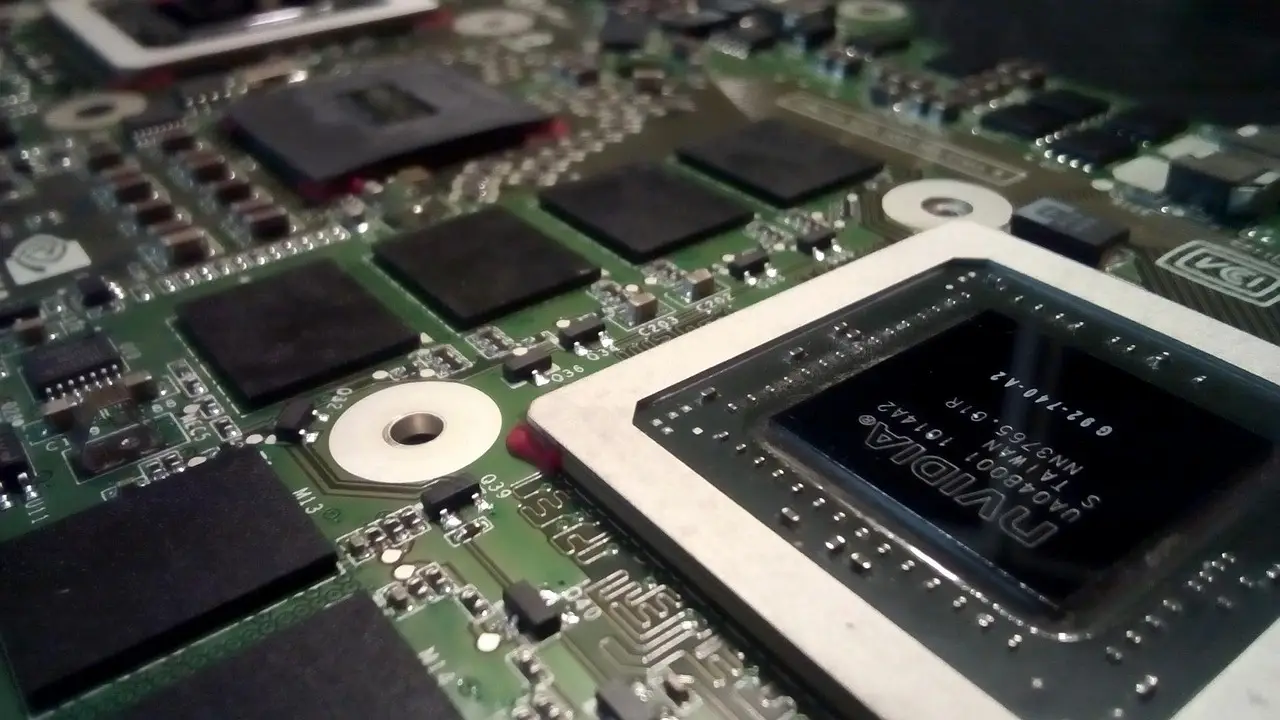
NVIDIA's board has opened an independent investigation into reports that CEO Jensen Huang was the target of a foreign-intelligence effort, and the company says it has "no reason to believe that either national security or NVIDIA secrets were compromised." That sentence is a statement of current belief, not a finding. The inquiry has only started. The board published no timeline.
By Priya Raman
What has the board actually confirmed?
The confirmed record is short. Huang founded NVIDIA in 1993 and has served as president and chief executive since inception, an unusually long founder tenure among large public technology companies. A committee of independent directors will oversee the inquiry, assisted by outside independent counsel, and the board said the investigation will examine all available information. The board also stated that it prioritizes U.S. national and economic security — language boards rarely lead with unless regulators or government customers are watching.
The Associated Press reported that Huang acknowledged to the board he had been intimate with a business executive. That is the entire confirmed personal detail. Nothing in the verified record identifies the executive's employment history or nationality.
The confirmed-versus-unconfirmed ledger, drawn from the board's announcement and AP reporting:
- Confirmed: Huang founded NVIDIA in 1993 and has led it as CEO since inception (company record).
- Confirmed: Independent investigation into reports of a foreign-intelligence effort targeting Huang (board announcement).
- Confirmed: Committee of independent directors oversees it, with outside independent counsel (board announcement).
- Confirmed, as stated view: No reason to believe national security or NVIDIA secrets were compromised (board announcement).
- Confirmed in reporting: Huang acknowledged intimacy with a business executive (Associated Press).
- Unconfirmed: The executive was a Chinese spy or Beijing recruit.
- Unconfirmed: Information passed to the Chinese government.
- Unconfirmed: The relationship shaped NVIDIA's China business or export-policy advocacy.
How did markets and Washington respond?
NVIDIA shares slipped 3.4% after hours to $180.30 when the story broke, and at one point slid up to 8.8% as Silicon Valley tested its reliance on the supplier. President Trump called Huang honorable and said he had not discussed the allegations. Democrats now hold two oversight tracks tied to the turmoil. Separately, the Department of Justice is probing NVIDIA's $12.93 billion Hugging Face deal — a distinct matter, but part of a widening pattern of scrutiny.
Why does a leadership story matter to developers?
The AI boom has turned one company's platform into default infrastructure for training and inference. A typical machine-learning repository contains a Dockerfile built from a vendor base image, GPU-specific wheels, CI jobs on GPU runners, and custom kernels written against CUDA (NVIDIA's parallel-computing programming model). Each is a coupling point invisible to executives until something forces a review. In most organizations, no single team owns accelerator-vendor risk: platform engineering owns runners, ML owns models, procurement owns contracts, security owns questionnaires, and each assumes another holds the dependency map.
Layers differ sharply in exit cost. Container base images diversify with low effort — pin digests, mirror internally, keep a CPU-only variant. Framework wheels and inference serving sit at low-to-medium effort. Custom kernels and reserved cloud GPU contracts rank medium to high. The cheap layers deserve attention first, since pinning images costs almost nothing and protects against registry outages as well as geopolitics.
What alternatives exist, and what do they cost?
Honest diversification options carry trade-offs:
- Stay on NVIDIA, harden the stack: no migration cost; concentration stays. Fits most teams near term.
- Add AMD's ROCm as a second target: a second hardware supplier; porting effort and tooling gaps.
- Use cloud-provider custom accelerators: different supplier; lock-in shifts to the cloud vendor.
- Use hosted model APIs: no hardware to manage; dependency shifts to the API provider.
- Self-host open models on mixed hardware: control and portability; operations burden.
Most alternatives move the concentration rather than remove it. Real diversification means keeping two working paths, which costs testing money even if the second path never serves production.
What should teams do now?
The disciplined response is narrow: count coupling points, pin and mirror what can be pinned, keep one alternate path alive in CI, and write a policy naming specific review triggers — formal regulator inquiry, disclosed toolchain incident, export-rule change, or customer contract clauses — while explicitly listing unverified press reports as non-triggers. An allegation about a person is not evidence about code, drivers, or supply chain.
Three overreactions deserve warning. Ripping out a working stack on an unproven premise trades speculative risk for certain cost. Repeating unconfirmed claims in company channels creates a regrettable paper trail. And dismissing the story entirely leaves an organization unprepared for the next supplier shock. The board's own wording is the model for customer communications: state what you know, state what is under review, decline to speculate.
Watch four signals in coming weeks: whether the committee publishes scope or a timeline, whether NVIDIA changes risk-factor disclosures, whether lawmakers ask formal questions, and whether enterprise customers add vendor-governance clauses to AI procurement. Until the inquiry reports, every dramatic claim beyond the confirmed facts remains exactly that — unconfirmed.
via shattered.io (Source)
More from Priya Raman
Show full bio
Correspondent covering money, funding and market shifts around hardware layer of artificial intelligence at Die Signal.
573 articles
Same lot · LOT-3627
- DSG-80967nmNvidia Board and Huang: Zero Votes, One Probe, One Confirmed Apology
- DSG-359910nmNvidia Probe Wipes Nearly $400 Billion as Board Backs Huang
- DSG-610420nmNvidia probe opens as Huang plans China trip with Trump
- DSG-978745nmNvidia Board Opens Independent Probe Into CEO Jensen Huang
- DSG-50293nmNVIDIA Opens Independent Probe Into Reports CEO Was Spy Target