Test report DSG-5672 · Rev A · tested November 11, 2026
Supply Chain & PolicyDevice under test
Elizabeth Warren Expected to Chair Senate Banking Panel Next Year
Sen. Elizabeth Warren is expected to chair the Senate Banking Committee next year, targeting AI chip exports, prediction markets, credit card rates and Trump administration conflicts.
- Read
- 4 min
- Words
- 787
- Node
- 20nm
- Operator
- Marcus Bennett
Spec summary
- Warren is expected to chair the Senate Banking Committee when the new Congress convenes next year.
- Warren taught at Harvard Law School for more than two decades.
- She was elected to the Senate in 2012 and ran in the 2020 Democratic presidential primary.
- Warren has more than 14 years of political experience.
- The committee's jurisdiction covers monetary policy, banking, housing, cryptocurrency and export controls.
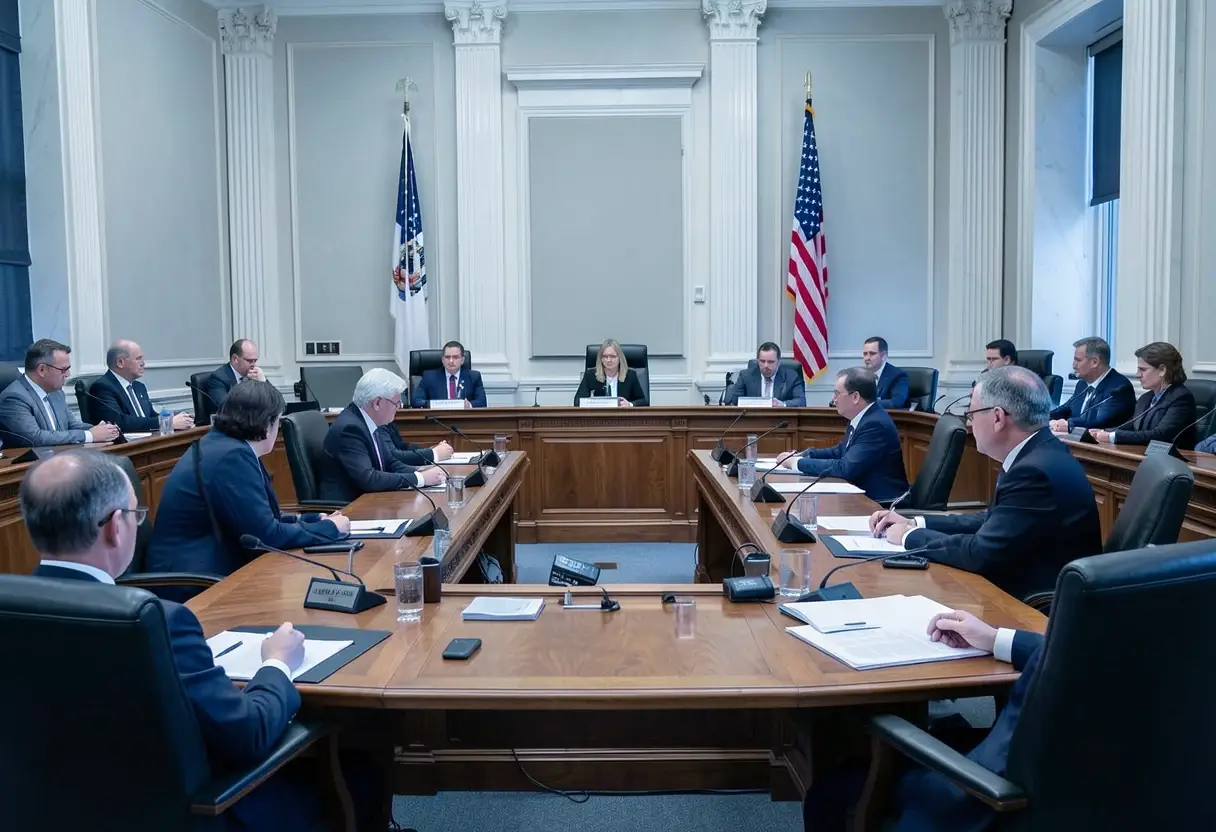
Next year, Sen. Elizabeth Warren is expected to chair the Senate Banking Committee, bringing Wall Street oversight under a long-standing critic of major financial institutions.
CNBC reported the expected assignment on the 9th. The expected role is chair of the Senate Committee on Banking, Housing and Urban Affairs. Warren, a Massachusetts Democrat, currently serves as the committee's ranking member for Democrats. Democrats now hold the Senate majority.
Her agenda covers credit costs, artificial intelligence chip exports, prediction markets and possible conflicts-of-interest investigations.
Policy priorities
Warren plans to seek a cap on credit card interest rates to reduce the cost-of-living burden on households. She also intends to tighten export controls on artificial intelligence chips headed for China. She expects to discuss establishing oversight rules for prediction markets, an industry criticized for gaps in legislation and regulation.
Her stated priorities do not specify a rate ceiling, export threshold or market rule. According to an aide, Warren also plans aggressive congressional oversight and investigations. She has asked technology company chief executives, administration officials and Wall Street executives to preserve relevant documents.
Her program links household borrowing costs with technology export restrictions, prediction-market oversight and investigations, broadening scrutiny across banking, housing, finance and digital assets next year.
Politico said: “Prepare for the most progressive and aggressive Senate Banking chair in decades.” That language points to a likely change in enforcement emphasis, but it does not establish the timing or scale of any investigation.
A record built around oversight
Warren, a former bankruptcy law expert, taught at Harvard Law School for more than two decades. She began her political shift while researching bankruptcy law and later became a progressive economist. Although she once registered as a Republican, she became a critic of Wall Street greed.
After the 2008 financial crisis, she chaired the oversight panel monitoring the Troubled Asset Relief Program. She criticized how Wall Street bailouts were carried out. During the Barack Obama administration, she helped create the Consumer Financial Protection Bureau to protect financial consumers.
Her political work includes a 2012 election to the Senate from Massachusetts and a campaign in the 2020 Democratic presidential primary. Over 14 years in politics, Warren has repeatedly challenged financial firms and senior executives. The Wall Street Journal reported that Warren called the private equity industry “looting.”
She introduced legislation to make executives more likely to face prison, sought to delay SpaceX's listing and raised questions about Anthropic's risk to human existence. Those positions support the expectation that she will tighten oversight of Wall Street while keeping consumer costs in focus during a period of high prices.
The committee's broad remit
The Banking Committee's jurisdiction covers federal monetary policy, finance, banking, housing, cryptocurrency and export controls. That range makes it the standing Senate committee most directly tied to Wall Street. The proposed agenda therefore links financial regulation with technology policy and consumer protection rather than confining oversight to banks.
Prediction markets have already entered the committee's information-gathering process. Warren and Republican Sen. John Curtis of Utah sent letters to Kalshi and Polymarket. The letters request information about safeguards the operators apply to election-related prediction markets.
Together, these powers give the chair a platform to examine bank practices, housing finance, digital assets and technology flows through a single congressional oversight system.
Scrutiny of the Trump administration
Warren also plans to examine possible corruption and conflicts of interest involving the Trump administration. She has accused companies ranging from Capital One, a major U.S. bank holding company, to film studio Skydance of conflicts of interest with the administration.
Her associates say she hopes for bipartisan cooperation with Republicans. Warren previously spoke by phone with President Donald Trump about the possibility of introducing a credit card interest-rate cap. The proposed cap remains part of a political discussion rather than an enacted measure.
What does this change for banks and prediction markets?
Banks, private equity firms and regulated companies should expect document requests and potentially broader investigations, although no specific targets or dates have yet been announced. Technology companies with exposure to China face policy risk if Congress tightens restrictions on AI chip exports.
Prediction-market operators already face an information request from Warren and Curtis, followed by a possible push for federal oversight rules. For consumers, the clearest potential benefit is a lower borrowing cost if a credit card interest-rate cap advances through Congress.
The immediate market change is institutional: a Wall Street critic will chair the main Senate financial oversight forum for finance, housing, cryptocurrency and export controls. None of those outcomes is final until the new Congress convenes, the committee sets its agenda and the Senate advances any legislation.
via en.sedaily.com (Source)
More from Marcus Bennett
Show full bio
News editor covering regulation, policy and their impact on hardware layer of artificial intelligence at Die Signal.
591 articles
Same lot · LOT-3627
- DSG-362828nmNvidia at $168.89: Wall Street Prices In a Governance Risk Discount
- DSG-973828nmThree U.S. Chip Bills Gain Momentum as Speaker Johnson Backs Export Curbs
- DSG-796610nmDemocratic Congress Win Hits Chip Stocks: Real AI Risk or Noise?
- DSG-749714nmNvidia faces Senate scrutiny over China chip export policy
- DSG-529720nmNVIDIA Faces CEO Pressure Ahead of $108 Billion Earnings Call