Test report · tested November 22, 2026
Memory & StorageDevice under test
Moody's Sees Samsung, SK Hynix Riding AI Memory Into Another Strong Year
Moody's 2027 Credit Outlook, reported released November 19, 2026, expects Samsung Electronics and SK Hynix to hold strong earnings on AI demand while APAC ex-China corporates get a stable outlook.
- Read
- 5 min
- Words
- 923
- Segment
- Memory & Storage
- Operator
- Grace Kim
Spec summary
- Moody's report '2027 Credit Outlook for Non-Financial Corporations in the Asia-Pacific Region' reported released November 19, 2026.
- Moody's expects Samsung Electronics and SK Hynix to maintain strong earnings next year on continued AI demand.
- Stable credit outlook applies to APAC non-financial companies excluding Greater China.
- No revenue, shipment or production figures appear in the available reporting.
- Moody's expects both memory makers to expand AI memory production capacity next year.
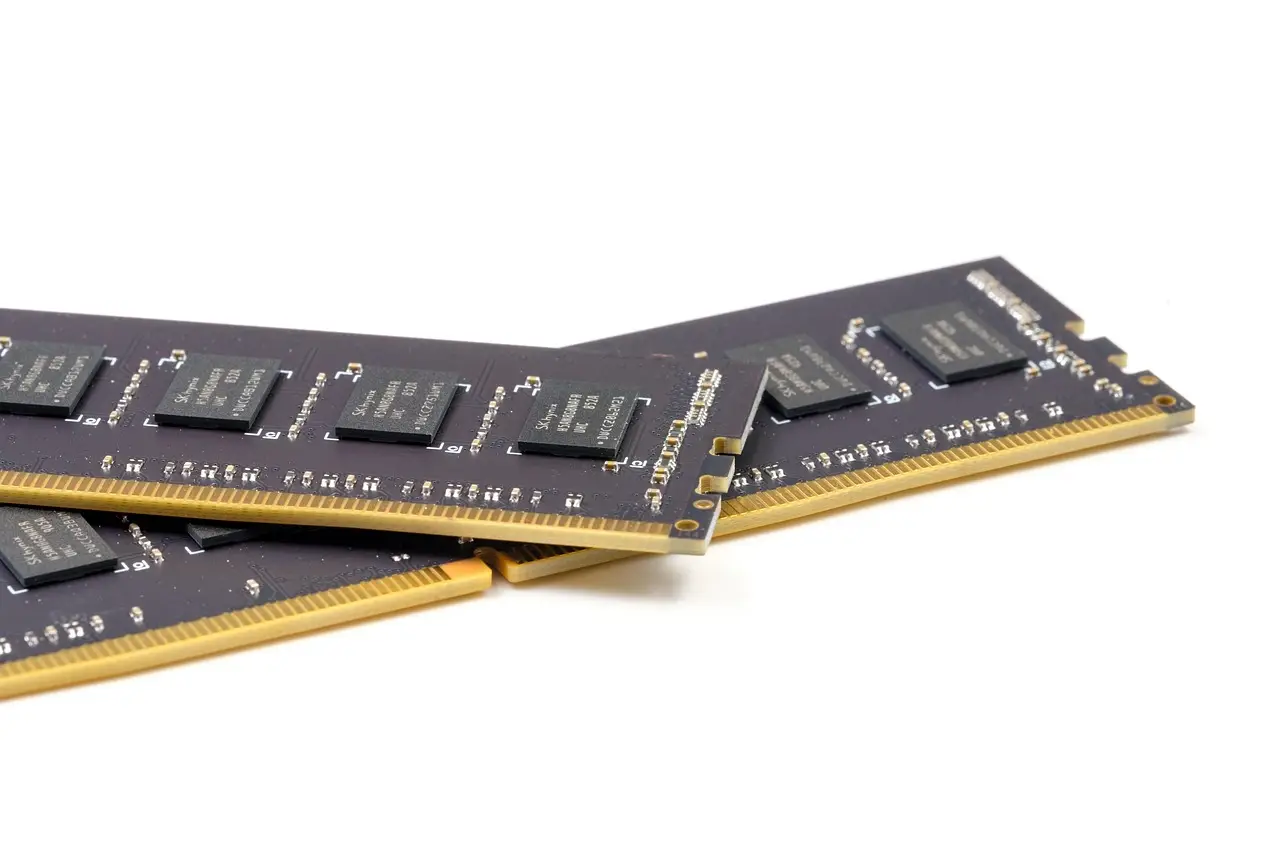
Moody's expects Samsung Electronics and SK Hynix to keep posting strong earnings next year, and it names continued artificial-intelligence demand as the driver. The assessment sits inside the agency's "2027 Credit Outlook for Non-Financial Corporations in the Asia-Pacific Region," reported as released on November 19, 2026. The same report gives Asia-Pacific non-financial companies outside Greater China a "stable" credit outlook for next year.
BigGo Finance and JournalArta both carried the assessment. The public record on it is thin: no Moody's spokesperson is named, no direct quote is confirmed, and no revenue, price, shipment or production figure appears in the available sources.
What does Moody's actually say about the two memory makers?
The core message is short. Moody's expects both companies to maintain strong earnings next year, driven by continued AI demand. It also says Samsung Electronics and SK Hynix led profit growth among Asia-Pacific technology companies this year. Two statements, no numbers attached.
A third point shapes the forward view. Moody's expects both companies to expand production capacity for AI memory products next year and to strengthen their market competitiveness. The agency is not describing two companies coasting on a favorable cycle; it describes two companies adding capacity and defending positions while demand keeps rising.
The fourth point concerns supply. Demand for AI-related products is expected to keep growing, while memory-semiconductor supply expansion is expected to remain limited. That pairing is the credit logic: strong demand against constrained supply tends to protect pricing and margins, and margins feed debt-servicing capacity.
Readers should note the tone. Moody's is a credit rating agency, not an equity research desk. Its language centers on cash flow, leverage and the odds that credit quality holds. Strong earnings here is a credit signal first, a stock signal only by extension.
What does "stable" mean in the 2027 outlook?
In rating-agency usage, a stable outlook signals that credit quality is not expected to move sharply up or down over the medium term — typically a 12-to-18-month horizon. It does not promise good news. It says the balance of risks looks even. For a sector as cyclical as memory, that's a meaningful statement.
The scope matters. The stable outlook applies to Asia-Pacific excluding Greater China, a detail easy to lose in a headline. Rating agencies often treat Greater China as its own analytical block because policy, property-sector stress and trade restrictions create a different risk mix. Samsung Electronics and SK Hynix, both South Korean, fall inside the covered group; mainland Chinese, Hong Kong and Taiwanese issuers do not.
The sources do not say how many companies the outlook covers, which sectors rate stronger or weaker, or whether technology received a different outlook. Anyone who sees a headline claiming Moody's turned "positive" on chips should check the report itself — the reporting supports only the stable regional outlook plus favorable commentary on the two memory makers.
What is confirmed versus unconfirmed?
- Confirmed (reported): both companies keep strong earnings next year, tied to AI demand.
- Confirmed (reported): both led APAC tech profit growth this year.
- Confirmed (reported): both expand AI memory capacity next year.
- Confirmed (reported): stable outlook for APAC non-financials excluding Greater China.
- Unconfirmed: that the outlook covers all Asia-Pacific companies.
- Unconfirmed: that the report names HBM specifically — sources say "AI memory products" only.
- Unconfirmed: any numerical forecast for earnings, shipments or share.
- Not available: a named Moody's spokesperson or direct quote.
The HBM point deserves emphasis. "AI memory products" may well mean high-bandwidth memory (the stacked memory used next to AI accelerators) in practice, but the sources never quote Moody's using that term.
Why the profit leadership fits the industry's mechanics
The sources give no profit figures behind the ranking claim. The mechanics, though, are familiar. Memory is a high-operating-leverage business: fabrication costs are mostly fixed, so when prices and volumes rise together, a large share of extra revenue falls to profit. A year in which AI customers pull hard on supply can lift earnings far faster than sales.
What does this change for buyers and investors? For component buyers, the supply constraint matters more than the credit label — if supply expansion stays limited while AI demand grows, memory cost pressure has no obvious near-term release valve. For investors, the story confirms a favorable consensus without new numbers. For credit watchers, the stable ex-China outlook frames the baseline any later change will be judged against.
The companies differ structurally. SK Hynix is primarily a memory company, so its fortunes track memory pricing closely. Samsung Electronics is diversified, with phones, displays and consumer devices alongside memory. Moody's, as reported, treats them together, with no head-to-head ranking or market-share split.
Expansion carries credit implications that cut both ways. More capacity raises capital spending and can lift debt, but pairing expansion with strong earnings implies the companies can fund growth from operating cash flow. That reading is an inference, not a reported statement.
Memory's boom-and-bust reputation frames why a rating agency's comment on durable memory earnings draws attention. The AI argument is that this cycle differs: demand comes from a few very large buyers with long-term build plans, and advanced AI memory is harder to manufacture than commodity parts. Moody's limited-supply expectation fits that argument. It does not prove the cycle is dead. For next year, the balance still favors producers.
via shattered.io (Source)
More from Grace Kim
Show full bio
Market editor covering regulation, policy and their impact on hardware layer of artificial intelligence at Die Signal.
749 articles
Same lot
- Samsung, SK Hynix Price Targets Cut Up to 43% on 2028 Memory Glut
- Samsung 10 Signed, SK hynix 14: Memory Deals Hold on Peak Fears
- Samsung, SK hynix Set for Record Q3 on AI Memory Shortage
- Samsung Posts Record $80 Billion Profit as AI Memory Demand Beats Estimates
- Micron Closes Gap on SK Hynix in Global DRAM Rankings