Test report DSG-4056 · Rev A · tested October 12, 2026
Processors & AcceleratorsDevice under test
Microsoft Unveils Maia 300 AI Chip to Reduce Reliance on Nvidia
Microsoft has unveiled the Maia 300, an in-house AI accelerator designed to cut the company's dependence on Nvidia GPUs for AI compute workloads.
- Read
- 2 min
- Words
- 386
- Node
- 10nm
- Operator
- Amara Osei
Spec summary
- Microsoft has unveiled the Maia 300, an in-house designed AI chip.
- The chip is intended to reduce Microsoft's reliance on Nvidia GPUs.
- Microsoft joins Google, Amazon and Meta in designing its own AI accelerators.
- No specifications, pricing or deployment dates have been disclosed.
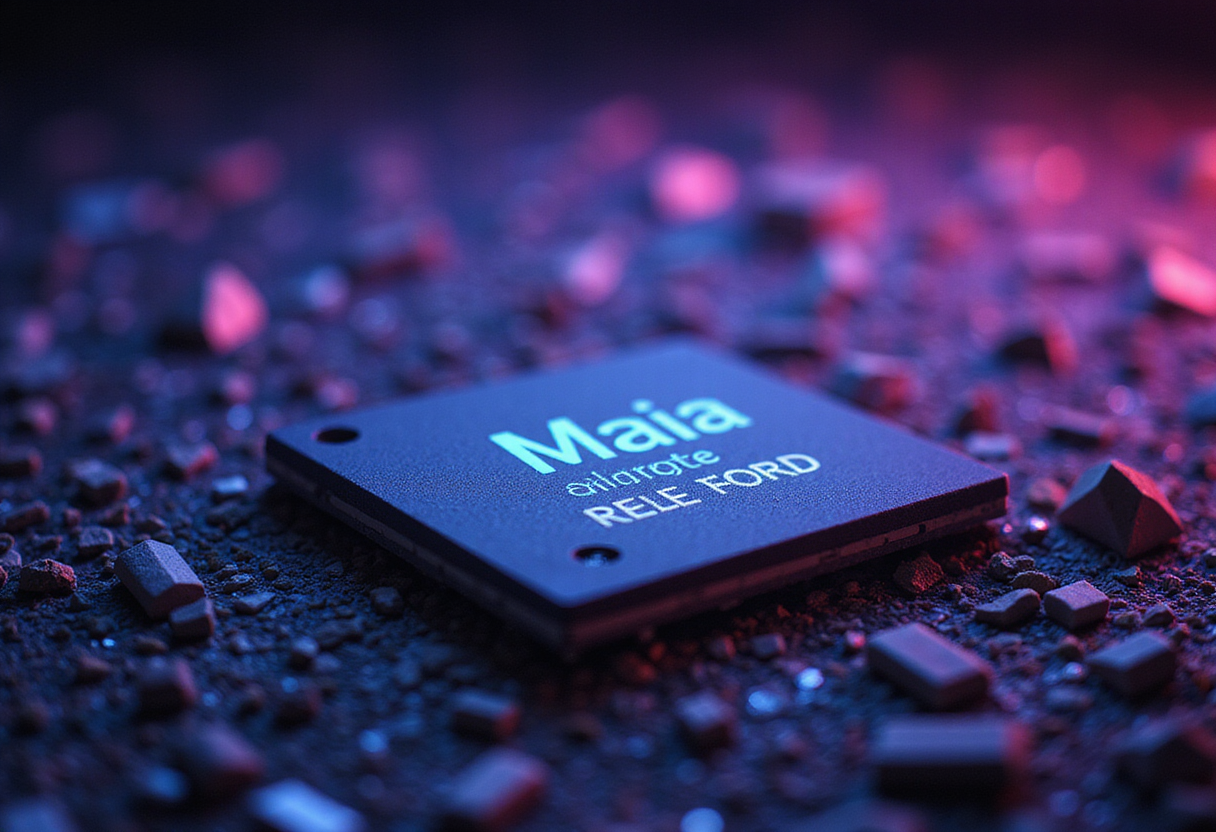
Microsoft has unveiled the Maia 300, an AI chip the company designed to reduce its reliance on Nvidia GPUs for artificial intelligence workloads. The announcement marks the latest step in Microsoft's in-house silicon program and directly targets the supply and cost constraints that have tied large AI operators to a single dominant vendor.
The Maia 300 follows Microsoft's earlier entries in the Maia accelerator line. With this release, Microsoft joins the group of hyperscalers — including Google, Amazon and Meta — that now design their own AI chips rather than buy processors exclusively from Nvidia.
What does the Maia 300 change?
The chip gives Microsoft a second sourcing option for the compute capacity behind its AI services. For Microsoft, in-house silicon means it can allocate silicon to its own workloads on its own schedule. For Nvidia, each hyperscaler that brings a custom accelerator to production narrows the addressable market for its data-center GPUs.
The competitive logic is straightforward:
- Microsoft runs large-scale AI services that require sustained GPU supply.
- Nvidia's GPUs have carried the bulk of that demand.
- A proprietary chip line reduces Microsoft's exposure to vendor pricing and allocation.
Microsoft has not yet published detailed specifications, pricing or deployment volumes for the Maia 300 in the announcement materials. The company also has not stated which specific AI workloads the chip will serve first.
Why does in-house silicon matter now?
Demand for AI accelerators has outpaced supply since the generative AI buildout began, and Nvidia has captured the largest share of that spending. Chip designers that operate their own data centers have responded by building alternatives: Google with its Tensor Processing Units, Amazon with Trainium and Inferentia, and now Microsoft with the Maia line.
The Maia 300 extends that pattern. Each iteration signals a longer-term commitment to internal chip design rather than a one-off experiment.
What comes next?
Microsoft will need to demonstrate that the Maia 300 can run production AI workloads at scale, and that it can do so at a cost and performance level competitive with Nvidia's current GPU generation. The company has not announced a deployment date for the chip.
For the AI hardware market, the takeaway is simple: Microsoft now has its own chip to lean on, and it intends to use it.
via Google News: AI chip (Source)
More from Amara Osei
Show full bio
Staff writer covering money, funding and market shifts around hardware layer of artificial intelligence at Die Signal.
285 articles
Same lot · LOT-C1C8
- DSG-187665nmMicrosoft Unveils Maia 300 to Cut AI Chip Dependence on Nvidia and AMD
- DSG-18307nmMicrosoft Bets on Maia 300 to Cut Its NVIDIA Dependence
- DSG-61057nmMicrosoft Targets Nvidia Reliance Cuts With Maia 300 AI Chip
- DSG-423965nmMicrosoft unveils Maia 300 AI chip, targets Nvidia dependency
- DSG-760828nmMicrosoft Unveils Maia 300 AI Chip to Cut Nvidia Reliance and Costs