Test report DSG-5173 · Rev B · tested October 13, 2026
Processors & AcceleratorsDevice under test
Microsoft Unveils Maia 300, Its Next-Gen Custom AI Chip
Microsoft has revealed the Maia 300, a next-generation custom AI chip intended for widespread deployment. No specifications, dates or volumes were disclosed at announcement time.
- Read
- 3 min
- Words
- 503
- Node
- 10nm
- Operator
- Priya Raman
Spec summary
- Microsoft revealed the Maia 300 as its next-generation custom AI chip.
- The company targets widespread deployment of the chip across its infrastructure.
- The Maia 300 succeeds the Maia 100, announced in November 2023.
- No performance figures, production dates or volume targets were disclosed.
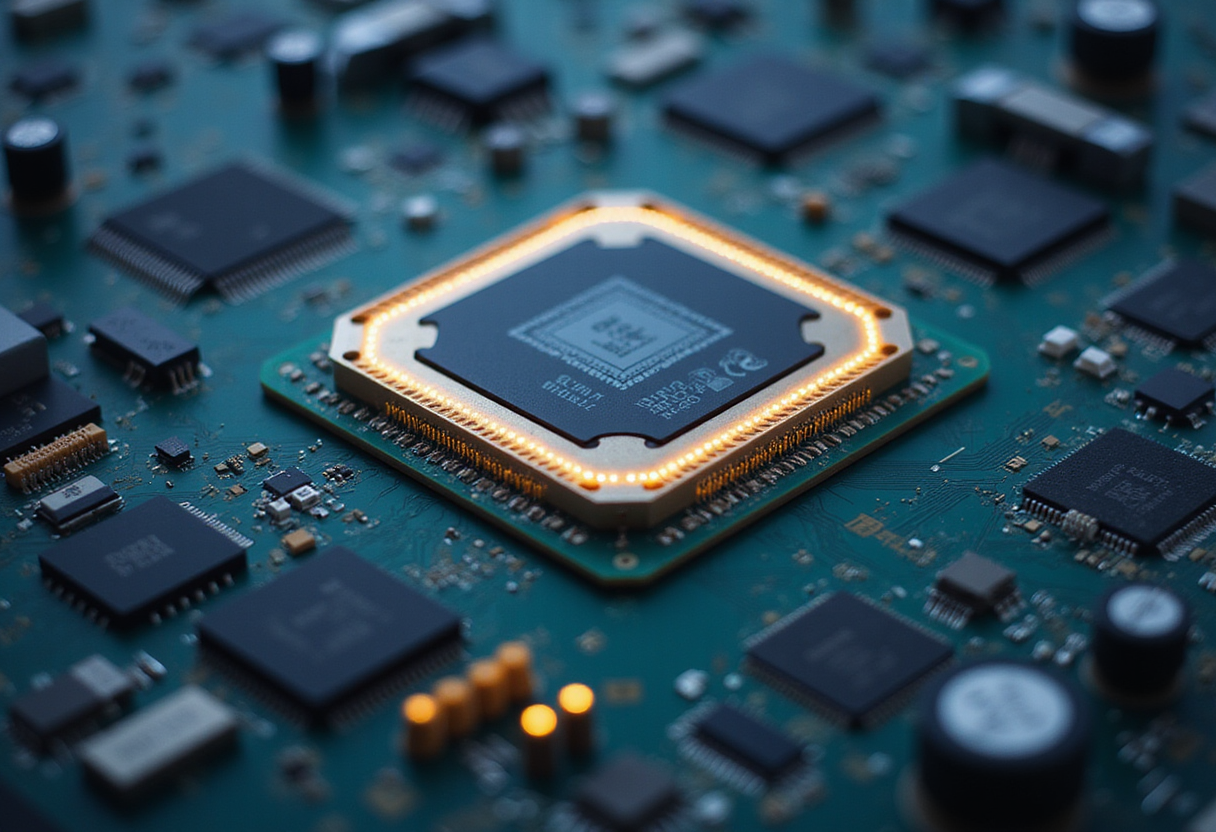
Microsoft has revealed the Maia 300, its next-generation custom AI accelerator, and framed the part for widespread deployment across its datacenter estate. The company disclosed the chip's existence and name but, at announcement time, published no throughput figures, memory capacity, or power envelope. That absence defines the story as much as the reveal itself.
By Priya Raman
The Maia 300 follows the original Maia 100, the in-house AI processor Microsoft announced in November 2023 for its Azure infrastructure. Microsoft designs these chips itself rather than buying accelerators solely from external suppliers. "Widespread deployment" is the stated ambition. No volume targets, no dates, and no customer commitments accompanied the phrase.
What is actually confirmed?
The verifiable facts are spare:
- The chip exists and carries the name Maia 300.
- Microsoft positions it as a next-generation part in its custom silicon line.
- The company says it is intended for widespread deployment.
- It succeeds the Maia 100, announced November 2023.
Everything else, including performance claims, remains undisclosed. A reveal without specifications is a statement of intent, not a product launch.
Why does custom silicon matter to Microsoft?
Microsoft, like Google and Amazon, wants to reduce dependence on third-party AI chip vendors by designing its own accelerators. Google builds its TPU line; Amazon produces its Trainium and Inferentia parts; Microsoft now has Maia. The comparison is exact: three hyperscalers, three in-house accelerator programs, one shared motive, which is margin and supply control.
The commercial logic is straightforward. AI workloads demand large fleets of accelerators. Owning the design gives a cloud operator leverage over price, scheduling, and feature priorities. It also carries risk. A underperforming or late chip strand capital in a market where external suppliers iterate annually.
What is not said?
Microsoft did not state when the Maia 300 enters production. It did not name a manufacturing partner, a process node, or a launch customer. It offered no benchmark against the Maia 100 or against competing accelerators. The word "widespread" appears without a single number behind it.
Every promise in this announcement carries a caveat: widespread deployment depends on yields Microsoft has not reported, at a cost it has not disclosed, on a timeline it has not committed to. Until the company publishes specifications, buyers and rivals should treat the Maia 300 as roadmap, not hardware.
Who should watch this?
Three groups have direct stakes. Azure customers may eventually see custom-silicon-backed AI instances at different price points than external-accelerator tiers. Investors tracking capital expenditure will want clarity on how much of Microsoft's buildout shifts to in-house parts. Competitors in the accelerator market gain a data point: the largest cloud operators continue pulling silicon design in-house.
The Maia 300 is the second act in Microsoft's custom AI chip program. The first act took two years to move from announcement to a successor reveal. How long the second act runs before spec-backed hardware appears is, for now, an open question, and Microsoft has not answered it.
via Google News: AI chip (Source)
More from Priya Raman
Show full bio
Correspondent covering money, funding and market shifts around hardware layer of artificial intelligence at Die Signal.
302 articles
Same lot · LOT-C1C9
- DSG-965628nmMicrosoft Unveils Maia 300 AI Chip, Expanded Rollout From 2027
- DSG-182914nmMicrosoft Announces Azure Maia 300, Discloses Almost Nothing
- DSG-340828nmMicrosoft Announces Maia 300, Its Next-Generation Custom AI Chip
- DSG-55767nmMicrosoft Targets 2027 Launch for Maia 300 AI Chip
- DSG-760828nmMicrosoft Unveils Maia 300 AI Chip to Cut Nvidia Reliance and Costs