Test report · tested November 22, 2026
Foundries & ManufacturingDevice under test
Microsoft Becomes First Customer for Intel EMIB Packaging
Microsoft becomes the first company to adopt Intel's EMIB 2.5D packaging for in-house silicon, in a multi-year deal that also secures long-term Xeon supply for Azure.
- Read
- 3 min
- Words
- 550
- Segment
- Foundries & Manufacturing
- Operator
- Amara Osei
Spec summary
- Microsoft is the first company to use Intel's EMIB packaging for its in-house silicon under a multi-year agreement.
- The deal confirms long-term Intel Xeon supply, including next-generation server CPUs.
- In February 2024, Intel announced a $15 billion deal to produce Microsoft-designed chips on its 18A process.
- The companies will collaborate on Intel Xeon with CXL for memory efficiency across Azure.
- Neither company disclosed target hardware, volumes, or deployment timelines.
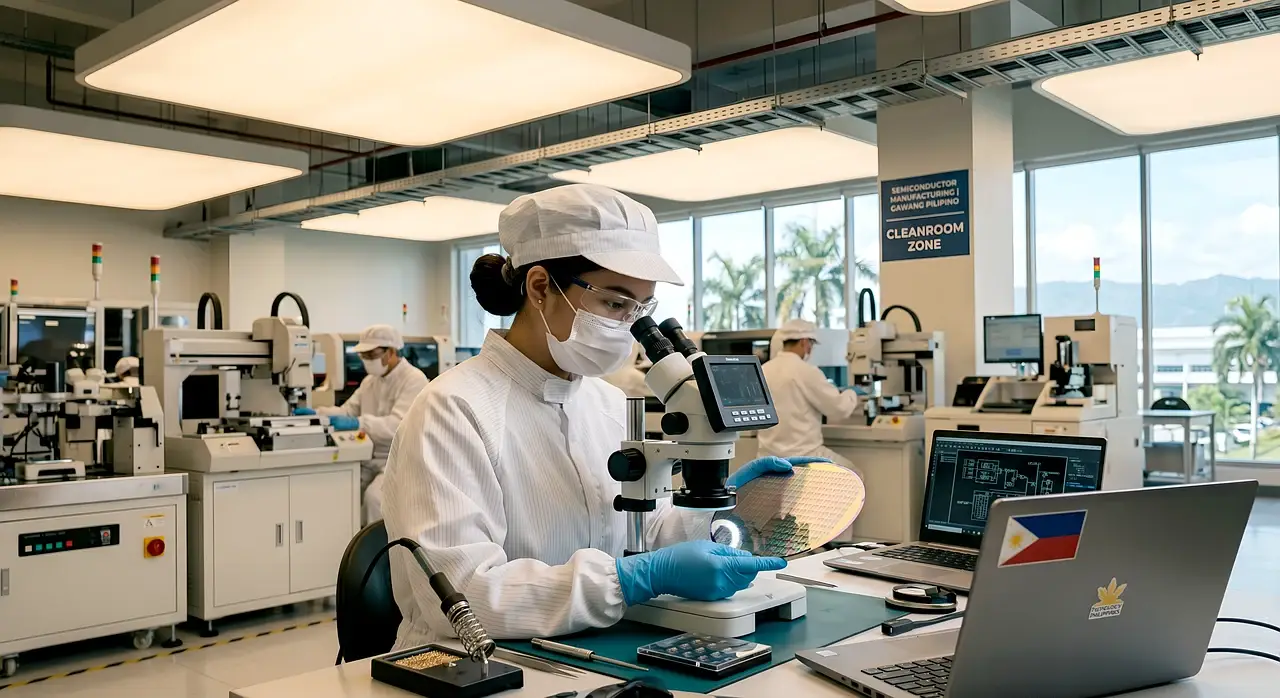
Microsoft has signed a multi-year agreement making it the first company to use Intel's EMIB advanced packaging technology for its in-house silicon. The deal, announced in statements from both companies, also confirms long-term supply of Intel Xeon processors, including next-generation server CPUs, for Azure hardware.
Neither company disclosed which specific hardware will use the packaging, nor manufacturing or deployment timelines.
What is EMIB and why does it matter?
EMIB — Embedded Multi-die Interconnect Bridge — is a 2.5D semiconductor packaging technology developed by Intel. It connects multiple chiplets inside a single package using silicon bridges embedded in the substrate.
The approach lets manufacturers combine dies built on different process nodes into one package, a method that has become central to high-performance computing and AI accelerators, where large monolithic dies are costly and yield-constrained.
Microsoft said the agreement "expands collaboration across the Azure roadmap and Intel-based Azure hardware systems."
How deep does the partnership go?
The EMIB deal is not the first large commitment between the two companies. In February 2024, Intel announced a $15 billion agreement under which it will produce Microsoft-designed custom chips on its 18A process node.
The new agreement adds a second pillar: collaboration on Intel Xeon with Compute Express Link (CXL), aimed at greater memory efficiency and system-level innovation across Azure.
The components of the partnership now span:
- Advanced packaging via EMIB
- Custom compute on Intel 18A
- Long-term Xeon processor supply
- CXL-based memory efficiency work
Saurabh Dighe, Corporate Vice President for Azure system and architecture at Microsoft, tied the pieces together: "Our longstanding collaboration with Intel brings together advanced packaging, custom compute, memory and security capabilities to support Azure compute and continued innovation across Azure."
"Together, we are connecting silicon and systems engineering to move the industry forward and meet the growing demand for Cloud + AI computing for our customers," Dighe said.
What does Intel Foundry gain?
For Intel Foundry, a first external EMIB customer at Microsoft's scale is a reference point in its effort to win hyperscaler business against packaging rivals such as TSMC's CoWoS.
Naga Chandrasekaran, EVP, chief technology and operations officer and general manager of Intel Foundry, framed the deal in terms of scale: "Through use of our advanced packaging capabilities with EMIB to scale future generations of Azure infrastructure, Intel and Microsoft can combine the flexibility of heterogeneous integration with the manufacturing scale required for the AI era—giving customers new levels of performance and economics when interacting with Azure."
The statement positions packaging capacity, not just transistor technology, as a competitive axis in the AI hardware market, where interconnect bandwidth between chiplets directly limits accelerator performance.
What remains unknown?
The gaps are concrete:
- No product names for the silicon Microsoft will package with EMIB
- No volumes disclosed
- No manufacturing start dates
- No deployment timelines for Azure systems
What is on record is the structure: EMIB packaging for Microsoft-designed silicon, guaranteed Xeon supply including next-generation server CPUs, and joint CXL work — layered on top of the $15 billion, 18A-based custom chip agreement from February 2024.
For Azure, the deal secures packaging capacity for future AI infrastructure. For Intel Foundry, it delivers a marquee customer for a technology it has so far used mainly in-house.
via datacenterdynamics.com (Source)
More from Amara Osei
Show full bio
Staff writer covering money, funding and market shifts around hardware layer of artificial intelligence at Die Signal.
777 articles
Same lot
- Microsoft Picks Intel EMIB for Azure Silicon, Names No Chip or Date
- Intel Says EMIB Wafer Utilization Tops 90% as AI Chips Push Bridge Counts Past 70
- Intel Lands First External 18A-P Foundry Customer as Stock Sits 60% Off Highs
- Applied Materials, Intel Widen AI Chip Development Partnership
- SK Hynix Details Advanced Packaging for Next-Gen HBM