Test report · tested November 23, 2026
Foundries & ManufacturingDevice under test
KERI Licenses Customized Pulse Power Tech to Ascendia
KERI has transferred customized pulse power technology, developed to cut heat and power loss in nanometer-scale chip processing, to Pyeongtaek-based Ascendia in a royalty-bearing licensing deal.
- Read
- 3 min
- Words
- 546
- Segment
- Foundries & Manufacturing
- Operator
- Elena Vasquez
Spec summary
- KERI announced on the 22nd the transfer of customized pulse power technology to Ascendia under an upfront-plus-royalty licensing deal.
- The technology, led by senior researcher Jang Seong-rok, reduces power loss and heat by sloping the voltage waveform and tuning its gradient.
- Foreign companies effectively monopolize the customized pulse power market, leaving Korean industry dependent on imports.
- Ascendia, based in Pyeongtaek, plans to supply test products first to universities and research institutes before scaling to mass-production and overseas markets.
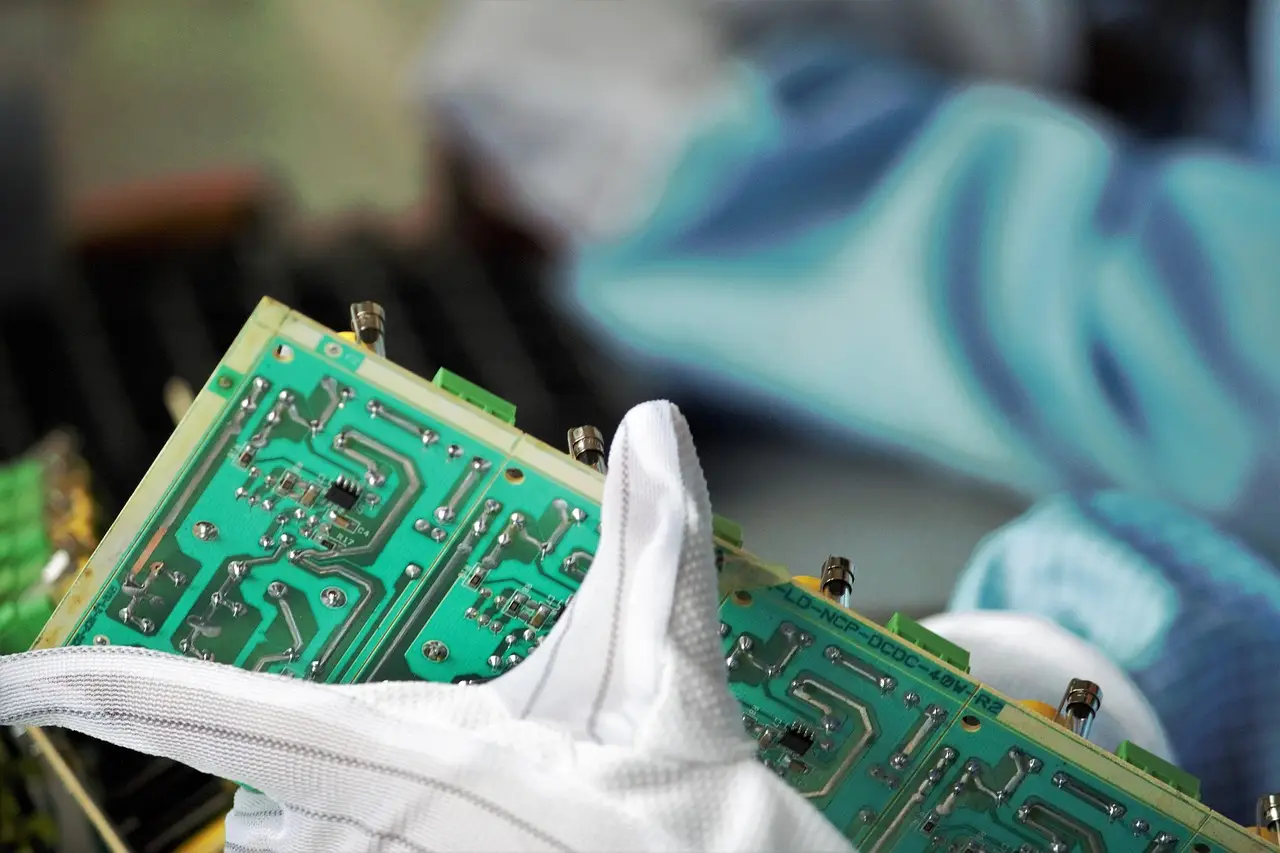
South Korea's Korea Electrotechnology Research Institute (KERI) said on the 22nd that it has transferred customized pulse power technology for next-generation semiconductor processes to Ascendia, a semiconductor equipment components maker headquartered in Pyeongtaek, Gyeonggi Province. The licensing terms pair an upfront fee with running royalties tied to future product sales. Both parties named no figures.
The technology came out of a team led by Jang Seong-rok, a senior researcher at KERI's Electric Physics Research Center in Changwon. For practitioners, the target is specific: a next-generation power supply market that foreign companies effectively monopolize, leaving Korean chipmakers dependent on imported equipment.
What does pulse power actually change on the line?
In chip manufacturing, power supplies feed the plasma processes that keep fabs running. Ions in a plasma state etch wafer surfaces, strip contaminants and deposit thin films. The energy with which those ions strike the surface depends directly on the strength and waveform of the electricity delivered, so precision control of the supply is not optional — it defines the process window.
As chip structures shrink to the nanometer scale, some steps outgrow radio frequency (RF) power alone, the mainstream source. Pulse power fills that gap. It charges energy over a longer period at low power, then discharges it instantly at high power. Adjusting that force lets a substrate be etched as narrowly and deeply as the process requires.
The catch has always been efficiency. Existing pulse power supplies suffer heavy power loss and heat generation as they rapidly and repeatedly discharge high voltage — a real constraint on tools expected to run around the clock.
How did KERI solve the heat problem?
Jang's team attacked the loss by sloping the voltage waveform and tuning that gradient to suit each process. Sloping the waveform cut both power loss and heat. With heat under control, the device itself could shrink — an advantage for production sites where floor space is scarce and every cubic meter of tool footprint counts.
KERI had already completed verification in an actual process chamber before handing the technology over, so Ascendia isn't starting from a bench prototype.
What happens next for Ascendia?
Ascendia develops and produces RF generators and RF matchers in-house. The plan is to fold KERI's core technology into that existing RF capability and begin developing commercial products.
The rollout comes in stages:
- First, supply test products to universities and research institutes.
- Then, work with domestic equipment makers to raise reliability to mass-production-line grade.
- Finally, expand supply to overseas markets.
That middle step matters most. Research-grade units don't survive fab duty without field hardening, and the domestic equipment makers' involvement is where reliability gets proven.
"Customized pulse power is a game changer that will break through the limits of ultra-fine semiconductor processing and a core technology that will break the foreign monopoly," Jang said. "We will become one team with Ascendia and achieve commercialization."
For Korean fabs, a domestic supplier in customized pulse power would mean one fewer imported component in a critical process step. For foreign incumbents, it signals a new competitor entering a market they've held unchallenged. The timeline to watch: when Ascendia's test units reach research institutes, and how quickly reliability climbs to production grade.
via en.sedaily.com (Source)
More from Elena Vasquez
Show full bio
Senior reporter covering people, launches and day-to-day practice in hardware layer of artificial intelligence at Die Signal.
757 articles