Test report DSG-3862 · Rev A · tested November 13, 2026
Supply Chain & PolicyDevice under test
KEPCO's Q3 Operating Profit Collapses 71% as Fuel Costs Bite
KEPCO's Q3 operating profit plunged 71% to 1.64 trillion won as fuel costs climbed, with a 2.8 trillion won tariff cut and 72.8 trillion won grid bill still ahead.
- Read
- 3 min
- Words
- 693
- Node
- 45nm
- Operator
- Elena Vasquez
Spec summary
- KEPCO Q3 operating profit fell 71% year-on-year to 1.64 trillion won ($1.1 billion)
- Nine-month thermal coal cost rose 24.5% to $130.7 a ton
- Regional industrial tariff expected to cut annual revenue by 2.8 trillion won from late this year
- Grid investment through 2038 totals 72.8 trillion won per the National Economic Advisory Council
- Consolidated debt of 209.6 trillion won generates 11.7 billion won in daily interest payments
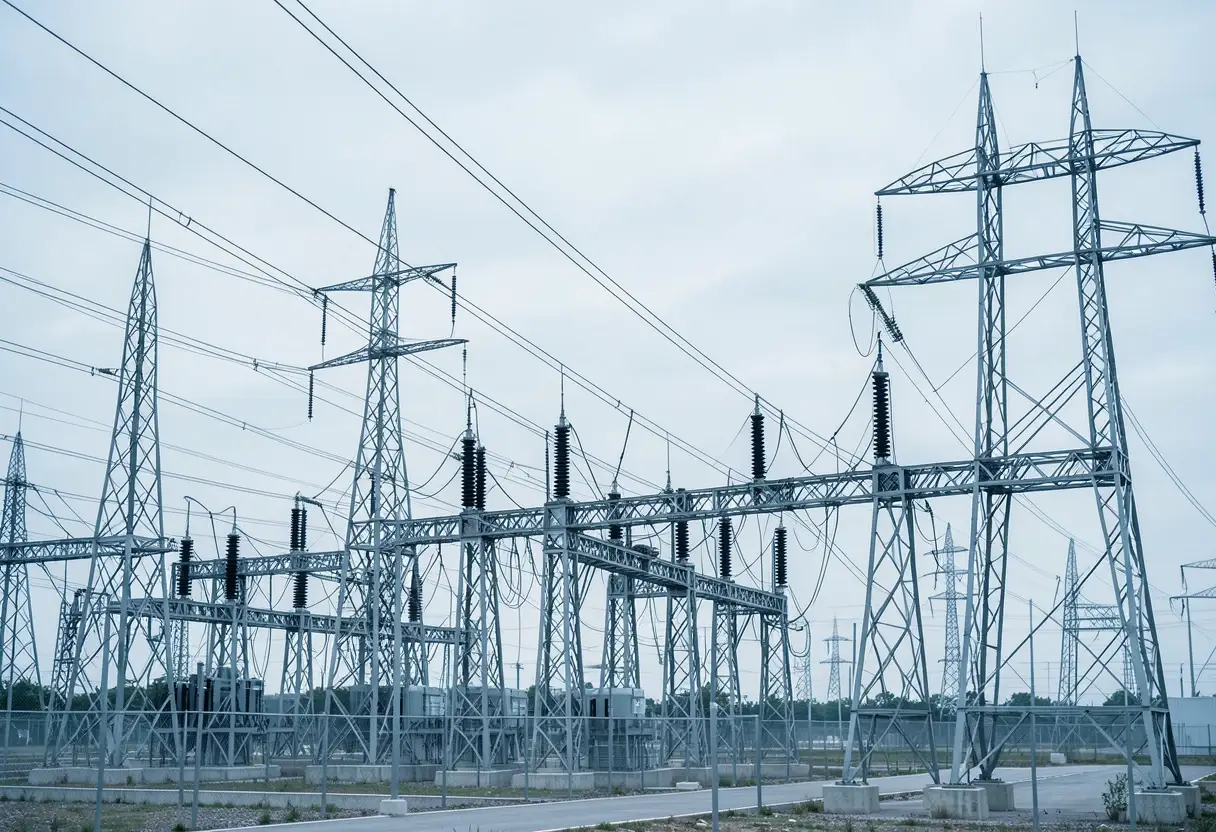
KEPCO's third-quarter operating profit fell 71% year-on-year to 1.64 trillion won ($1.1 billion) — just 29.1% of the 5.65 trillion won it earned in the same quarter last year. The Korean utility, listed as 015760, released its consolidated results on the 12th, and the numbers point to a utility squeezed from both directions: input costs climbing, selling prices about to fall.
The trigger was the war between the United States and Iran, which pushed up liquefied natural gas and coal prices. The system marginal price also stayed above last year's level through the peak of summer. Revenue barely moved — down 2.6%, to 26.85 trillion won from 27.57 trillion won — but operating expenses, led by fuel procurement, rose sharply.
What do the nine-month numbers show?
For the first nine months of the year, KEPCO posted revenue of 73.17 trillion won, down 0.8%, while operating profit dropped 43.2% to 6.56 trillion won from 11.54 trillion won a year earlier. In plain terms: the utility earned less than 6 cents of operating profit per dollar of revenue it did last year on a falling sales base.
The fuel bill tells most of the story:
- Thermal coal for power generation cost $130.7 a ton in the first nine months, up 24.5% from $105 a ton a year earlier.
- LNG purchased for generation by KEPCO's subsidiaries rose 2.7% year-on-year.
- Payments for renewable energy certificates climbed to 3.7 trillion won from 2.9 trillion won — an extra 800 billion won flowing to renewable power operators.
What's coming next in costs?
The bigger problem isn't this quarter's fuel bill. It's the spending ahead. The regional industrial electricity tariff the government is pursuing is expected to cut KEPCO's annual revenue by 2.8 trillion won once it takes effect late this year. That's a direct hit to average selling prices, landing just as grid investment costs mount.
And the grid bill is enormous. According to the National Economic Advisory Council, transmission and substation investment needed through 2038 to deliver on the megaproject totals 72.8 trillion won. Restructuring the power market and building out grid capacity for the artificial intelligence era both require substantial additional spending on top.
Some in the industry argue the answer is bringing tariffs in line with actual costs. "Industrial electricity rates have risen sharply over the past few years, while increases in household rates have been limited," an industry official said. "Infrastructure costs have the character of a public good, so they need to be reflected in the rate structure."
How bad is the debt picture?
KEPCO's consolidated debt stood at 209.6 trillion won at the end of the third quarter. That generates interest payments of 11.7 billion won a day — every day. Roughly 34.1 trillion won of the operating losses accumulated during the war in Ukraine also remains on its books, an unresolved legacy that continues to weigh on the balance sheet.
What about Korea Gas Corporation?
The gas side of the Korean energy system shows a split picture. As global LNG prices rose, the unrecovered costs that have long weighed on Korea Gas Corporation (036460) grew by about 510.3 billion won, reaching 14.65 trillion won at the end of the third quarter, up from 14.13 trillion won at the end of last year.
Yet KOGAS still managed to grow. Improved conditions in its overseas LNG development business lifted its third-quarter operating profit 51.5% from a year earlier. The cost overhang grows, but so does the earnings engine — a contrast with KEPCO, where rising costs arrived without an offsetting revenue source.
For practitioners, the read is straightforward: KEPCO's quarter was bad, but the structural picture — a 2.8 trillion won tariff cut incoming, 72.8 trillion won of grid investment due through 2038, and 11.7 billion won in daily interest — is what will shape the utility's finances, and likely the policy debate over electricity rates, through the end of the year and beyond.
via en.sedaily.com (Source)
More from Elena Vasquez
Show full bio
Senior reporter covering people, launches and day-to-day practice in hardware layer of artificial intelligence at Die Signal.
589 articles
Same lot · LOT-3629
- DSG-142428nmKEPCO Posts 99 Billion Won Q3 Loss as Grid Bill Looms
- DSG-760245nmJSTEM Nine-Month Revenue 71.1 Billion Won, Operating Margin 28.7%
- DSG-600620nmDB HiTek Q3 operating profit rises 7% on power-chip demand
- DSG-108020nmSouth Korea Q3 GDP beats forecasts as chip exports lift growth
- DSG-756610nmSamsung Posts Record Operating Profit of 107 Trillion Won