Test report · tested November 19, 2026
AI Datacenter InfrastructureDevice under test
Karlsruhe Team Wins Germany's 250,000 Euro Future Prize for Optical Chip Work
Steinmeier honors KIT's Christian Koos and two industry partners with the 250,000-euro Deutscher Zukunftspreis for light-based chip data transfer aimed at AI data centers.
- Read
- 2 min
- Words
- 432
- Segment
- AI Datacenter Infrastructure
- Operator
- Elena Vasquez
Spec summary
- The Deutscher Zukunftspreis, worth 250,000 euros, was awarded for the 30th time.
- Winners: Christian Koos (KIT), Matthias Lauermann (Vanguard Automation), Philipp Dietrich (Keystone Photonics).
- The technology transmits data via light instead of electricity, targeting faster, more energy-efficient chip communication.
- Application focus: testing and precisely connecting optical microchips for stronger data networks and AI computing centers.
- Last year's prize went to a fuel cell drive system for emission-free long-distance transport.
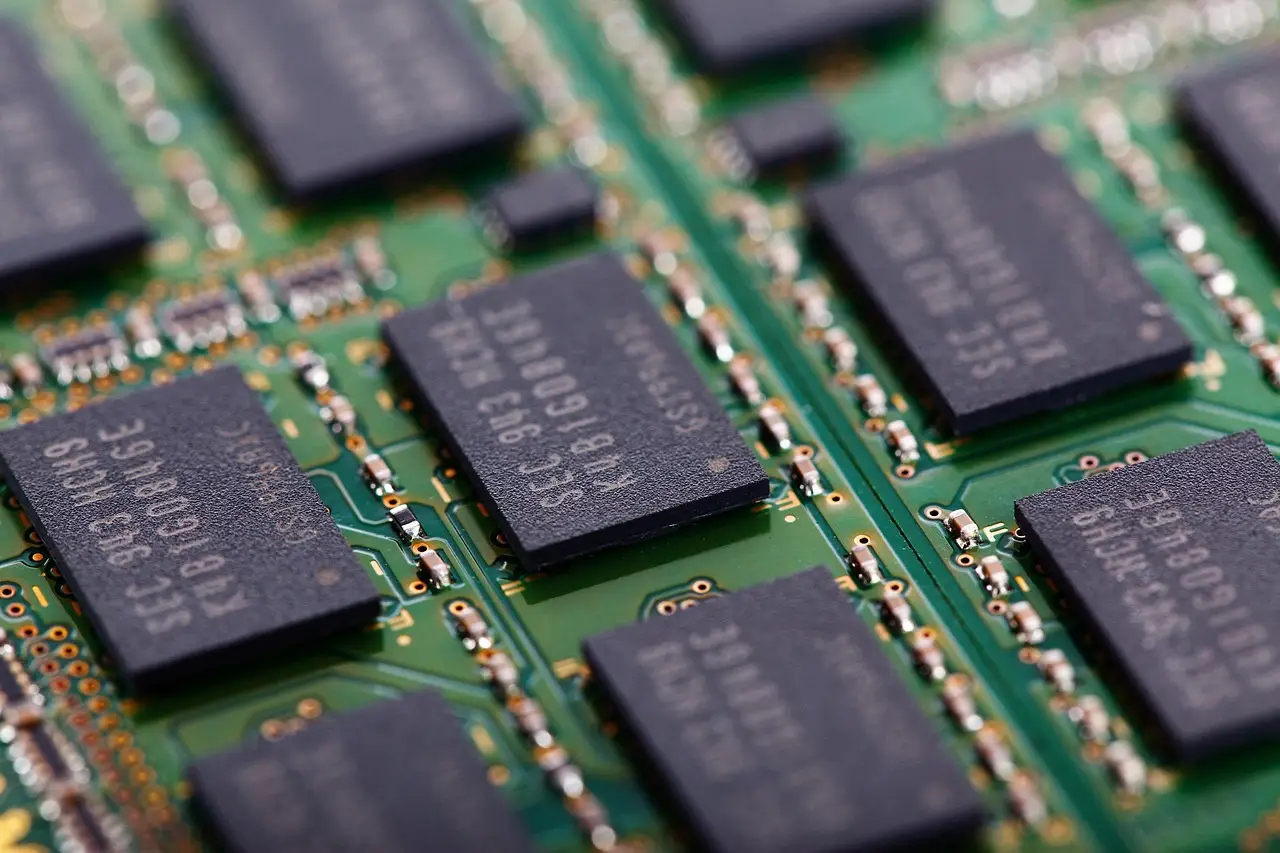
Germany's Federal President has awarded the 250,000-euro Deutscher Zukunftspreis to a three-researcher team from Karlsruhe working on technology that moves data through chips with light instead of electricity. It's the 30th time the prize has been handed out.
President Frank-Walter Steinmeier honored Christian Koos of the Karlsruhe Institute of Technology (KIT), Matthias Lauermann of Vanguard Automation, and Philipp Dietrich of Keystone Photonics. Their shared project tackles a problem every practitioner in high-performance computing knows: data congestion inside and between microchips.
What does the technology actually change?
The team relies on light rather than electrical current to move data. Their processes address two practical bottlenecks in building optical microchips: testing them efficiently, and connecting them to one another with precision.
That combination matters for the networks side of the house. As the Federal President's Office explained, the work is meant to lay the foundation for more powerful data networks and AI computing centers. In concrete terms, the goal is faster data transfer at lower energy consumption — the two constraints that currently cap how big AI training and inference clusters can get.
Who gets the prize, and why?
The Deutscher Zukunftspreis recognizes especially innovative research. Each year it honors scientists and engineers, in the Federal President's Office's words, "who develop solutions to pressing societal challenges through excellent basic and cutting-edge research" — work that also has "the potential to be economically successful and open up new growth fields."
So this isn't a pure science award. The framing explicitly couples research quality with market potential, and this year's winners fit that profile: all three laureates have industry or institute affiliations spanning fundamental photonics research and commercial ventures — Vanguard Automation and Keystone Photonics among them.
For engineers and product planners in optical interconnects, the endorsement signals that chip-level optical testing and assembly is now considered strategic German research territory, not a niche lab pursuit.
A 30-year tradition
The award has been presented 30 times now. Last year's prize went to a team developing a fuel cell drive system for emission-free long-distance transport — an indication of the breadth of fields the honor covers, from mobility to, this year, photonics.
At 250,000 euros, the prize ranks among Germany's most endowed innovation awards. For the Karlsruhe team, though, the money likely matters less than the visibility: the Federal President's platform puts their optical chip work in front of industry decision-makers who will decide whether Europe builds its AI data center infrastructure on domestic interconnect technology or imports it.
via tagesschau.de/xml/rss2/ (Source)
More from Elena Vasquez
Show full bio
Senior reporter covering people, launches and day-to-day practice in hardware layer of artificial intelligence at Die Signal.
770 articles
Same lot
- Optical Computing Market Hits $2.22 Billion as AI Power Bills Bite
- GlobalFoundries Bets on Glass Waveguides Against TSMC's COUPE
- KIT to build €24 million AI data center with waste heat recovery
- SiMa.ai raises $150m at $1.45bn valuation for physical AI chips
- Germany and Netherlands Link Up on AI Chip Design