Test report DSG-9246 · Rev C · tested November 17, 2026
AI Datacenter InfrastructureDevice under test
Healixa Claims IPLV 10-11 Cooling, Publishes No Water Data
Healixa claims IPLV 10-11 and up to 70% cooling-energy cuts for FrostPulse, announced Nov. 11, 2026, but publishes no water figure and no independent verification.
- Read
- 5 min
- Words
- 910
- Node
- 65nm
- Operator
- Priya Raman
Spec summary
- Healixa announced FrostPulse on November 11, 2026, from Bohemia, NY, under ticker EMOR.
- Vendor claims: IPLV 10-11 versus an industry standard of 3, and up to 70% lower cooling energy under volatile workloads.
- No water-savings figure, test conditions, customer name, date or specifications were published.
- First FrostPulse-branded device was delivered in the Northeast, with no site or capacity disclosed.
- Data-center public comments have run 90.5% negative and 41 local measures targeted data centers.
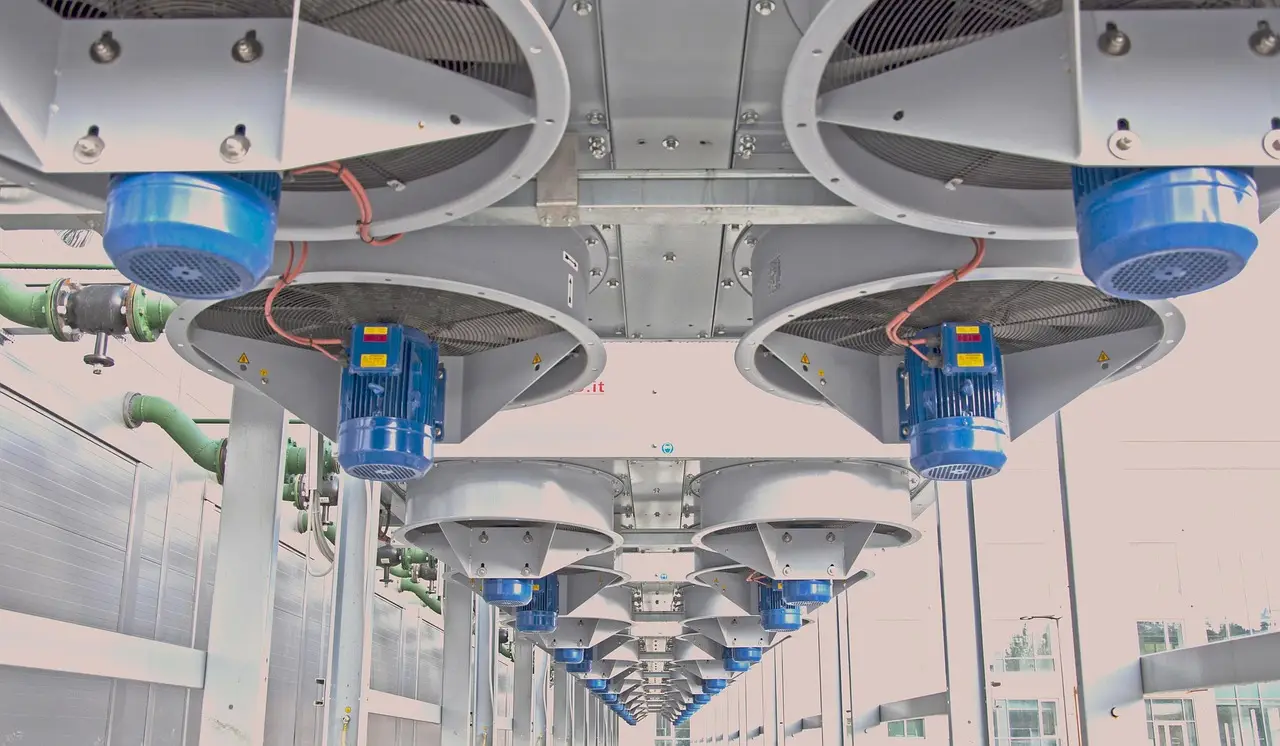
Healixa Inc. announced its FrostPulse cooling product on November 11, 2026, from Bohemia, New York, claiming an IPLV (integrated part load value, a blended chiller efficiency metric) of 10-11 against an industry standard of 3 — roughly 3.3 to 3.7 times the baseline. The company published no water-consumption figure, no test conditions, and no independent verification.
The release also claims up to 70% lower cooling energy under volatile workloads. Both numbers come from Healixa's own product page, not from the press release and not from any third-party test. The arithmetic is at least internally consistent: energy per unit of cooling scales as one divided by the rating, so a rating of 10 implies a 70.0% cut against a baseline of 3, and a rating of 11 implies 72.7%. That consistency proves the two claims are not contradictory. It does not prove either was measured on a working plant.
Coverage followed on Yahoo Finance, Payload Space, Bloomberg.com and TechRadar. Headline framing said FrostPulse "solves" a major roadblock to data-center growth. That is promotional language, not an independently established fact. The body of the release is more careful, repeating "designed to" rather than promising results.
What does the announcement actually contain?
Healixa, which trades under the ticker EMOR, presented two branded technologies. FrostPulse is the cooling product. Eternal Spring is a related technology described as designed to create a new source of water. The release states: "Cooling consumes both. FrostPulse is designed to reduce that burden. Eternal Spring is designed to create a new source of water." The "both" refers to energy and water.
The company lists five application areas: data centers, medical imaging, industrial processes, telecommunications and commercial facilities. Data centers get headline billing. A product pitched at MRI suites and cell-site shelters as well as hyperscale halls is a general-purpose cooling play, not a purpose-built AI-campus answer.
Healixa says it delivered its first FrostPulse-branded device in the Northeast. The release gives no date, no customer, no site and no specifications. A medical-imaging installation, a telecom shelter and a data hall have very different duty cycles, and one site in one climate region cannot demonstrate performance across humid summers, dry heat and cold winters. Hot, dry markets are where water pressure runs highest.
Why does water frame the pitch?
A conventional chilled-water plant rejects heat outdoors through a cooling tower, which sheds heat largely by evaporating water. That evaporation is the water cost. FrostPulse is described as reducing dependence on cooling towers and condenser-water infrastructure (the pumps, piping, treatment and makeup supply connecting chillers to the tower). The release does not explain the physical mechanism, refrigerant, heat-rejection method or operating envelope. The release also stops short of saying the infrastructure disappears.
The timing tracks real market pressure. Public comments on data-center projects have run 90.5% negative, 41 local data-center measures have put the AI boom on notice, and one survey found 76% opposition to AI data centers. Water is among the easiest constraints to explain at a public hearing. The release frames water as a "major roadblock." The friction is real; the solution is unproven.
What is confirmed and what is not?
- Announced November 11, 2026, from Bohemia, NY: stated.
- Design intent to reduce tower and condenser-water dependence: stated, no quantified figure.
- IPLV 10-11 versus a standard of 3: vendor claim, no units, standard or rating conditions given.
- Up to 70% lower cooling energy under volatile workloads: vendor claim, ceiling figure; "up to" and "volatile workloads" mark a best case.
- First Northeast delivery: stated, no date, customer or specs.
- Water-consumption rate, capacity, price, cooling temperature: not published.
Eternal Spring carries even less substance. Healixa gives no mechanism, yield, energy requirement or deployment status. The phrase "a new source of water" could mean condensate capture, atmospheric extraction or reuse of byproducts; the release does not say which. The pairing lets Healixa tell a two-part story — less demand for water, more supply of it — but it doubles the burden of proof.
How does this compare with the existing field?
Operators already weigh evaporative towers, dry coolers, direct-to-chip liquid cooling and immersion. Against dry rejection, FrostPulse must prove lower energy while still saving water — the hard combination. Against towers, it must show a water edge without a cost penalty. Liquid and immersion approaches are complementary, not rivals, since heat still needs a rejection path.
Two caveats apply to the efficiency number. First, without units, test standard and rating conditions, the IPLV comparison is a marketing ratio rather than an engineering result. Second, ratings are not field measurements; controls, fouling, weather and commissioning erode performance, so a certified part-load number can overstate what appears on the utility bill. The illustrative arithmetic also ignores fans, pumps and non-chiller loads.
What would change the assessment?
A named customer, a measured water figure in liters or gallons per unit of cooling, and a disclosed test standard with several months of operating data would convert assertion into evidence. None of that has been published. Water-saving claims have a long record in building services of looking better on paper than on site, and without a quantified figure FrostPulse cannot enter a procurement comparison on water at all. For buyers, the practical stance is a watch list, not a purchase order — neither hype nor dismissal, but patience until measured data appears.
via shattered.io (Source)
More from Priya Raman
Show full bio
Correspondent covering money, funding and market shifts around hardware layer of artificial intelligence at Die Signal.
661 articles
Same lot · LOT-362D
- DSG-581065nmMHS Claims Cooling Plate Cuts AI GPU Coolant Use by 60%
- DSG-10043nmCoolIT and Ecolab ship 3MW liquid cooling CDU for AI racks
- DSG-24285nmMHS Builds GPU Cold Plate That Cuts Coolant Demand
- DSG-32187nmNSE India deploys direct-to-chip liquid cooling for GPU expansion
- DSG-512810nmNvidia Claims New Data Center Design Solves AI's Water Problem