Test report · tested November 27, 2026
Supply Chain & PolicyDevice under test
Half of Korea's 2025 Export Gain Came From Prices, Not Volume
KIET projects $1.1566 trillion in Korean goods exports, but roughly $220 billion of the $447.3 billion gain reflects price rises, with DRAM values up 369% on near-sixfold pricing.
- Read
- 3 min
- Words
- 552
- Segment
- Supply Chain & Policy
- Operator
- Amara Osei
Spec summary
- KIET projects 2025 goods exports of $1.1566 trillion, up $447.3 billion year on year.
- Roughly $220 billion of the export increase stems from higher prices, chiefly memory chips.
- DRAM export value surged 369% as commodity DRAM prices jumped nearly sixfold in a year.
- Q3 private consumption turned negative for the first time in 15 quarters; overseas card spending hit a record $6.63 billion.
- The Bank of Korea raised its 2025 growth forecast to 3.9% from 3.3% and its 2026 forecast to 4.1% from 2.9%.
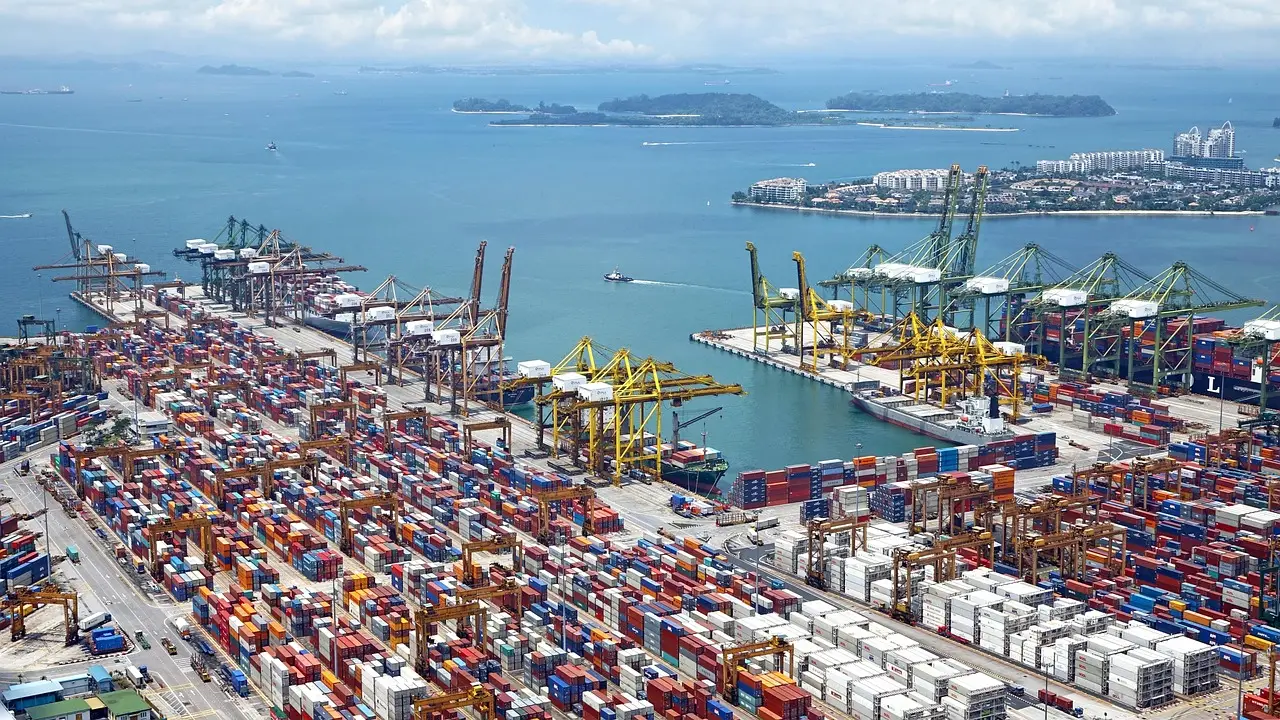
Roughly $220 billion of South Korea's projected export increase this year came from higher prices rather than larger shipments, according to the Korea Institute for Industrial Economics and Trade (KIET). The institute said on the 27th that goods exports will reach $1.1566 trillion in 2025, up $447.3 billion from a year earlier. That places almost half of the gain in the price column, not the volume column.
The headline numbers, in brief:
- Goods exports projected at $1.1566 trillion, up $447.3 billion year on year.
- About $220 billion of that increase stems from price rises in memory chips and other products.
- DRAM export value surged 369%, driven by commodity DRAM prices that jumped nearly sixfold in a year.
- Petroleum products sold 7.5% less by volume, yet their export value rose 80%.
What does the price dependence mean for the $1 trillion mark?
Breaking the $1 trillion export mark may be a temporary price illusion, KIET's analysis implies. An export structure that depends on prices, much like a rain-fed paddy field, leaves earnings badly exposed when prices fall. The comparison the institute draws is concrete: Germany, where exports stalled after passing $1 trillion on the back of a strong euro, versus China, which sustained growth by expanding export volumes. With its heavy reliance on chip prices, Korea is more vulnerable than Germany.
The takeaway in plain words: the record export figure rests on DRAM pricing power that can reverse as fast as it rose.
Is domestic demand picking up any slack?
It is not. Private consumption turned negative in the third quarter for the first time in 15 quarters, and a record share of household spending flowed abroad. Bank of Korea data show:
- Overseas card spending by residents rose 13.3% from the previous quarter to $6.63 billion in Q3, a record high.
- The number of people traveling abroad rose only 7.4%, meaning per-trip spending outpaced the travel boom.
- Travel spending in Japan surged 45.8% year on year in Q3, helped by the weak yen.
- Card spending in Korea by non-residents fell 3.1% from the previous quarter.
Foreign visitor numbers to Korea have topped 20 million, but the boost from rising tourist counts can do only so much to offset the slump in domestic demand, the analysis notes.
What is the central bank forecasting?
The Bank of Korea raised its growth forecast for this year to 3.9% from 3.3% a day before KIET's release, and lifted its 2026 projection to 4.1% from 2.9%. Rapid growth is encouraging, the analysis states — but what matters is the substance of that growth.
If exports leaning on chip prices and the outflow of consumption persist, an economic structure vulnerable to external shocks will become entrenched, leaving growth unable to sustain itself.
What does KIET prescribe?
To avoid settling for hollow growth, the institute calls for two parallel moves:
- Diversify the export base by strengthening the competitiveness of industries beyond semiconductors.
- Revive domestic demand by improving the quality and price competitiveness of service industries, overhauling regulations and expanding households' capacity to spend.
The closing point: a 3.9% growth forecast built on a sixfold DRAM price swing and record overseas card spending is growth that Korea does not fully control.
via en.sedaily.com (Source)
More from Amara Osei
Show full bio
Staff writer covering money, funding and market shifts around hardware layer of artificial intelligence at Die Signal.
818 articles
Same lot
- Korea's Exports Double to Record $77.4 Billion in 20 Days
- Korea to Cross $1 Trillion Annual Export Mark in November on AI Chip Boom
- Korea's ICT Exports Triple to $70.35 Billion on Record Chip Surge
- South Korea's Annual Exports Pass $1 Trillion, Powered by Chips
- Korea tops $1 trillion in exports as chips drive 74.5% of growth