Test report DSG-6122 · Rev E · tested October 30, 2026
AI Datacenter InfrastructureDevice under test
Google TPUs, Cerebras and SambaNova Accelerators Head to Oracle Cloud
Google TPUs reach OCI in a hyperscaler first, Cerebras CS-4 and SambaNova RDUs arrive in 2027, and Oracle posts $664B in contracted backlog plus Deep Trust AI security.
- Read
- 4 min
- Words
- 792
- Node
- 14nm
- Operator
- Grace Kim
Spec summary
- Google TPUs will run on OCI next year — first hyperscale deployment outside Google's own cloud
- OCI revenue hit $7.4B in Q1 FY 2027, up 121 percent year-over-year; remaining performance obligations reached $664B
- Oracle capex was $55.7B in FY 2026 and could exceed $90B this fiscal year
- Oracle announced 25 new agentic applications across Fusion suites
- Cerebras CS-4, based on three Wafer Scale Engine 3 Turbo chips, claims up to 30x GPU tokens-per-second-per-user
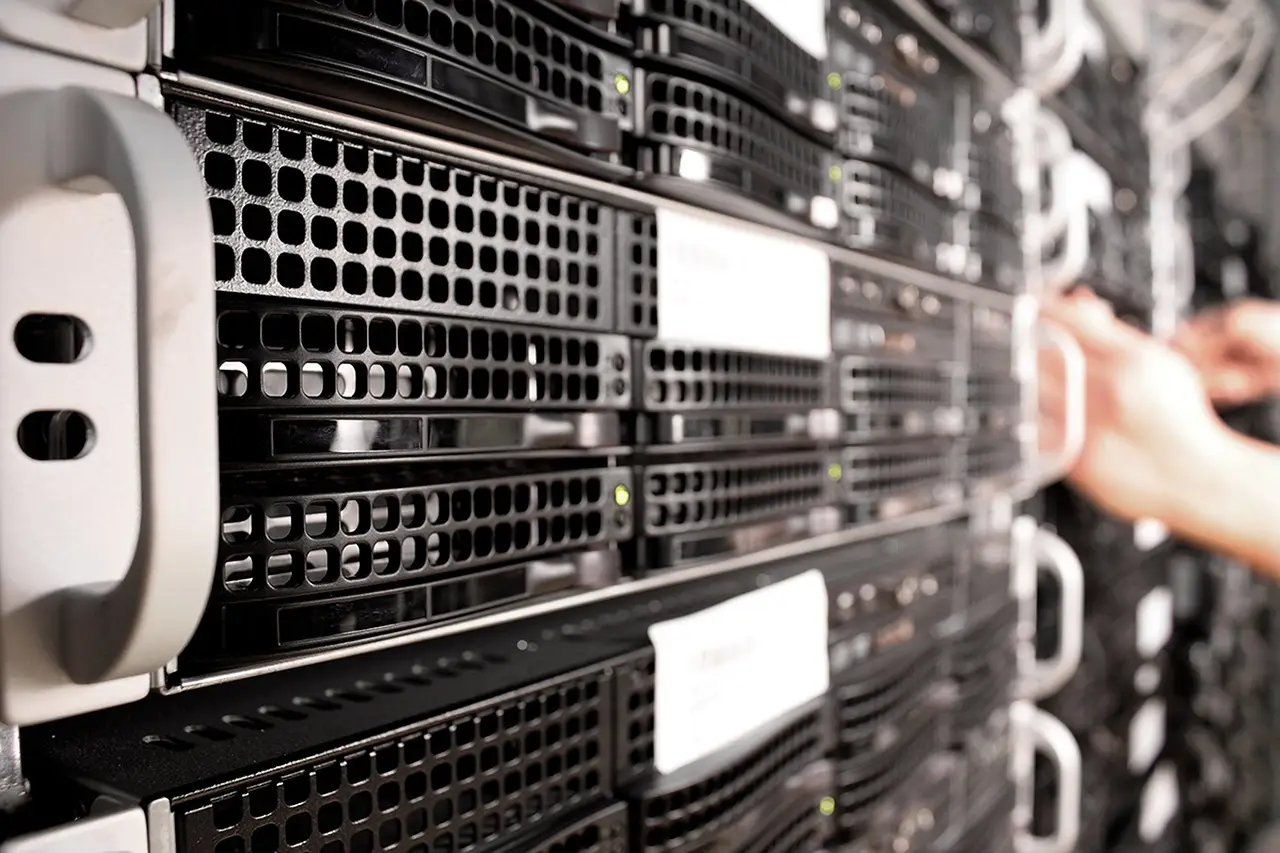
Oracle will put Google's Tensor Processing Units into Oracle Cloud Infrastructure next year — the first time Google's specialized AI chips will run in any hyperscale cloud other than Google's own. The announcement landed Tuesday at Oracle AI World 2026 in Las Vegas, alongside Cerebras and SambaNova hardware and a new security architecture aimed at enterprise AI.
The timing suits Oracle's numbers. Revenue jumped from $57.4 billion in FY 2025 to $67.4 billion in FY 2026, and OCI pulled in $7.4 billion in Q1 FY 2027, up 121 percent year-over-year. Remaining performance obligations — contracted sales for services not yet delivered and not counted in revenue — hit $664 billion, up $209 billion over the previous year.
The spending side is heavier. Capital expenditures reached $55.7 billion in FY 2026 and could push past $90 billion this fiscal year, all against growing public resistance to datacenter buildouts and AI itself. Oracle is often cited as a cautionary tale in that debate. It isn't alone in the spending rush.
What does the hardware expansion change for OCI customers?
Day 2 of the show focused on architecture: more accelerator options for organizations taking on greater inference and other AI workloads. The Google TPUs are built for large language model (LLM) training, post-training workloads, and inference for reasoning and agentic AI. Google released its eighth-generation TPUs in April, the first split into two specialized chips: the TPU 8t for training and TPU 8i for inference.
Cerebras arrives in 2027 too. The company, known for wafer-sized chips that put compute and memory on the same silicon, introduced its CS-4 AI accelerator in August — a rack-scale offering built on three Wafer Scale Engine 3 Turbo chips, with up to 30 times the tokens-per-second-per-user speed of GPUs, by Cerebras' own claim.
SambaNova's fifth-generation SN50 Reconfigurable Dataflow Units (RDUs), released in February, join the mix. The inference-focused silicon is designed to work alongside GPUs: GPUs handle prefill tasks, the RDUs handle decode.
The strategy is deliberate breadth, not lock-in. "We want to enable that, so we partner very deeply with who we view are best-in-breed in markets," Nathan Thomas, senior vice president and product manager for OCI, told The Next Platform before the show. "We don't want to put ourselves in a position where we're dictating any of that stuff or trying to cut off any options for those customers."
How does Oracle plan to secure AI data?
Monday brought the Deep Trust AI Architecture, embedded in Oracle's AI Database, Autonomous AI Database, and APEX AI Application Generator. It protects organizational data as AI applications access sensitive information, AI agents reach into outside companies' systems, and threat groups weaponize AI in attacks. The architecture enforces business rules, ensures accurate answers, and controls AI's interactions with enterprise environments — a control layer placed where the data lives. It dovetails with Oracle's Maximum Availability Architecture for systems that survive failures.
"Deep Trust AI Architecture applies the same principle to AI: build trust into the architecture from the start, instead of trying to bolt it on later," Juan Loaiza, executive vice president of Oracle database technologies, and Maria Colgan, vice president of product management, wrote in a blog post. "Trust should be built into the architecture."
What's new on the applications side?
Oracle is expanding its OpenAI partnership, linking OpenAI's models, ChatGPT, and the Codex developer tool with Oracle applications, data, and cloud infrastructure — from application building to detecting and fixing security vulnerabilities. ChatGPT plug-ins in Oracle AI Workspace connect OpenAI tools to Fusion applications, NetSuite, AI Database, and OCI, making capabilities agent-ready and accessible to ChatGPT users.
The company also rolled out 25 new agentic applications across Fusion suites — HR, ERP, supply chain, customer management — for tasks like scheduling deliveries, customer service evaluations, and payroll management. Customers can build their own. Fusion Claw, the execution runtime behind the Fusion Agentic Applications suite, powers them.
"Work is sometimes organized around the work itself," Co-CEO Mike Sicilia said in his keynote. "AI should allow you to barely think about the software at all. Instead of navigating applications and managing processes, you simply tell the system what you'd like to accomplish. Because it understands your business, it can figure out how to get the work done."
Two more pieces round it out. Fusion Companion lets users work with Fusion Applications through ChatGPT and other AI tools, automatically selecting and coordinating agents, workflows, and approvals. And the Fusion Setup and Configuration Registry — a public Git repository — turns Oracle's implementation expertise into reusable AI skills that automate manual setup and configuration tasks.
via s23.q4cdn.com (Original)
More from Grace Kim
Show full bio
Market editor covering regulation, policy and their impact on hardware layer of artificial intelligence at Die Signal.
494 articles
Same lot · LOT-C204
- DSG-764714nmOracle to Deploy Google TPU AI Chips on OCI in Multi-Gigawatt Deal
- DSG-397865nmOracle Expands Nvidia AI Chip Deal to Multi-Gigawatt Scale, Adds Google and Cerebras
- DSG-80537nmOracle shares fall on debt-for-AI-chip plan, OpenAI revenue disclosure
- DSG-488828nmOracle expands Nvidia deal and adds Google, Cerebras chips
- DSG-112814nmOracle Lines Up Nvidia, Google and Cerebras AI Chips for Its Cloud