Test report · tested November 25, 2026
AI Datacenter InfrastructureDevice under test
Goldman Sachs: 52 GW of New US Data Centers in 2028
Goldman Sachs sees 52 GW of new US data-center capacity in 2028, driving nearly 30% growth and a bullish Henry Hub gas view through 2030.
- Read
- 5 min
- Words
- 909
- Segment
- AI Datacenter Infrastructure
- Operator
- Elena Vasquez
Spec summary
- Goldman Sachs expects up to 52 GW of additional US data-center capacity in 2028
- US data-center power capacity and demand grew nearly 30% year to date
- Data centers contributed more than one third of total US power-demand growth
- Goldman keeps a bullish Henry Hub outlook for 2028-2030, with no stated price target
- Earlier Goldman research pegged data-center-driven gas demand at 3.3 billion cubic feet per day by 2030
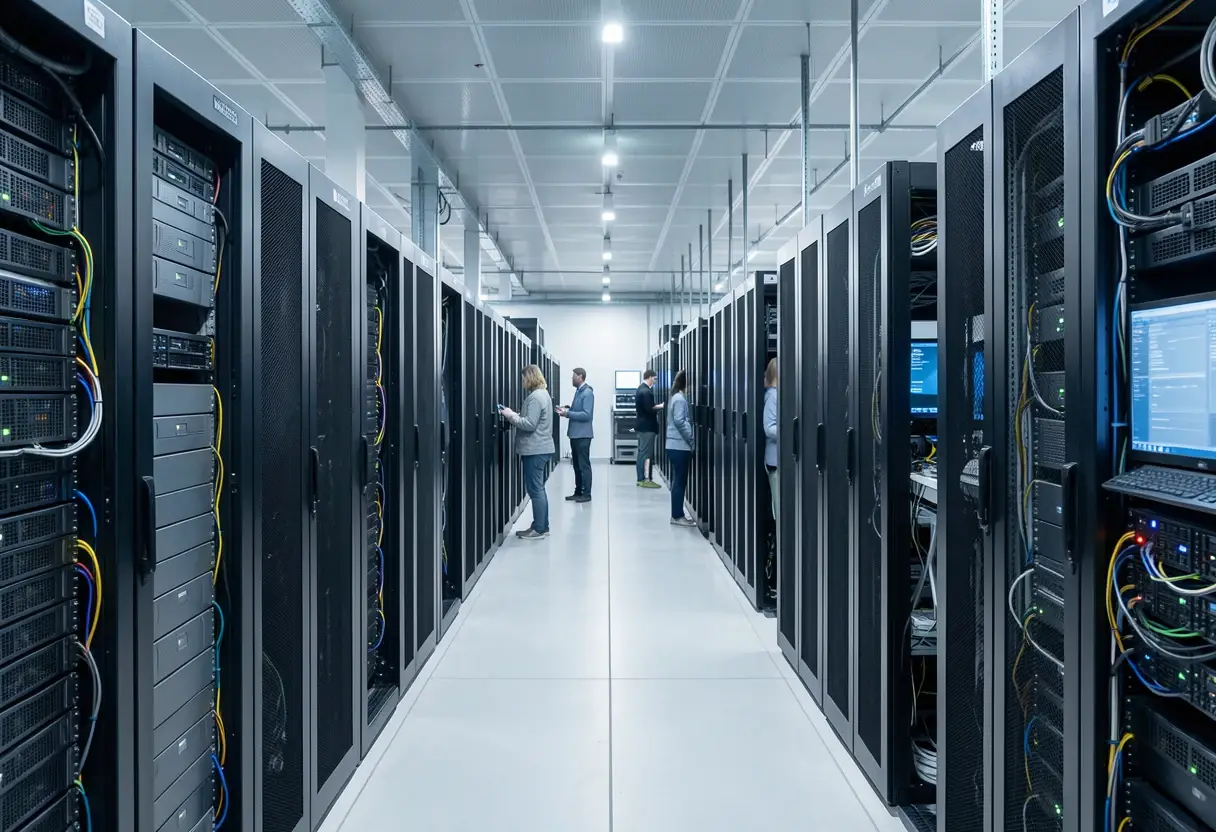
Goldman Sachs expects as much as 52 gigawatts of additional US data-center capacity to come online in 2028, and it says the build-out will tighten power markets and lift natural-gas demand through the end of the decade.
The bank's note, dated Tuesday, November 24, 2026, ties the expansion to the AI boom, which is pushing developers toward larger and more power-dense facilities. Reuters carried the original report, with The Economic Times, TechRadar and other outlets picking it up.
The anchor statistic is already visible in this year's numbers. In the note, the bank wrote: "Year-to-date, data-center power capacity and demand have increased by nearly 30% in the US, contributing to more than one third of US total power demand growth."
That share deserves a pause. The US economy runs on power from homes, factories, offices, electric vehicles and heat pumps. One customer category, built mostly around a single technology wave, accounted for more than a third of the total increase across all of them.
What does the forecast actually say?
The core message is short. Goldman said strong US data-center power-capacity growth is likely to continue through 2028, creating upside risk for both electricity and natural-gas demand, and the expansion could tighten US power markets.
A tight power market means less spare generation, higher prices at the margin, and more competition for every new megawatt. Three points in the framing matter:
- The 52 GW figure describes capacity that could come online, not a list of announced projects.
- The note links the capacity to AI workloads, not general cloud growth.
- It reaches past megawatts into gas markets — most data-center forecasts stop at the meter.
For scale: a gigawatt is one billion watts, roughly the output of a large power plant. If the full 52 GW ran for a year, that's up to about 455 terawatt-hours at full utilization, or roughly 228 TWh at 50% — a ceiling-level figure, since capacity added during 2028 would only run for part of the year. Load of that size can't hide inside normal grid growth.
Why gas sits at the center of the story
Gas is the fuel that can respond fastest. Solar and wind add energy but not on demand. Nuclear and new transmission take years. A gas turbine near a campus is a known quantity with a known supply chain. When load arrives faster than the grid expands, gas fills the gap.
The November note did not give a Henry Hub price target. It gave direction: Goldman kept a bullish outlook for the benchmark US gas price between 2028 and 2030. Anyone quoting a specific dollar figure from this report is adding something the available text doesn't contain.
The timing logic is consistent with Goldman's other public research. In a Goldman Sachs Exchanges discussion, the bank's research team said: "We think it'll get tight as demand ramps in the 2028 time frame," and separately: "About 60% of data center demand we think will be met with natural gas. So, we expect to see a lot of natural gas."
Earlier Goldman analysis put a number on the chain: "incremental data center power consumption in the US will drive around 3.3 billion cubic feet per day of new natural gas demand by 2030, which will require new pipeline capacity to be built." More load, more gas burned, more pipe needed.
What the note leaves unconfirmed
The reported text did not identify a Henry Hub price target, individual company beneficiaries, facility locations, project schedules, or a named Goldman analyst. Any list of winners you see online comes from commentators, not the note.
Real risks could bend the forecast. Transformers and turbines carry long lead times, interconnection queues move slowly, and permitting can stall a project for months. The word "could" in the 52 GW line carries weight — it's the upper marker of an ambitious range, and delays are normal at this scale.
What does it change for practitioners?
For utilities, concentrated growth is both opportunity and headache: easy to forecast when customers sign contracts, hard to serve when dozens of them ask for gigawatts in the same region. For regulators, it raises the question of who pays for new lines and plants. For gas producers, a bullish Henry Hub view strengthens the case for drilling and locking in pipeline capacity.
Cloud buyers pay for this indirectly. If power tightens in 2028, expect providers to protect margins through pricing structure, capacity limits or regional availability. Buyers with predictable workloads hold more bargaining power than those with unpredictable ones, and committed-use pricing remains the standard hedge.
Engineers face a parallel shift. Capacity planning used to mean choosing instance types and regions; it now means asking whether a region can physically host the next cluster. A short list of alternative regions, with pipelines that can move without a rewrite, costs a little during calm periods and saves a lot when a region runs short.
There's also a timing mismatch worth spelling out. A server hall goes up in months; a pipeline, transmission line or plant takes years to plan, permit and build. Goldman's 2028 focus reads partly as a statement about that gap: the capacity developers have committed to will arrive, and the supply meant to serve it may not be ready. That gap is where tight markets and higher prices come from.
via shattered.io (Source)
More from Elena Vasquez
Show full bio
Senior reporter covering people, launches and day-to-day practice in hardware layer of artificial intelligence at Die Signal.
781 articles
Same lot
- BlackRock's Fink: Data Center Moratorium Could Trigger US Recession
- Jeffries: Hyperscalers Will Build 68% Less Than Planned in 2030
- Intel Grew Data Center Revenue 78% — Three Catalysts Target $100 in 2027
- AI Data Center Power Demand to Double by 2030, IEA Warns
- HBM Capacity Ceiling Puts a Governor on AI Spending Growth