Test report DSG-8081 · Rev B · tested October 10, 2026
Supply Chain & PolicyDevice under test
Denmark puts large data centers at back of grid connection queue
Denmark's grid emergency plan, adopted October 1 and effective October 12, drops first-come-first-served and places large data centers in the lowest priority category.
- Read
- 3 min
- Words
- 609
- Node
- 14nm
- Operator
- Amara Osei
Spec summary
- Denmark adopted the grid emergency plan on October 1, 2026; it takes effect October 12.
- The plan replaces first-come, first-served with four priority categories; large data centers fall into Category 4.
- Data centers linked to critical societal functions can be prioritized under Category 1.
- Microsoft launched a Danish cloud region in 2026, under development since 2020.
- Finland is consulting on a similar model that would deprioritize data centers needing more than 10MW; consultation closes October 9.
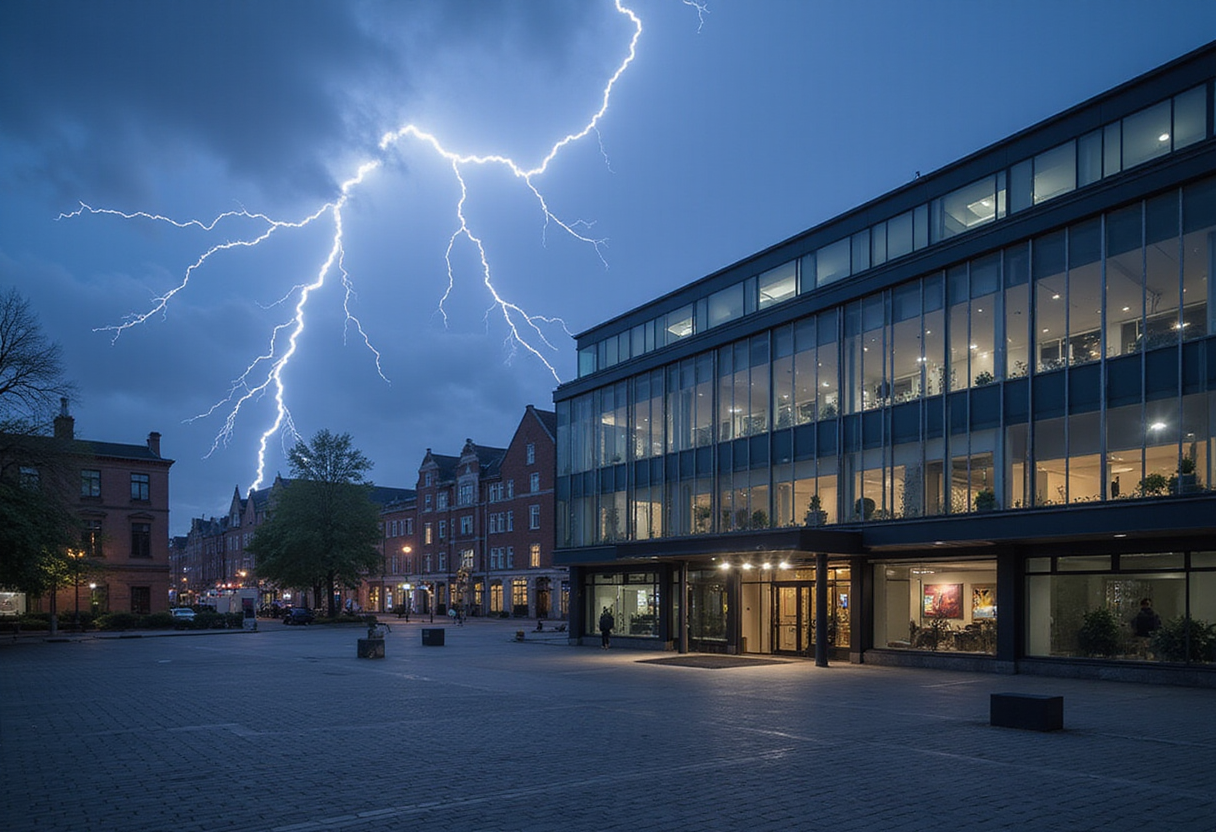
Denmark's Parliament voted in an "emergency plan" for the electricity grid on October 1, 2026, and the new rules take effect on October 12 — moving large data centers to the back of the connection queue. The Ministry of Climate, Energy, and Utilities first proposed the plan in August 2026.
The plan scraps the current first-come, first-served allocation model. In its place, grid operators gain the authority to decide who gets access to limited grid capacity. According to the Ministry, the plan "replaces the current first-come, first-served principle with a new model, where Energinet and the grid companies are given greater opportunity to prioritize who gets access to the limited space in the electricity grid."
How does the new priority system work?
Connection requests will fall into four categories, with Category 1 receiving the highest priority.
- Category 1: Protected needs and critical societal functions. The agreement states this "covers standard load growth for existing customers, new households, small businesses (e.g., in transport), and critical societal functions such as defense, healthcare, and emergency services, including data centers linked to critical societal functions."
- Category 2: Projects contributing to the green transition and the electrification of society.
- Category 3: Energy storage facilities, including "energy storage capacity in co-located facilities established beyond the user's standard generation or consumption needs."
- Category 4: Large energy consumers — and, in principle, data centers.
Where do data centers land?
In most cases, at the bottom. The agreement states: "In principle, this category will include data centers, which are typically not geographically bound and may have consumption patterns that negatively affect the grid. However, data centers linked to functions critical to society may be prioritized under Category 1."
Anna Bjerre, climate, energy and supply spokesperson for the Alternative party, welcomed the change. "Finally, we will have the gigantic, hyperscale data centers and tech giants at the back of the queue for the electricity grid and the opportunity to reject them, so that we can actually prioritize Denmark's critical societal functions and phase out our use of fossil fuels," she said.
Bjerre framed the plan as a starting point rather than a finished reform. "It is only the first small step in the big task of electrifying our country and ensuring cheap, green, and stable energy prices, but a really important first step that can take effect already now," she said.
How large is Denmark's data center market?
Denmark does not host a particularly large data center market. Most facilities sit in and around Copenhagen. Microsoft launched a cloud region in the country earlier in 2026, a project under development since 2020, and construction to expand capacity continues.
Operators active in Denmark include Digital Realty, atNorth, Penta Infra, Global Connect, and Stack Infrastructure, among others.
Is Denmark the only country doing this?
No. Finland is considering a similar tiered approach to grid connection requests. The Finnish proposal would prioritize smaller data center projects and push back those requiring more than 10MW. The consultation process remains open until October 9.
What does the ruling change?
For data center operators, the practical consequence is straightforward: new large-scale projects in Denmark will no longer secure grid capacity on a first-come, first-served basis. Transmission system operator Energinet and the grid companies can now reject or defer their requests in favor of households, small businesses, defense, healthcare, emergency services, and green-transition projects. Only data centers tied to critical societal functions can expect Category 1 treatment.
For the wider market, the Danish model — and Finland's pending consultation — signals a broader shift in how European grid operators allocate scarce capacity as electrification accelerates.
via kefm.dk (Original)
More from Amara Osei
Same lot · LOT-C1C6
- DSG-17775nmFinland Plans to Drop First-Come, First-Served Grid Connections
- DSG-503714nmEmerald AI Draws Google, Nvidia, Anthropic for Grid-Flexibility Work
- DSG-760928nmUBS: Power Supply Can Meet AI Chip Demand Through 2030
- DSG-999314nmKonin Data Center: €3bn, 260MW Project Signed in Poland LOI
- DSG-49577nmatNorth commits €2bn to 75MW Salo data center campus FIN05