Test report · tested November 6, 2026
Memory & StorageDevice under test
CXMT Claims 4F² DRAM First; Prototype Yield Undisclosed
CXMT claims engineering-sample validation for a sixth-generation 4F² DRAM process and plans DDR5 server samples by year-end, but undisclosed yields leave HBM3E output below SK Hynix’s 70% threshold.
- Read
- 3 min
- Words
- 622
- Segment
- Memory & Storage
- Operator
- Elena Vasquez
Spec summary
- CXMT claims world-first engineering-sample validation for its sixth-generation 4F² DRAM process.
- DDR5 registered DIMM samples are planned for server customers by year-end.
- Third-quarter revenue reached 118.7 billion yuan ($17.84 billion), up 613% year over year, returning CXMT to profit.
- Estimated CXMT HBM3E production yields are 20%-30%, versus SK Hynix's 70% threshold.
- CXMT held 10% of global DRAM revenue in Q2 2026.
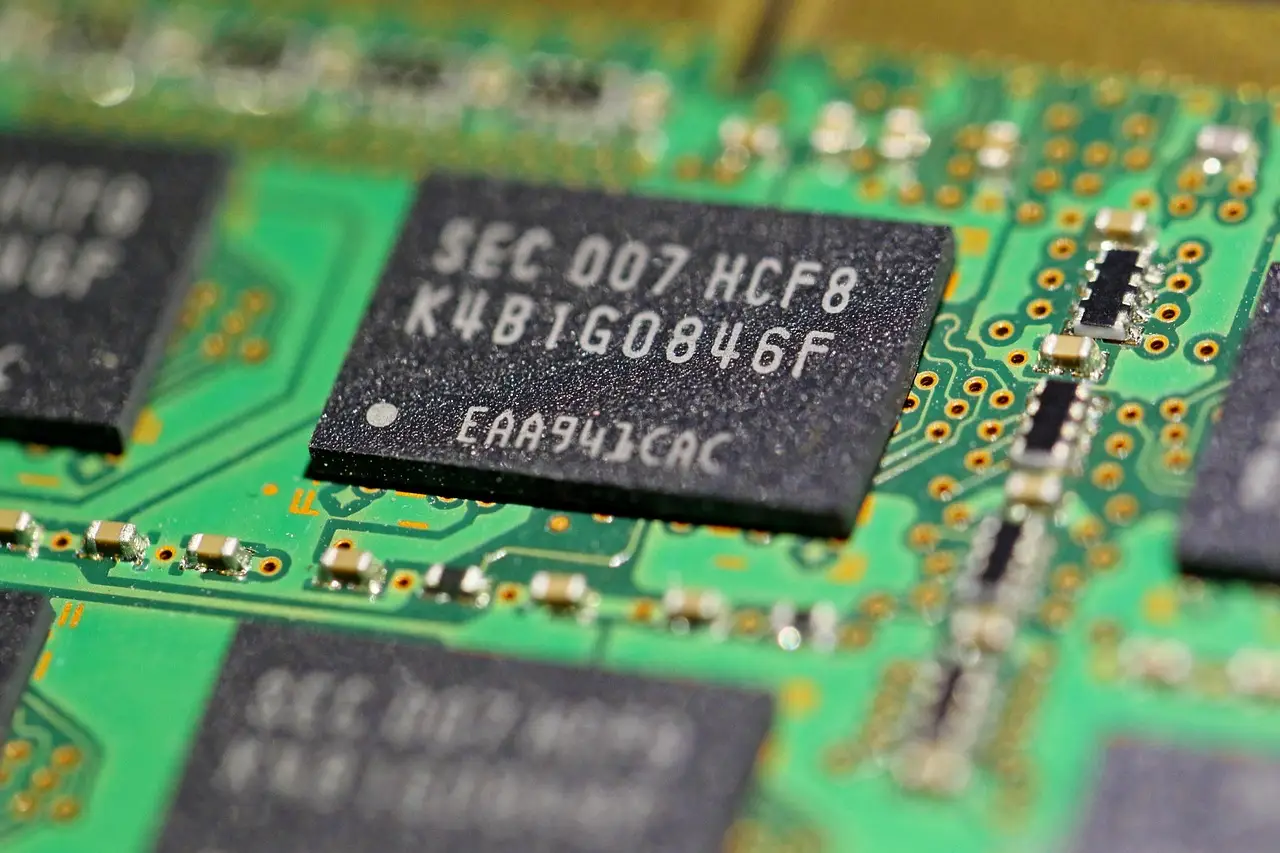
CXMT has claimed engineering-sample validation of a sixth-generation DRAM process built on a 4F² structure, but an estimated 20%-30% HBM3E yield still trails SK Hynix's established 70% threshold.
The Chinese memory manufacturer called the achievement a “world-first.” It said the architecture could accelerate CXMT's commercial timeline against Samsung Electronics and SK Hynix. The claim gives CXMT a technical milestone; missing silicon-yield data leaves its manufacturing scale unresolved.
What has CXMT actually validated?
The milestone covers engineering samples rather than proven volume production. CXMT has omitted silicon-yield data for the 4F² prototype. Customers and investors therefore lack the central measure of usable output.
Self-reported sample validation rarely equates to volume-manufacturing parity. Without a yield reading, CXMT has not shown how much salable memory it can produce per wafer. Nor has the company shown whether the process can support customer order volumes.
What reaches customers by year-end?
According to Chosun, CXMT plans to ship DDR5 registered DIMM samples to server customers by year-end. The initial target is high-density data-center applications. CXMT then plans to scale the process into broader product lines.
For server buyers, the year-end delivery window creates a concrete qualification checkpoint. They can test samples before CXMT widens the rollout. The announcement still stops short of establishing mass-production economics.
How large is CXMT's commercial base?
CXMT reported third-quarter revenue of 118.7 billion yuan ($17.84 billion), up 613% from a year earlier. That puts revenue at more than seven times the prior-year level. It also marks a return to profitability.
The financial result gives the architecture program commercial momentum. It does not substitute for manufacturing data, though; customers need sample delivery and demonstrated volume output. The “world-first” label does not answer either.
Why are Samsung and SK Hynix staying with 6F²?
Samsung Electronics and SK Hynix are prolonging their mature 6F² platforms while CXMT advances 4F². The two Korean suppliers favor that approach to preserve margin stability and yield predictability.
Micron went the other way, abandoning 4F² because of physical constraints. Their differing choices expose the tradeoff CXMT still has to prove: architecture novelty versus production consistency.
How wide is the manufacturing gap?
Current market estimates put CXMT's HBM3E production yields at 20%-30%, versus SK Hynix's established 70% threshold. The estimate leaves CXMT well behind the benchmark. It does not, however, supply the missing silicon-yield figure for the 4F² DRAM prototype.
Sample validation and volume-manufacturing parity remain separate milestones. For CXMT and its prospective server customers, disclosed yield data will determine whether the first can become the second.
Can 10% market share change advanced-memory competition?
CXMT held 10% of global DRAM revenue in Q2 2026. The share demonstrates that it can disrupt established legacy-node markets. It does not establish parity in advanced architectures, where Samsung and SK Hynix retain the lead.
Breaking that duopoly will require proven wafer yields rather than self-reported milestones. The next evidence points are year-end DDR5 registered DIMM deliveries and disclosed yield data. CXMT must also prove it can sustain volume output.
What should market participants watch?
- Silicon yield: CXMT has not published a yield figure for the 4F² prototype.
- Commercial timing: Server customers are slated to receive DDR5 registered DIMM samples by year-end.
- Production benchmark: Market estimates put CXMT's HBM3E yield at 20%-30%, compared with SK Hynix's 70% threshold.
- Financial scale: Third-quarter revenue reached 118.7 billion yuan ($17.84 billion), up 613% year over year, with a return to profit.
- Competitive proof: CXMT needs proven wafer yields before it can challenge Samsung and SK Hynix in advanced architectures.
via Google News: DRAM chip (Source)
More from Elena Vasquez
Show full bio
Senior reporter covering people, launches and day-to-day practice in hardware layer of artificial intelligence at Die Signal.
770 articles
Same lot
- CXMT to Start HBM3E Production at 20-30% Yields Despite Heavy Losses
- CXMT's Fifth-Generation DRAM Platform Enters Mass Production
- CXMT Claims Denser DRAM, Targets Server DDR5 Launch
- CXMT HBM3 Yields Hit 25%, With Roughly 80 of 100 Chips Failing Tests
- CXMT Pushes China's DRAM Into Fifth-Generation Technology