Test report DSG-7896 · Rev E · tested October 30, 2026
Supply Chain & PolicyDevice under test
Bloomberg Lifts 2030 AI Accelerator Forecast to $1.4 Trillion
Bloomberg raised its 2030 AI accelerator forecast 150% to $1.4 trillion. Supply of memory, power and land—not demand—is now the industry's binding constraint.
- Read
- 4 min
- Words
- 815
- Node
- 20nm
- Operator
- Marcus Bennett
Spec summary
- Bloomberg Intelligence raised its 2030 AI accelerator market forecast from ~$560 billion to $1.4 trillion, a 150% increase.
- Micron says over 75% of fiscal 2027 shipments are committed; capex plans imply more than ~$50 billion for fiscal 2027.
- Vicor revenue hit a record $197.1 million, up 78.5% year-over-year, with backlog of $406 million, up 166%.
- Anthropic has reportedly committed roughly $518 billion to compute over about a decade, ~80% noncancelable.
- Google's Project Suncatcher prototype is in orbit; Trillium TPUs survived radiation equal to a five-year mission.
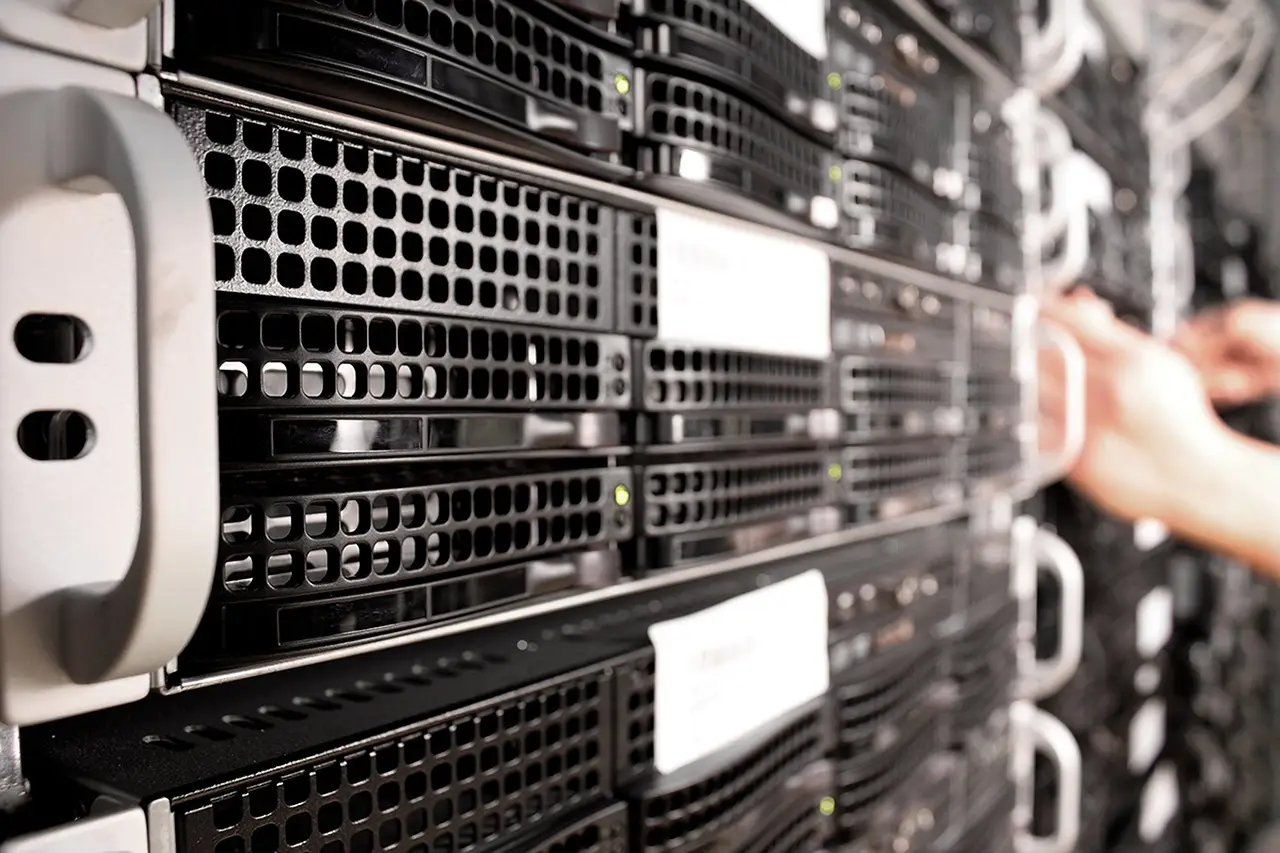
Bloomberg Intelligence now expects the annual AI accelerator market to reach $1.4 trillion in 2030, up from a prior forecast of about $560 billion. That is a 150% increase in one revision, and it reframes the entire AI buildout as a supply-chain problem rather than a demand question.
The research firm projects accelerator revenues to grow roughly 38% annually through the end of the decade, with the market approaching $1 trillion as early as 2028. The forecast is not just richer GPUs. Bloomberg raised expected unit shipments by 50% and blended selling prices by 65%. The industry will need far more chips, and each system will contain more expensive hardware.
What does the supply picture look like on the ground?
Evidence of scarcity is already visible in pricing and order books.
- Amazon Web Services is raising prices on reserved GPU capacity by about 15%.
- Micron says more than 75% of its fiscal 2027 shipments are already committed, with allocation talks moving into 2028 and some customer agreements stretching beyond 2030.
- Micron plans more than roughly $50 billion of capex in fiscal 2027, after spending $27.37 billion in fiscal 2026.
- Anthropic has reportedly committed about $518 billion to compute and infrastructure over roughly a decade, with about 80% of those obligations noncancelable or payable regardless of usage.
Micron management still cannot say when DRAM supply will catch up with demand. That gap is the story.
Why do the bottlenecks keep moving down the stack?
The boom started with a chip shortage. When more accelerators arrived, memory became the constraint, because AI systems must constantly move massive datasets in and out of processors. Bloomberg expects HBM contract pricing to rise 70% to 80% in 2027, while next-generation accelerators pack in more memory per chip.
Then comes power delivery. Vicor raised its quarterly growth outlook twice within weeks heading into its Oct. 20 report, then beat its own raised bar: revenue rose 37.5% sequentially and 78.5% year-over-year to a record $197.1 million, royalty revenue tied to its Vertical Power Delivery technology more than doubled from the prior quarter, and backlog hit $406 million, up 166% from a year ago.
One level higher, the data center itself needs electricity. Amazon signed a long-term agreement supporting more than $3 billion of investment at Maryland's Calvert Cliffs nuclear plant. Finland is considering rules that would prioritize smaller grid connections and require large users to bring substantially more local generation and flexibility.
What does regulation do to demand?
CoreWeave CEO Mike Intrator was asked about regulatory pushback against data-center development. He said the company has seen "absolutely not" any reduction in orders. His point was simple: restrictions are not reducing demand, they are changing where infrastructure gets built.
That turns AI infrastructure into a geography problem. A modern AI data center needs chips from billion-dollar fabs, specialized HBM production, networking, transformers, cooling, land, and gigawatts of reliable power. Those resources are not available everywhere, and increasingly not fast enough anywhere. So companies are moving data centers closer to energy, financing their own generation, pursuing nuclear and natural gas, and shifting infrastructure across borders.
Why is Google testing computers in orbit?
Google's Project Suncatcher prototype is already operating in orbit, testing whether AI hardware can survive where a space-based computing system would actually run. The concept: satellites carrying TPUs and solar arrays, linked by free-space optical connections, tapping sunlight far more consistently than terrestrial solar farms.
The engineering hurdles are real: launch costs, heat dissipation, radiation, networking, servicing, reliability. But Google researchers found that Trillium TPUs survived radiation exposure equivalent to roughly a five-year mission without permanent failure. Its analysis suggests that if launch costs to low-Earth orbit fall below roughly $200 per kilogram — possibly by the mid-2030s under its learning curves — amortized launch costs could approach terrestrial data-center energy costs per kilowatt.
Redwire recently announced a partnership with Sophia Space to develop orbital data-center infrastructure, and Honda is working with Redwire on robotic systems for future commercial space stations.
What does this change for investors?
The opportunity keeps broadening beyond Nvidia: memory, networking, power management, equipment, utilities, nuclear, data-center developers, and eventually space infrastructure. AI agents such as OpenAI's Dots and Meta's Muse point toward one human request triggering dozens or eventually hundreds of computational actions, intensifying demand for inference, storage and electricity.
Macro noise remains: the 10-year Treasury yield touched its highest level since 2002 before falling during an AI-led selloff, oil is back above $100 a barrel, and Wall Street is questioning the debt financing the buildout. But commitments now stretch into the 2030s, and the bottlenecks themselves are evidence of how fast the cycle is expanding. The industry is not searching for less compute. It is searching for more places to put it.
via Google News: AI chip (Source)
More from Marcus Bennett
Show full bio
News editor covering regulation, policy and their impact on hardware layer of artificial intelligence at Die Signal.
516 articles
Same lot · LOT-C204
- DSG-179120nmAmerica plans more AI datacenters than chips can equip
- DSG-281365nmHBM Capacity Ceiling Puts a Governor on AI Spending Growth
- DSG-112228nmSamsung Forecasts Record $80 Billion Quarterly Profit on AI Chip Demand
- DSG-474845nmSpaceX Seeks $40 Billion to Buy Nvidia AI Chips
- DSG-52867nmBlackRock and Nvidia Back $40 Billion AI Data Center Consortium