Test report DSG-4612 · Rev E · tested November 15, 2026
Supply Chain & PolicyDevice under test
Blackwell Fingerprints Found in Kimi K3 and DeepSeek V4 Weights
A research effort reported by TechCrunch finds Blackwell-consistent fingerprints in Kimi K3 and DeepSeek V4. It proves involvement, not ownership, location or illegality.
- Read
- 4 min
- Words
- 814
- Node
- 3nm
- Operator
- Grace Kim
Spec summary
- TechCrunch reported on November 13 that Kimi K3 and DeepSeek V4 show fingerprints consistent with banned Blackwell GPUs
- Forensic work attributed to former OpenAI researcher Will DePue, published November 12, covers six models from four developers
- Nvidia reports earnings November 17; Lutnick testifies on Nvidia China chip sales December 10
- White House tech adviser Michael Kratsios said in early 2026 that Moonshot AI used export-banned chips
- H200 exports allowed with a reported 25% tariff; Blackwell banned for China and Chinese-owned firms
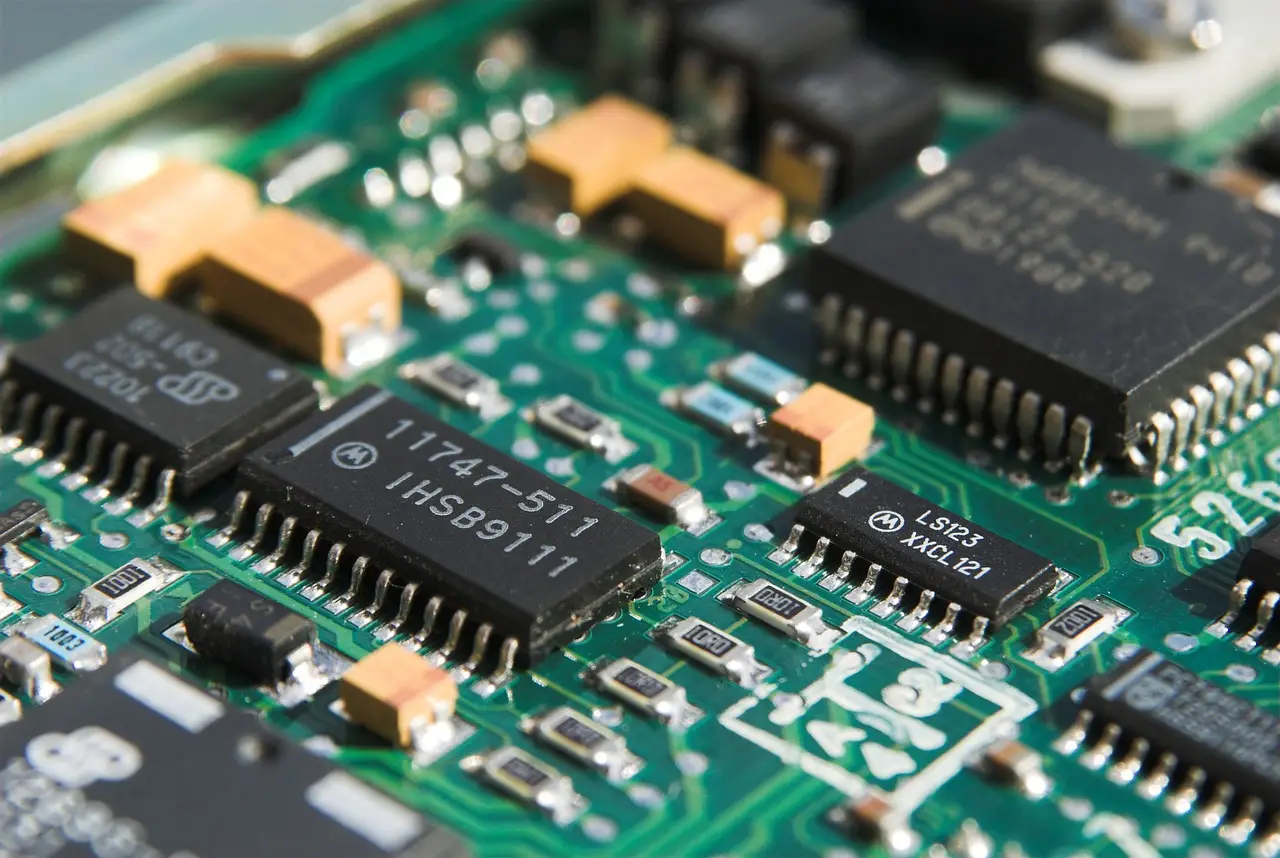
Moonshot AI's Kimi K3 releases and DeepSeek's V4 models carry numerical fingerprints consistent with training on Nvidia Blackwell GPUs, hardware Washington bars from export to China, according to research reported by TechCrunch on November 13. The claim is serious. It is also, so far, a research finding — not proof of who owned the chips, where they ran, or whether any law was broken.
Research summaries, including coverage by The Register, attribute the forensic work to Will DePue, a former OpenAI researcher, published November 12. The analysis reportedly covers six models from four developers: DeepSeek, Moonshot AI, MiniMax and Ant Group. The six-model count and developer list are reported, not independently verified.
How do hardware fingerprints work?
A trained model is a set of numbers — its weights. Different chips round arithmetic differently, order operations differently, and support different formats. Those quirks leave tiny numerical traces. The research claims those traces can be matched to a hardware family; here, the traces are consistent with Blackwell.
"Consistent" carries a lot of load. The pattern does not prove a model finished training on Blackwell, does not say how many chips were involved, and cannot tell you whether the hardware sat in Shenzhen, Singapore or a Texas data center. Some summaries suggest early training or initialization stages may be what shows up, leaving later stages on other silicon.
At best a fingerprint narrows candidate chips. It cannot name an owner, show how a chip was obtained, or reveal whether an export license applied. Those answers live in invoices, cloud logs and customs paperwork. None has surfaced publicly.
What does this change for teams running these weights?
Nothing legally. No part of the reporting says using Kimi or DeepSeek models is illegal. But open weights circulate widely among Western startups, universities and enterprise teams, and exposure to sanctions pressure travels with the files. Expect procurement checklists to start asking where a model came from and how it was trained. The sensible response: document model versions, weight sources and licenses, and keep an alternative on the shelf.
There is a second-order effect. If weights can be traced to training hardware, compute provenance becomes a compliance attribute, much like a software bill of materials. Vendors who can document clean provenance may gain a selling point.
Four things nobody has confirmed
- Exact GPU models. Only Blackwell-consistent patterns are described; some summaries name Grace Blackwell or B200-class parts, which no confirmed reporting establishes.
- Chip counts. No figure has been published for any named model.
- Location. Overseas or third-party compute could explain the findings; no geography is verified.
- Jensen Huang's role. Nothing links the Nvidia chief executive to authorizing or knowing about any transfer. The source headline plays on his name; the facts do not support the implication.
How could Chinese labs reach banned chips?
Reporting cited with the story describes a rental route: Chinese companies lease capacity in data centers outside China, ship training jobs abroad, and pull the finished weights home. No ownership, no imports. Whether that violates U.S. rules depends on ownership and licensing details nobody has published. That route fits a world where the labs did nothing improper under current law — and it exposes a structural gap: a shipment ban does not automatically control who can use hardware sitting in a rack elsewhere.
The policy ladder gives context. The H800 was designed for China under earlier thresholds, then banned. The H200 ships under conditions including a reported 25% tariff. Blackwell sits above both, banned outright. Moonshot AI said in January it trained Kimi K2.5 on H800 chips — a statement about an older model that neither confirms nor contradicts the K3 claim, though it shows the company has been open about using Nvidia silicon.
Prior signals and analyst context
Michael Kratsios, identified as a White House technology adviser, said earlier in 2026 that Moonshot AI had used export-banned Nvidia chips, citing U.S. intelligence. That makes the Kimi K3 finding the second public allegation against the same company this year. Lian Jye Su, chief analyst at Omdia, said Chinese vendors still use cutting-edge Nvidia chips to train their models — a general statement that offers context, not confirmation.
What happens next
Nvidia reports earnings November 17, with analysts certain to press on China exposure and customer screening; the company has neither confirmed nor denied the research. Lutnick testifies December 10 on Nvidia's China chip sales, where the fingerprint finding gives senators a fresh exhibit and remote-access rules may enter the debate.
Three plausible scenarios fit the evidence: overseas rental (legality depends on contract details), banned hardware inside China (diversion or enforcement failure), or a mixed path with early training abroad and later stages elsewhere. No reporting picks among them. One verified invoice or log would settle it. Until then, treat the claim as a strong lead, not a verdict.
via shattered.io (Source)
More from Grace Kim
Show full bio
Market editor covering regulation, policy and their impact on hardware layer of artificial intelligence at Die Signal.
565 articles
Same lot · LOT-362B
- DSG-557210nmSix Chinese AI Models Carry Nvidia Blackwell Fingerprints
- DSG-858114nmDeepSeek and Huawei Reportedly Team Up on AI Chips to Rival Nvidia
- DSG-845928nmDeepSeek and Huawei to co-develop open-source AI chip software
- DSG-730210nmMoonshot AI's 32 B300 Server Lease Exposes U.S. Export Control Gaps
- DSG-867365nmFive Open-Weight Models, Three Run Paths: A Buyer's Ledger for November 2026