Test report · tested November 6, 2026
Foundries & ManufacturingDevice under test
Barclays sees AI probe-card market at €7.1 billion by 2030
Barclays rates Technoprobe overweight with a €40 target and sees AI probe-card demand rising from €1.7 billion in 2026 to €7.1 billion in 2030, with FormFactor posing the main share risk.
- Read
- 3 min
- Words
- 597
- Segment
- Foundries & Manufacturing
- Operator
- Marcus Bennett
Spec summary
- Barclays initiated Technoprobe at overweight with a €40 price target.
- The AI probe-card market may grow from €1.7 billion in 2026 to €7.1 billion by 2030.
- Technoprobe holds about 60% of the leading-edge logic probe-card market and close to 100% for AI graphics chips.
- Barclays forecasts Technoprobe revenue of €3.5 billion in 2030 against the company’s €2.8 billion estimate.
- FormFactor may reduce Technoprobe’s share of AI graphics-chip probe cards to about 85% by 2028.
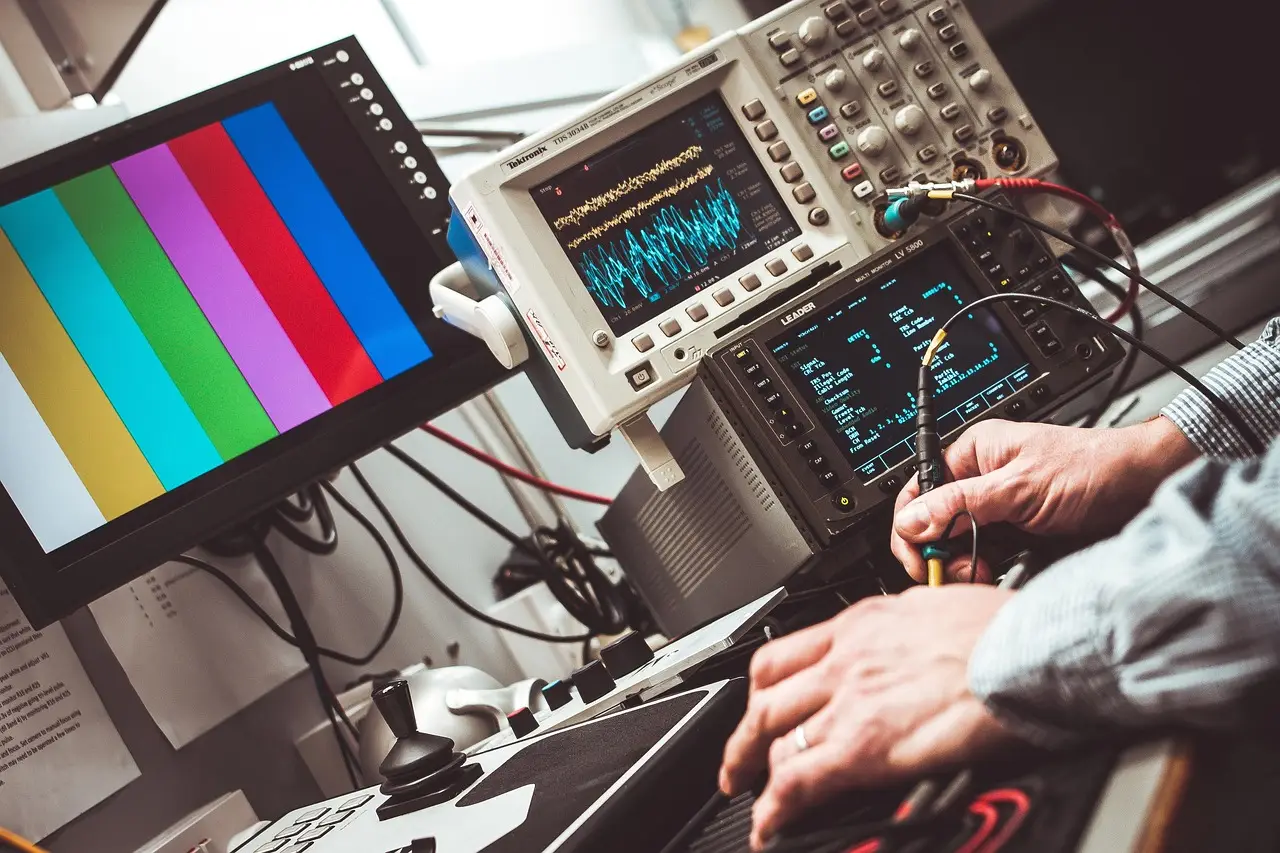
Barclays expects the AI probe-card market to expand from about €1.7 billion in 2026 to about €7.1 billion by 2030.
The forecast supports Barclays’ initiation of Italian chip-testing equipment maker Technoprobe (BIT:TPRO) with an “overweight” rating and a €40 price target. The bank based its work on interviews with more than 20 industry experts.
How do probe cards capture AI chip growth?
Probe cards connect chips to test equipment. Testers use them to screen out faulty chips before packaging. Barclays says more complex AI chips require longer and more frequent tests. Demand for probe cards should therefore grow faster than chip volumes.
Technoprobe holds about 60% of the probe-card market for leading-edge logic chips. Its share of probe cards used to test AI graphics chips is close to 100%. The investment case thus rests on higher test intensity for advanced AI chips, not only higher semiconductor shipments.
The two share figures cover different scopes. The 60% figure spans probe cards for leading-edge logic chips. The near-100% figure applies to the narrower AI graphics-chip segment, where FormFactor has now qualified.
What does Barclays assume about revenue and earnings?
Barclays models Technoprobe’s 2030 revenue at €3.5 billion, above the company’s own €2.8 billion forecast. The company’s forecast gives no credit for co-packaged optics and includes about €200 million of memory-chip revenue. Barclays’ model assumes about €410 million from memory chips.
- Barclays forecasts 2027 earnings per share of €0.86, 6% above Bloomberg consensus of €0.81.
- Its 2028 EPS forecast is €1.17, 9% above Bloomberg consensus of €1.07.
- Gross margin rose to 57% in Q2 FY26, up from 40% in Q3 FY25.
- Technoprobe guides to a 61.5% gross margin, plus or minus 2 percentage points, for Q3 FY26.
Research, sales and administrative costs have remained flat for six quarters while revenue grew strongly. The gross-margin increase equals 17 percentage points from Q3 FY25 to Q2 FY26. At the midpoint, Q3 FY26 guidance implies another 4.5-point increase.
Barclays forecasts an EBITDA margin of 48% in 2026 and 53% in 2028, against 32% in 2025. That path requires 16 percentage points of expansion in 2026, followed by another five points through 2028.
What changes for Technoprobe investors?
For investors, the change is a larger capacity program set against faster market growth. The payoff depends on execution.
Technoprobe raised its spending plan to about €350 million for Q1 FY26 through Q1 FY27, up from about €240 million. The company expects the investment to lift capacity to at least €1.6 billion by end-Q1 FY27, from €1.4 billion.
Barclays estimates a 46% return on invested capital. Its own 2026 spending forecast of €240 million is below consensus of about €285 million. Barclays calls the difference “a delay rather than a cut.”
Technoprobe guides to 2026 revenue of €1.05 billion to €1.10 billion and Q3 2026 revenue of €314 million. Barclays sees an update on another expansion plan, possibly in November, as a key catalyst.
What could weaken the thesis?
FormFactor has qualified for AI graphics chips. Barclays expects 2027 to bring FormFactor’s first meaningful share gains at Technoprobe’s expense. Its model assumes Technoprobe’s share of those chips falls to about 85% by 2028.
For investors, Barclays’ case therefore needs strong AI test demand and on-time capacity conversion to outweigh measurable competition from 2027. The above-consensus EPS forecasts and €40 target depend on both operating delivery and share retention.
via Google News: AI chip (Source)
More from Marcus Bennett
Show full bio
News editor covering regulation, policy and their impact on hardware layer of artificial intelligence at Die Signal.
800 articles
Same lot
- AI Chips Need Testing, and Teradyne Is Winning — but Is the Stock Too Rich?
- TSMC Posts Strong Earnings, But AI Returns Face a Tougher Test
- GlobalFoundries Q1 2026 Revenue Climbs 23% YoY on AI Demand
- AI Chip Iteration Hits Testing Bottleneck as Test Times Surge Up to 2.5x
- AI Chips Outpace Test: Insertions Double, Silicon Dies Before Deployment