Test report DSG-4688 · Rev A · tested September 30, 2026
Processors & AcceleratorsDevice under test
AI Chip Iteration Hits Testing Bottleneck as Test Times Surge Up to 2.5x
AI chip developers face a testing bottleneck: validation times have surged up to 2.5 times previous levels while costs climb, constraining rapid accelerator iteration cycles.
- Read
- 3 min
- Words
- 690
- Node
- 20nm
- Operator
- Amara Osei
Spec summary
- AI chip test times have surged by up to 2.5 times previous levels
- Testing costs are climbing as a direct consequence of the bottleneck
- The testing stage now constrains the iteration speed of AI accelerator development
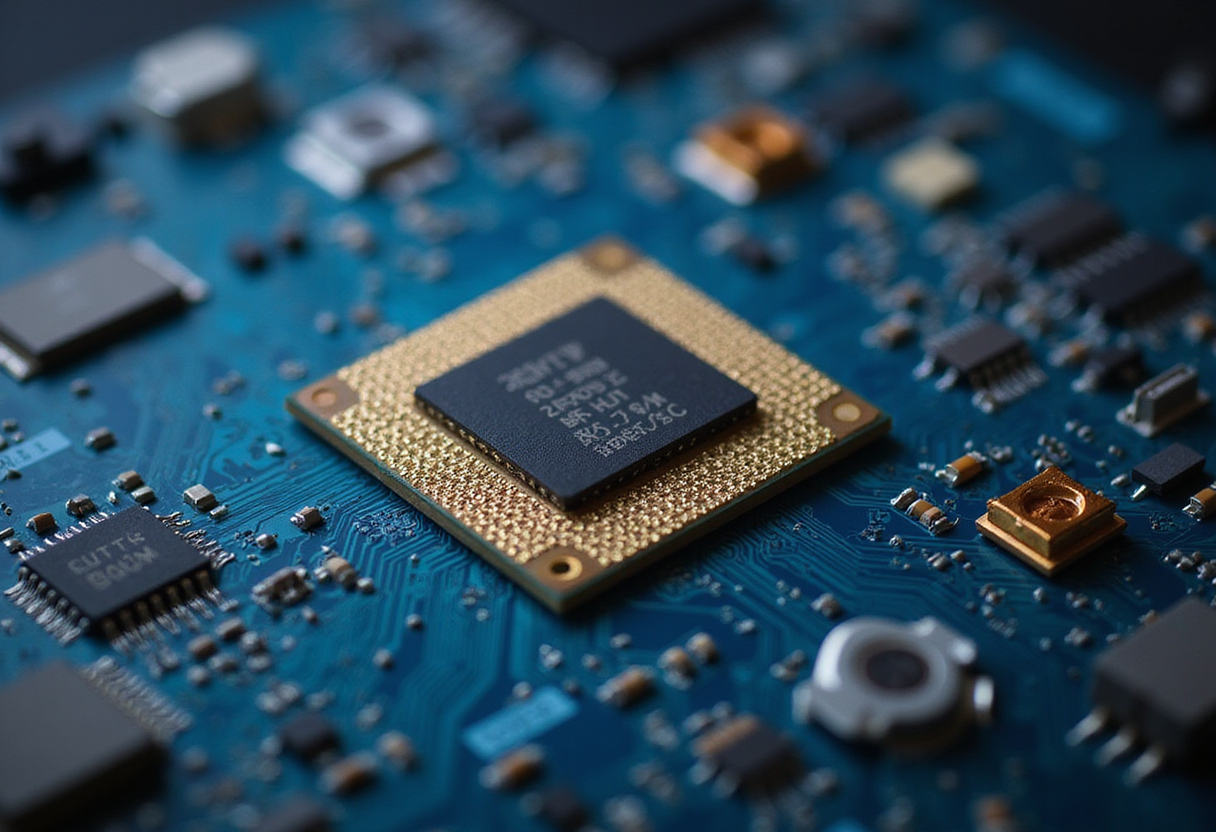
The pace of AI chip iteration has run into a structural constraint: testing. According to a report from finance.biggo.com, semiconductor developers working on AI accelerators now face test times that have surged by as much as 2.5 times previous levels, with corresponding increases in cost.
The numbers frame the problem directly. A test process that once consumed a set amount of calendar time and equipment capacity now requires up to two and a half times that budget. For chipmakers already racing to ship successive generations of AI silicon on compressed schedules, the testing stage has become the point where iteration speed stops scaling.
Costs climb alongside the time penalty. Each additional test hour consumes expensive automated test equipment, engineering labor, and facility capacity. When total test duration multiplies by 2.5, the per-unit validation budget multiplies with it. The report identifies this cost escalation as a direct consequence of the testing bottleneck rather than an independent trend.
Why does this matter for the AI chip market? Because iteration speed has been the core competitive variable. Developers have pushed new accelerator designs through design, tape-out, and production at a cadence far faster than traditional semiconductor product cycles. The testing stage now constrains that cadence. A company can design faster, fabricate faster, and still wait in the test queue.
The bottleneck carries several market implications.
First, time-to-market pressure intensifies. If testing absorbs up to 2.5 times the duration it previously required, the interval between a chip's design freeze and its commercial availability stretches. In a segment where customers evaluate accelerators generation by generation, that stretch can decide competitive positioning.
Second, unit economics deteriorate. Test cost is a component of cost of goods sold. A 2.5x surge in test time pushes validation spending upward at exactly the moment when AI chip developers face pricing pressure from large cloud customers negotiating volume purchases.
Third, capacity allocation becomes a strategic question. Test equipment and engineering teams are finite resources. Longer test cycles for each AI chip design mean fewer designs can move through validation in a given period, forcing companies to prioritize which products reach the market first.
The testing burden grows from the nature of the chips themselves. AI accelerators pack enormous numbers of compute elements onto single dies, and each new iteration increases the surface area — figuratively and literally — that verification must cover. More cores, more interconnect paths, and more operating conditions translate directly into more test cases and longer test execution. The 2.5x figure reported by finance.biggo.com quantifies how sharply this burden has risen as iteration has accelerated.
The cost consequence compounds across generations. Each successive AI chip family inherits a larger validation workload than the one before it, while the market expects the development cycle to stay short or shrink. The gap between those two forces is where the bottleneck bites.
For the supply chain, the effects spread beyond the chip designers themselves. Test equipment vendors, outsourced semiconductor assembly and test (OSAT) providers, and internal validation teams all face demand for capacity that existing infrastructure struggles to satisfy. Long test times tie up equipment that other product lines also need.
For customers of AI silicon — cloud providers, server OEMs, and enterprises building AI infrastructure — the bottleneck signals potential schedule risk. Chips announced on aggressive timelines may encounter delays at the validation stage even when design and fabrication proceed on plan.
The report's central claim is stark in its simplicity: AI chip iteration has hit a testing bottleneck. Costs climb. Test times surge up to 2.5x. The industry's ability to keep delivering new accelerator generations at the current pace now depends on how it resolves the mismatch between design iteration speed and test capacity.
How the industry responds remains the open question. Whether through expanded test capacity, revised validation methodologies, or acceptance of longer qualification cycles, the 2.5x test time surge documented by finance.biggo.com marks a concrete obstacle on the path that AI silicon development has followed — one measured in hours of equipment time and dollars of validation spending, not in marketing language.
via Google News: AI chip (Source)
More from Amara Osei
Same lot · LOT-C1D0
- DSG-467345nmTSMC Reports 45% Sales Surge Driven by AI Chip Demand
- DSG-135810nmAxelera AI Closes Funding Round Above $250 Million
- DSG-555310nmAI Server Demand Drives DDR5 Module Prices Up Fivefold in 10 Months
- DSG-760928nmUBS: Power Supply Can Meet AI Chip Demand Through 2030
- DSG-461745nmBaidu's 15-Year AI Chip Bet Faces Its Public Market Test