Test report · tested November 6, 2026
Foundries & ManufacturingDevice under test
ASML vs TSMC: duopoly math behind the AI chip boom, in numbers
Semiconductor revenue reached $792 billion in 2025. ASML grew net income 133%; TSMC holds 73% of the foundry market. We stress-test the bull case for each.
- Read
- 3 min
- Words
- 595
- Segment
- Foundries & Manufacturing
- Operator
- Priya Raman
Spec summary
- Semiconductor industry revenue reached $792 billion in 2025, up nearly 26% from 2024 (SIA).
- ASML Q3 revenue was 11.66 billion euros, up 55% year over year; net income rose 133%.
- TSMC Q3 revenue was $46.7 billion, up 41%; EPS jumped 69% to $29.43.
- TSMC controls 73% of the global foundry market versus 7% for the second player (Counterpoint Research).
- ASML plans to lift EUV machine capacity by 30% next year and over 30% in 2028.
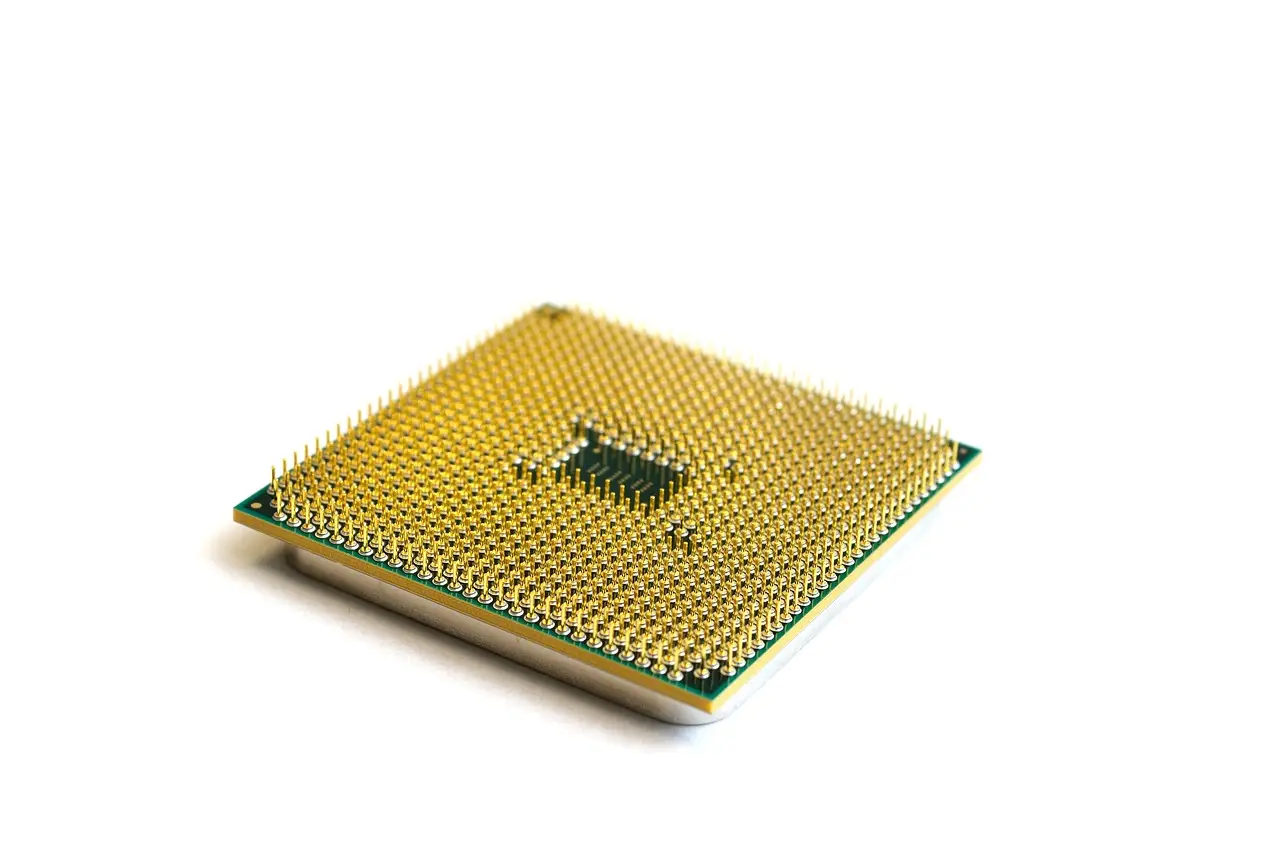
The semiconductor industry generated $792 billion in revenue in 2025, up nearly 26% from 2024, according to the Semiconductor Industry Association. That figure stood at $439 billion in 2020. McKinsey now projects $2.3 trillion in industry revenue by 2030 — a forecast revised upward from the $1.6 trillion guidance issued a year ago. Two companies sit at the top of this supply chain: Taiwan Semiconductor Manufacturing and ASML Holding. The question for investors is which monopoly-like position deserves the capital.
Where does each company sit in the chain?
TSMC is the world's largest semiconductor foundry (a factory that manufactures chips for fabless designers). ASML builds the machines those foundries use. ASML's extreme ultraviolet lithography systems print billions of transistors onto a chip with light, enabling smaller, faster and more power-efficient designs. AI chip designers including Nvidia, Advanced Micro Devices and Broadcom now design around process nodes of 5 nanometers or smaller.
That dependency cuts one way. ASML is the only manufacturer of EUV machines capable of producing advanced AI chips. This sole-supplier status gives it pricing power that analysts cite when raising long-term earnings estimates. Caveat: sole-supplier status protects margins only as long as no rival enters the field, and none of the projections quoted here price in that risk.
What do the latest results show?
ASML reported Q3 revenue of 11.66 billion euros, up 55% year over year. Net income rose 133% from the year-ago period. The company sold 113 new lithography systems last quarter, a 71% year-over-year jump. It plans to raise EUV machine production capacity by 30% next year and by more than 30% in 2028.
TSMC's numbers are larger but slower-growing:
- Q3 revenue of $46.7 billion, up 41% year over year
- 73% share of the global foundry market, per Counterpoint Research, versus 7% for the second-placed competitor
- 79% of revenue from chips at the 7nm node or below, up from 74% a year earlier
- Net profit margin up 5.4 percentage points year over year, driving a 69% earnings-per-share jump to $29.43
Both companies posted growth that outpaces most large-cap industrials. Note what the figures do not say: neither the margin expansion nor the capacity plans guarantee demand holds if AI data-center spending slows.
How are the two linked?
TSMC is an ASML customer. The Taiwanese foundry recently said it will use ASML's High NA EUV machines (a next-generation lithography system with higher-resolution optics) to increase advanced chip production, and expects broader adoption of the technology to meet AI chip demand. Given that 79% of TSMC revenue already comes from sub-7nm manufacturing, further node shrinks imply more machine purchases from its sole EUV supplier. ASML, in effect, taxes TSMC's growth.
Which stock should investors buy?
The source's verdict: both. ASML is growing faster — triple-digit earnings growth, capacity expansion locked into 2028 — and can arguably justify its premium valuation on that basis. TSMC offers a mix of growth and value, with analysts expecting long-term earnings-per-share growth above 40%. The final choice reduces to how much valuation investors will pay for exposure to the same semiconductor expansion.
The skeptic's read is narrower. The McKinsey revision from $1.6 trillion to $2.3 trillion within a single year signals forecast volatility, not forecast precision, and a duopoly extracting price increases from its customers depends on AI demand persisting through 2030. Investors buying either stock are underwriting that assumption, whatever their preferred ticker.
via Google News: Semiconductor supply chain (Source)
More from Priya Raman
Show full bio
Correspondent covering money, funding and market shifts around hardware layer of artificial intelligence at Die Signal.
731 articles
Same lot
- TSMC and ASML Earnings Next Up: Analysts Lay Out Bull and Bear Cases
- ASML Profit More Than Doubles as AI Chip Demand Runs Hot Through 2028
- TSMC Posts $46.7 Billion Quarter; Investors Face One Open Question
- ASML Sees Q4 Sales Topping Estimates on AI Chip Demand
- CNBC tours $25B supplier behind next-generation AI chips