Test report · tested November 29, 2026
Memory & StorageDevice under test
AMD MEXT Claims 95% Performance on Half the Server DRAM
AMD MEXT Predictive Memory Software kept 94.8% of PrimeTime performance at half the DRAM in AMD's own test. No price, no independent replication, 86 internal servers deployed.
- Read
- 4 min
- Words
- 865
- Segment
- Memory & Storage
- Operator
- Priya Raman
Spec summary
- AMD MEXT kept 94.8% of PrimeTime performance at 256GB DRAM versus a 512GB baseline, per AMD's own test reported November 11, 2026.
- AMD claims 20% to 75% DRAM reduction depending on workload; Spark on Azure kept 99.3% at half memory.
- AMD IT's deployment across 86 servers added 58TB of usable memory for estimated savings of $2.78 million, unaudited.
- AMD plans 2,000 internal MEXT servers in 2027; no price or launch date for the licensed phase is public.
- No independent lab, external customer or third-party benchmark has replicated any MEXT figure.
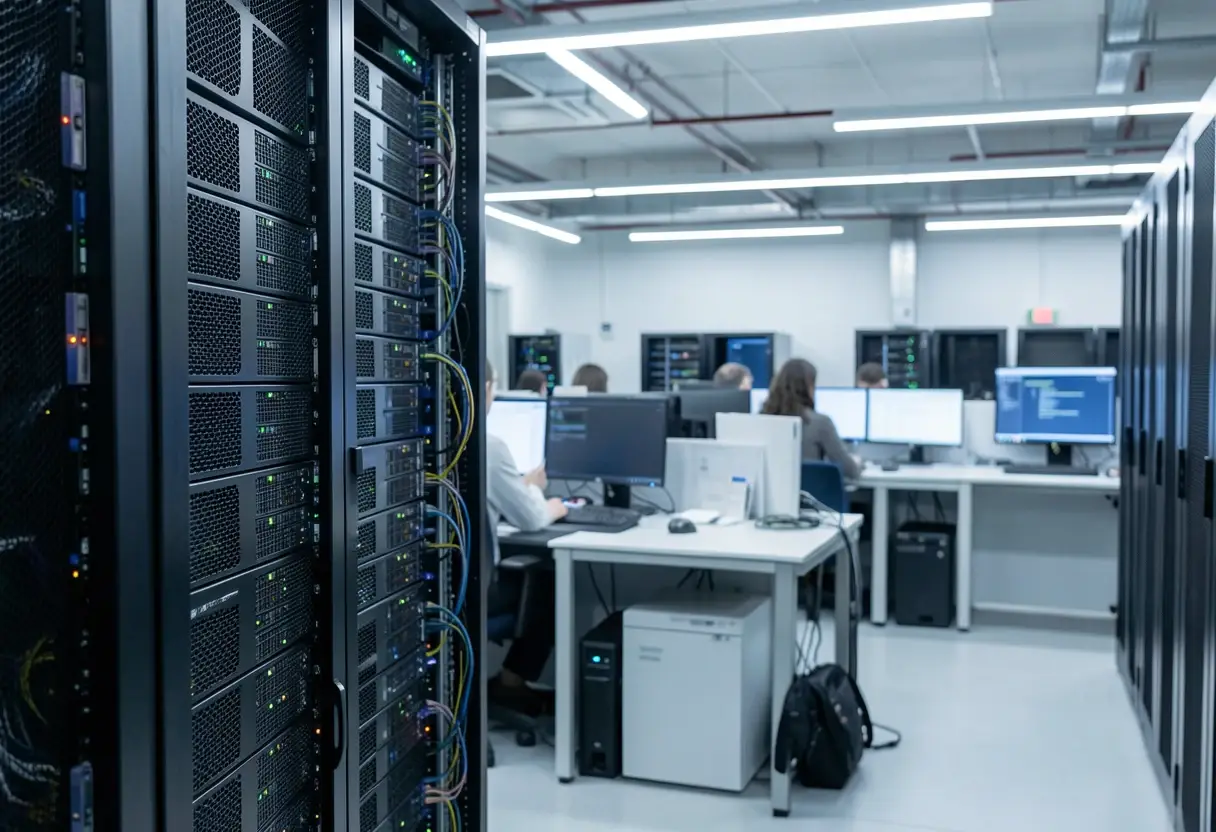
AMD claims a server can run a chip-timing workload on half the DRAM and keep 94.8% of full speed. The claim comes from AMD's own test of its MEXT software, reported by Tom's Hardware on November 11, 2026. It arrives while DRAM contract prices keep climbing. Treat the headline number with care. It is one workload on one machine, measured by the company selling the software.
What is MEXT, exactly?
MEXT is not a memory chip. It is software that uses AI to tier memory pages between DRAM and NVMe flash, so cold pages sit on cheap storage and hot pages stay in RAM. The official name is AMD MEXT Predictive Memory Software, version 1.2 in current documents. AMD says the approach cuts required DRAM by 20% to 75%, depending on workload and performance target.
The prediction layer is the novel part. According to Tom's Hardware's account of AMD's briefing, MEXT uses a transformer-based model that predicts which page the application needs next, much as a language model predicts the next token. If the prediction runs ahead of flash latency, the application never notices. The software ships as a Linux kernel module, arrives without pre-training, trains in under a second at deployment, and runs on a single EPYC core with no GPU. AMD says one command installs it, in under five minutes.
Requirements exist despite the "software-only" label. Dedicated NVMe storage serves as backing capacity, OS swap is disabled, and the target is Linux servers — bare metal, virtualized, containerized, on premises or cloud. AMD's product page says workloads needing more than 64GB of DRAM gain the most. A web server with a few gigabytes of working set has little reason to care.
Where does the 95% figure come from?
The test uses Synopsys PrimeTime, a static timing analysis tool (chip signoff before manufacturing) that loads huge netlists into RAM. The configuration was a single-socket EPYC 9686F. The baseline carried 512GB of DRAM. The MEXT configuration paired 256GB of DRAM with roughly 256GB of flash and reached 94.8%, rounded to 95%.
The curve below the headline matters more. At 192GB of DRAM, performance held 90%. At 128GB, it held 80%. That is a smooth trade-off, not a free lunch. AMD's own materials stop short of presenting 50% and 95% as a universal specification.
What did AMD's own IT deployment show?
A separate case study, titled "AMD IT Avoids 82% of DRAM Expansion Costs" and updated November 25, describes a rollout begun in September 2026. Here AMD did not shrink DRAM at all. It added 20% more usable memory at 18% of the cost of equivalent DRAM. Across 86 production servers, the deployment added about 58TB of usable memory and produced estimated savings of $2.78 million.
Two cautions apply. The savings are AMD's own estimate, not audited. And the server count shifts: the case study says 86 hosts, while Tom's Hardware put the count above 100 days later. AMD plans 2,000 internal servers in 2027 — a plan, not a finished deployment.
What other workloads did AMD test?
- Apache Spark on an Azure VM with an EPYC 9V45: 128 GiB of DRAM kept 99.3% of a 256 GiB baseline's speed. Analytics jobs sweep memory in predictable runs, which favors a prediction model.
- Agentic AI on 6th Gen EPYC: half the baseline DRAM, 512GB of MEXT backing, near-baseline results on a mixed-phase geometric mean. AMD cites about 1.99x performance per DRAM dollar, and up to 3.5x in another configuration. The two figures describe different setups.
- PrimeTime on Azure HX-series VMs: a reported 39.7% throughput gain. The baseline is unclear from the public summary. Flag it, do not bank on it.
What is missing?
No figure in this story comes from an outside lab, a non-AMD customer, or a third-party benchmark suite. Every number traces back to the vendor. That does not make them wrong; it means none has faced independent replication.
Price is the other gap. AMD has published no list price, subscription tier, per-server fee or launch date for the licensed phase. CRN reported that AMD plans to sell paid software through partners, but that is not an official announcement. The 82% avoided-cost figure compares flash against DRAM and ignores any license fee.
The ecosystem context is real. TrendForce forecasts another 10% to 15% quarterly rise in conventional DRAM contract prices for Q4 2026. Tom's Hardware reports an HPE partnership and a MEXT Ready badge on some EPYC servers, with a second phase adding licenses and a monitoring tool called RAM View, undated. On the competitive side, CXL-attached memory (a slower memory tier over the bus) needs new hardware; MEXT runs on servers a buyer already plans to purchase. It also ties the benefit to AMD's roadmap.
Open questions remain: which workloads fall off the curve below the 50% DRAM mark, what NVMe endurance costs, and how MEXT behaves under noisy-neighbor conditions in shared cloud hosts. Buyers should pilot on their real workloads before changing a purchase order.
via shattered.io (Source)
More from Priya Raman
Show full bio
Correspondent covering money, funding and market shifts around hardware layer of artificial intelligence at Die Signal.
788 articles
Same lot
- AI Agent Boom Drives Memory Demand: All Eyes on Micron Earnings
- CXMT to Invest RMB 34.9 Billion in DRAM Capacity, In-House Test
- CXMT moves new memory-chip platform into mass production
- CXMT to Start HBM3E Production at 20-30% Yields Despite Heavy Losses
- Micron Warns RAM Supply Will Tighten Further as Prices Climb