Test report DSG-6984 · Rev C · tested September 30, 2026
Memory & StorageDevice under test
AI Agent Boom Drives Memory Demand: All Eyes on Micron Earnings
Micron (MU.US) reports earnings with the market expecting a significant beat plus a share buyback, as AI agent workloads drive demand across HBM, DRAM and SSDs.
- Read
- 3 min
- Words
- 517
- Node
- 5nm
- Operator
- Amara Osei
Spec summary
- Micron (MU.US) is about to report earnings, with the market anticipating a significant beat plus a share buyback.
- Demand driven by AI agents spans HBM, DRAM and SSDs — the full memory stack, not a single segment.
- Agent workloads require persistent state, rapid context retrieval and high-throughput storage, extending demand beyond GPU-attached HBM.
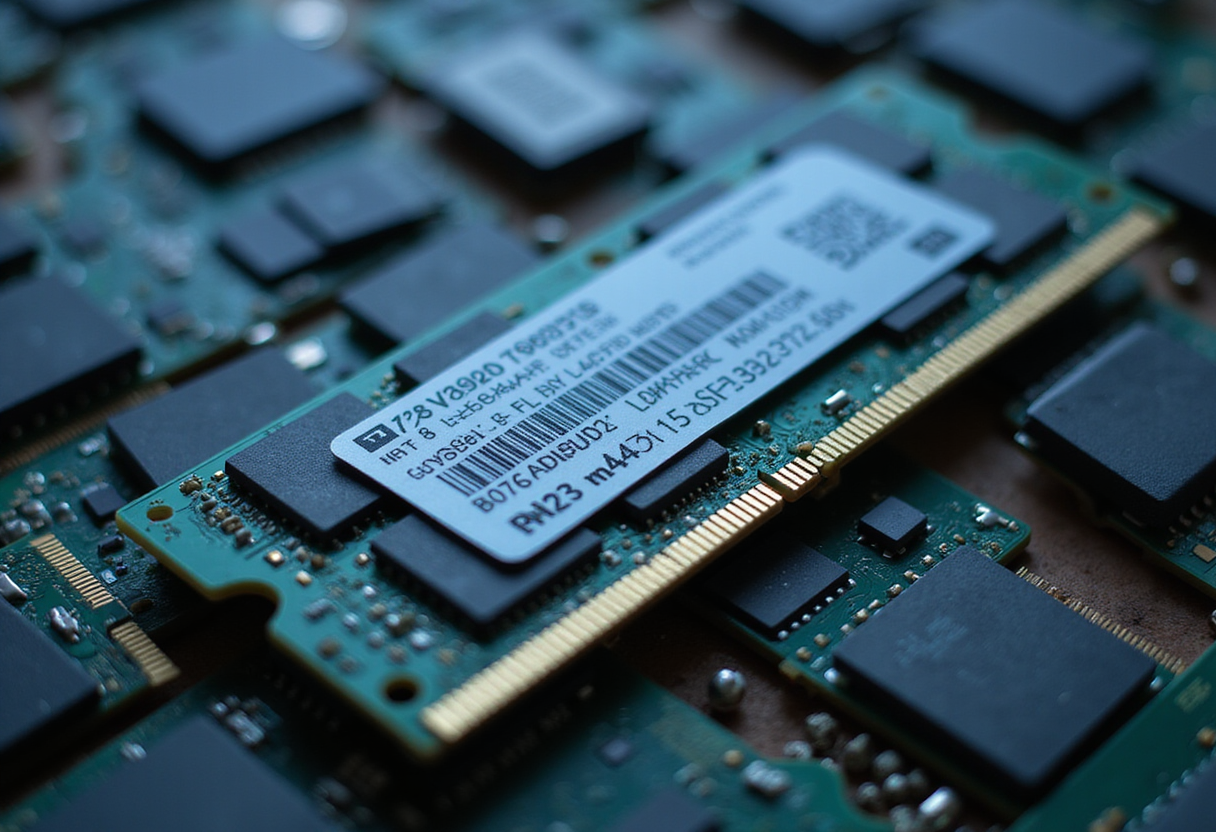
Micron Technology (MU.US) takes center stage this week as investors await its latest earnings report, with sentiment across the memory sector running hot on demand triggered by AI agents.
The anticipation centers on a specific scenario: a significant beat on consensus estimates, paired with a shareholder-friendly capital return in the form of a share buyback. Traders and analysts have framed this combination as the expected "bonus package" from the report — a bar that Micron must now clear or exceed.
Demand spans the full memory stack
What distinguishes the current cycle is the breadth of the demand. The surge is not confined to a single product category. It runs from high-bandwidth memory (HBM), the premium DRAM variant used in AI accelerators, through conventional DRAM, and into solid-state drives (SSDs).
AI agents — systems that perform multi-step tasks with a degree of autonomy rather than simply responding to single prompts — are driving this breadth. Agent workloads differ from earlier generative AI patterns. They require persistent state, rapid context retrieval and high-throughput storage, which pulls on conventional DRAM and NAND-based SSD capacity alongside the HBM attached directly to GPUs.
That dynamic matters for Micron specifically. The company is one of the few suppliers with exposure across all three segments. When AI demand concentrated in HBM alone, the benefit accrued narrowly. When agents extend demand into standard DRAM and client- and enterprise-class SSDs, the upside spreads across a larger share of Micron's product portfolio.
What the market is pricing
The phrase "significant beat" reflects expectations that consensus figures have lagged the speed of price and volume moves in memory over recent months. In fast-moving memory cycles, sell-side models built on quarterly data points tend to undershoot when pricing turns abruptly. Investors positioning ahead of the print are betting on exactly that gap.
The buyback expectation signals a second judgment: that Micron's balance sheet can now support capital returns. Memory suppliers historically freeze shareholder returns during downturns to preserve cash, and restart them only when management confidence in the cycle's durability is high. A buyback announcement would therefore read as an internal endorsement that the current demand strength is structural, not a short-lived inventory correction.
Why this report matters beyond Micron
Micron reports ahead of its larger Korean and Chinese competitors in the memory calendar, and its results often set the tone for the sector. A confirmation of broad-based strength — HBM plus DRAM plus SSD — would validate the thesis that AI agents represent a new, sustained leg of memory demand rather than an extension of the 2023–2024 training-infrastructure buildout.
A miss, or guidance that disappoints against the elevated bar, would carry the opposite signal. With expectations now anchored to a "significant beat plus buyback," the report has become a binary test of the AI-agent demand narrative for the entire memory supply chain.
The extent of any capital return program, the pricing commentary across the three product lines, and management's characterization of agent-driven demand will be the details investors parse once the numbers land.
via Google News: HBM memory (Source)
More from Amara Osei
Same lot · LOT-C1D0
- DSG-31465nmMicron Q3 Results: AI Demand, HBM Gains, Supply Limits Frame Outlook
- DSG-698228nmMicron Earnings: AI Chip Demand Drives Fresh Memory Boom
- DSG-397414nmMicron Sets New Revenue and Profit Records on Sustained AI Demand
- DSG-878265nmMicron's Quarterly Revenue Quadruples Year Over Year on AI Demand
- DSG-655414nmMicron Forecasts $61.5 bn Revenue on AI Memory Demand