Test report DSG-7221 · Rev D · tested October 11, 2026
AI Datacenter InfrastructureDevice under test
Bernstein: AI Data Center Buildout Costs Hit $39.5 Billion per GW
Bernstein puts AI data center investment at up to $39.5 billion per gigawatt, with depreciation — driven by short-lived accelerator hardware — identified as the biggest cost burden.
- Read
- 4 min
- Words
- 785
- Node
- 3nm
- Operator
- Elena Vasquez
Spec summary
- Bernstein estimates AI data center investment at up to $39.5 billion per gigawatt of capacity.
- The report identifies depreciation as the single biggest cost burden in AI data center economics.
- Accelerator hardware with short useful life drives the dominant depreciation charges.
- Operators, not chip suppliers, carry the depreciation and residual value risk.
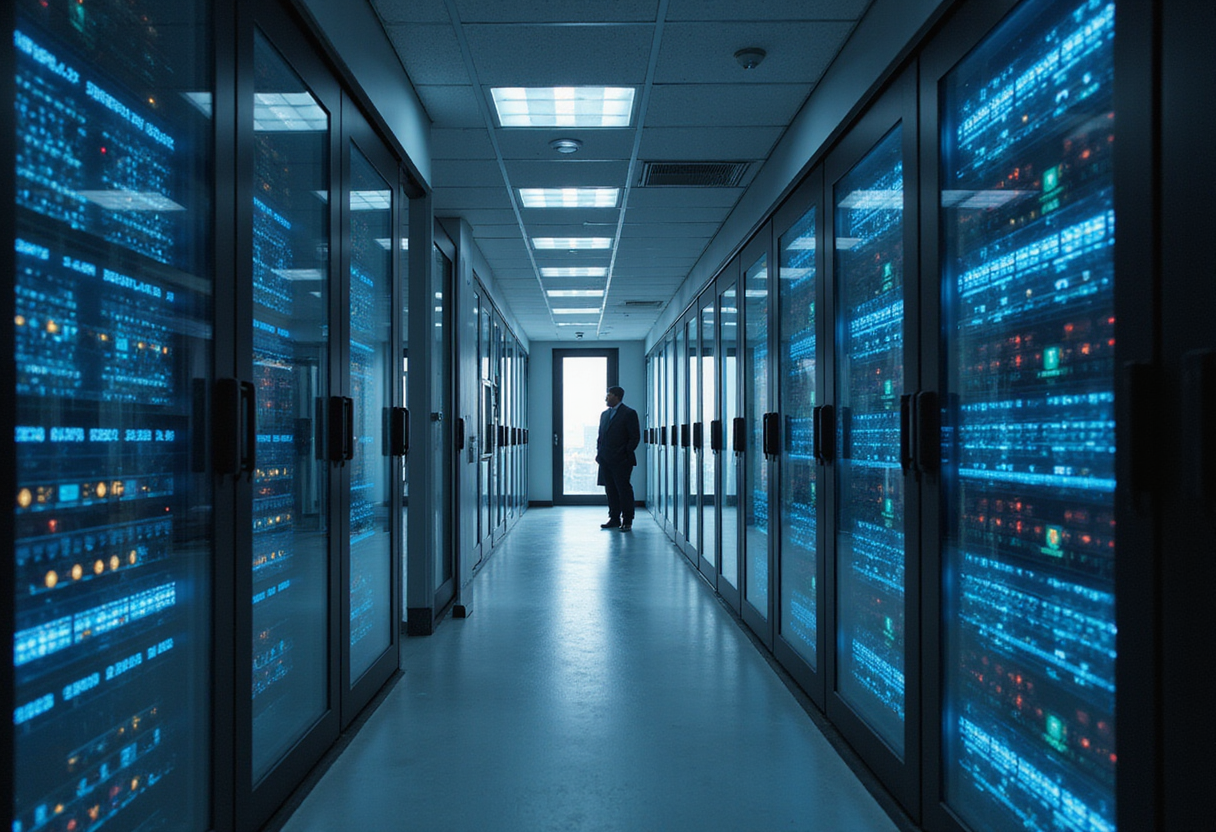
AI data center investment reaches up to $39.5 billion per gigawatt of capacity, according to an analysis by Bernstein — and the research firm identifies depreciation, not power or chips alone, as the single biggest cost burden operators will carry.
The figure anchors a valuation question that now sits at the center of the AI infrastructure debate: whether the capital being committed per gigawatt can generate returns that outlast the hardware's accounting life. Bernstein's framing puts the depreciation line item above every other operating and capital cost category in the model.
What does the $39.5 billion per GW number represent?
The Bernstein estimate covers total investment required to bring a gigawatt of AI-ready data center capacity online. At that intensity, the cost of building out large-scale AI training and inference clusters is no longer comparable to traditional cloud data center economics. The capital outlay per unit of power has escalated as server configurations, networking, cooling and power delivery systems have been re-specified for high-density AI workloads.
The report's core message is blunt. The biggest burden is not construction, land, or even the electricity bill over the facility's life — it is depreciation. High-performance AI hardware, above all GPUs and accelerators, carries a short useful life. As those assets are written down on corporate books, the resulting depreciation charges flow directly through profit and loss statements, weighing on margins for years after the initial purchase.
This cost structure differs sharply from earlier data center generations. Traditional facilities allocated most of their capital to long-lived assets: shells, power infrastructure and cooling plant amortized over 15 to 25 years. The AI buildout inverts that mix. The majority of the per-gigawatt investment now sits in IT equipment with far shorter depreciation schedules, and that equipment must be refreshed at a pace set by the accelerator release cycle rather than by the building's condition.
Why does depreciation dominate the cost stack?
Depreciation becomes the decisive burden because of a compounding effect. Each gigawatt of AI capacity requires an enormous installed base of accelerators. Those accelerators lose accounting value quickly. When the next hardware generation arrives, the un-depreciated balance of the previous generation still sits on the books, and the operator faces a choice: write it down, absorb underutilization, or keep running economically inferior silicon.
Bernstein's analysis positions this dynamic as the central risk to the economics of the AI infrastructure cycle. The report's title states the conclusion directly: investment reaches up to $39.5 billion per GW, and depreciation is the biggest burden. In other words, the question for operators and their investors is not only whether demand justifies the buildout — it is whether the returns arrive faster than the assets lose value.
For hyperscalers and neocloud providers, the depreciation profile shapes reported earnings well before it shapes cash flow. Companies that expense or rapidly amortize accelerator fleets will show compressed margins even where utilization and revenue run high. Conversely, stretching depreciation schedules flatters near-term results but concentrates write-down risk later — particularly if demand shifts toward newer-generation hardware held by competitors.
Who carries the risk?
The cost structure distributes risk unevenly across the stack. Chip suppliers capture revenue at the point of sale and are largely insulated from the asset's subsequent decline in value. Data center operators — the entities holding the $39.5 billion per gigawasset base on their balance sheets — absorb both the depreciation charge and the residual value risk at refresh time.
This asymmetry matters for how the market reads AI capital expenditure announcements. Headline investment figures measure commitment; they do not measure profitability. Bernstein's depreciation framing gives analysts a tool to convert announced capacity into an implied schedule of future charges, and by extension into the revenue levels operators must clear just to offset the write-down of their own equipment.
The burden also scales with the size of the buildout. Every additional gigawatt committed at this cost intensity adds a further depreciation load that must be serviced by AI workloads whose pricing and utilization are still being established. Bernstein's report implies that the industry's aggregate margin structure depends less on construction costs trending down and more on whether accelerated hardware can earn back its cost within a compressed useful life.
What happens next?
The Bernstein estimate sets a reference point for evaluating every AI infrastructure deal announced from here forward. At up to $39.5 billion per gigawatt, capacity plans translate into balance sheet commitments that will show up in financial statements as depreciation for years — the line item the research firm singles out as the biggest burden of the AI data center era.
via Google News: GPU datacenter (Source)
More from Elena Vasquez
Show full bio
Senior reporter covering industry trends and analytics at Die Signal.
257 articles
Same lot · LOT-C1C7
- DSG-179120nmAmerica plans more AI datacenters than chips can equip
- DSG-84453nmFoxconn Prices NVIDIA Vera Rubin Datacenter at $47B per Gigawatt
- DSG-75935nmGoogle to Pay $920 Million Monthly to SpaceX-xAI for AI Data Center Capacity
- DSG-548945nmNscale Raises $3.36 Billion for AI Cloud Platform and Data Centers
- DSG-460814nmFoxconn Puts NVIDIA Vera Rubin AI Datacenter Cost at $47 Billion Per Gigawatt