Test report DSG-7817 · Rev B · tested October 10, 2026
AI Datacenter InfrastructureDevice under test
Wistron CTO: Power, Not GPUs, Now the Real AI Data Center Bottleneck
Wistron's CTO says power supply has overtaken GPU availability as the main constraint on AI data center expansion, shifting planning to megawatts over chip allocations.
- Read
- 3 min
- Words
- 529
- Node
- 14nm
- Operator
- Grace Kim
Spec summary
- Wistron's CTO states that power, not GPUs, is now the real bottleneck for AI data centers.
- The assessment was reported by DigiTimes.
- The shift means deployment schedules now depend on energization dates rather than GPU delivery.
- Wistron is a major Taiwan-based ODM and AI server manufacturer serving hyperscale customers.
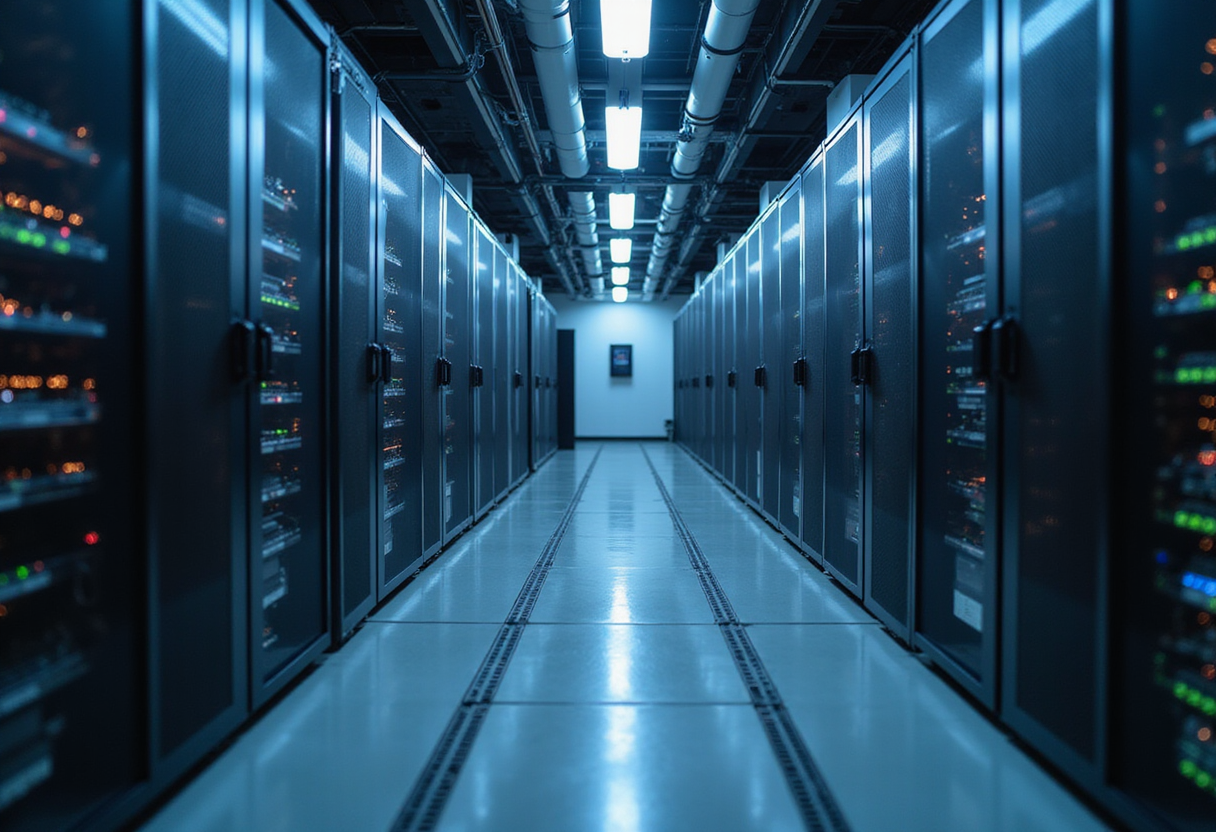
Power has replaced GPUs as the primary bottleneck constraining AI data center buildouts, according to Wistron's Chief Technology Officer. The executive's assessment, reported by DigiTimes, marks a shift in how the industry frames its capacity problem: the constraint is no longer silicon supply but electricity.
For two years, AI infrastructure operators treated GPU availability as the gating factor on expansion. That picture has now changed, the Wistron CTO indicated. Facilities can increasingly source accelerated computing hardware, yet they cannot secure the megawatts required to run it.
Wistron occupies a central position in this discussion. The Taiwan-based company is a major ODM and server manufacturer, building AI server platforms for leading cloud and hyperscale customers. Its CTO's view of the supply chain therefore reflects what the company observes directly across its order book and customer deployments.
Why does power now bind before compute?
AI servers concentrate extraordinary electrical demand in dense racks. Each GPU deployment draws far more power than conventional compute infrastructure, and the aggregate load of new AI campuses stresses grid connections, transformer supply, and cooling capacity simultaneously.
The practical consequence: a data center operator can hold confirmed GPU allocations and still wait on utility interconnects, substations, or generation capacity. Construction timelines now hinge on energization dates rather than hardware delivery schedules.
This dynamic affects procurement planning. If power availability caps deployments, GPU counts alone no longer measure effective AI capacity. Operators must plan around the megawatt budget a site can actually draw.
What does this mean for the supply chain?
Wistron's position gives the CTO's statement weight beyond one company's outlook. Several implications follow for the industry:
- Server demand remains strong, but deployment schedules may stretch where power is delayed.
- Rack and system design increasingly prioritizes power efficiency and thermal management.
- Site selection shifts toward regions with available generation and grid headroom.
- Utility and grid infrastructure investment becomes a competitive variable for AI capacity.
A changing constraint
The Wistron CTO's framing signals that the AI infrastructure race has entered a new phase. Chipmakers continue to ship accelerating volumes of GPUs, and supply of those components has eased relative to peak shortage conditions. Electricity has not followed the same curve.
Grid capacity, transmission approvals, and generation buildout move on multi-year timelines that hardware production cycles do not match. That mismatch, according to the executive's assessment, defines the current ceiling on AI data center growth.
For hardware vendors, including Wistron itself, the bottleneck shapes product strategy. Customers now evaluate platforms on performance per watt and total facility power draw, not raw compute alone. Manufacturers that help operators extract more inference and training throughput from a fixed power envelope gain an edge.
The statement from Wistron's CTO aligns with broader industry signals. Utilities and regulators across major markets have flagged the surge in data center interconnection requests, and hyperscale operators have pursued power purchase agreements and dedicated generation to lock in supply.
For now, the constraint hierarchy in AI infrastructure stands clear: power first, GPUs second. Until grid and generation capacity catches up, the pace of AI data center expansion will be set in megawatts, not in chip allocations.
via Google News: GPU datacenter (Source)
More from Grace Kim
Same lot · LOT-C1C6
- DSG-413714nmNvidia, Broadcom insulated as AI power strain hits supply chain
- DSG-58583nmMorgan Stanley: AI power crunch strains chip supply chain
- DSG-11615nmGPU Supply Loosens, Data Centers Emerge as New Bottleneck
- DSG-503714nmEmerald AI Draws Google, Nvidia, Anthropic for Grid-Flexibility Work
- DSG-45545nmMorgan Stanley: AI power crunch strains chip supply chain