Test report DSG-1117 · Rev F · tested November 11, 2026
AI Datacenter InfrastructureDevice under test
Venture Global Lifts 2026 EBITDA Outlook to $10.3B, Targets 5 GW AI Power
Venture Global now expects 2026 adjusted EBITDA of $10.0–$10.3B, up from $8.7–$9.1B, and plans 5 GW of off-grid AI compute capacity by end-2031.
- Read
- 5 min
- Words
- 958
- Node
- 5nm
- Operator
- Grace Kim
Spec summary
- Venture Global raised 2026 Consolidated Adjusted EBITDA guidance to $10.0–$10.3 billion on November 11, 2026, from $8.7–$9.1 billion.
- Q3 adjusted EBITDA came in at $2.6 billion against a $2.5 billion analyst estimate.
- The company targets ~5 GW of data-center compute capacity by end of 2031, with first delivery in late 2028.
- GE Vernova and Baker Hughes hold framework agreements for up to 16 turbine units totaling ~11.5 GW.
- Planned sites are Cameron Parish and Plaquemines Parish, Louisiana; no customers or contracts have been named.
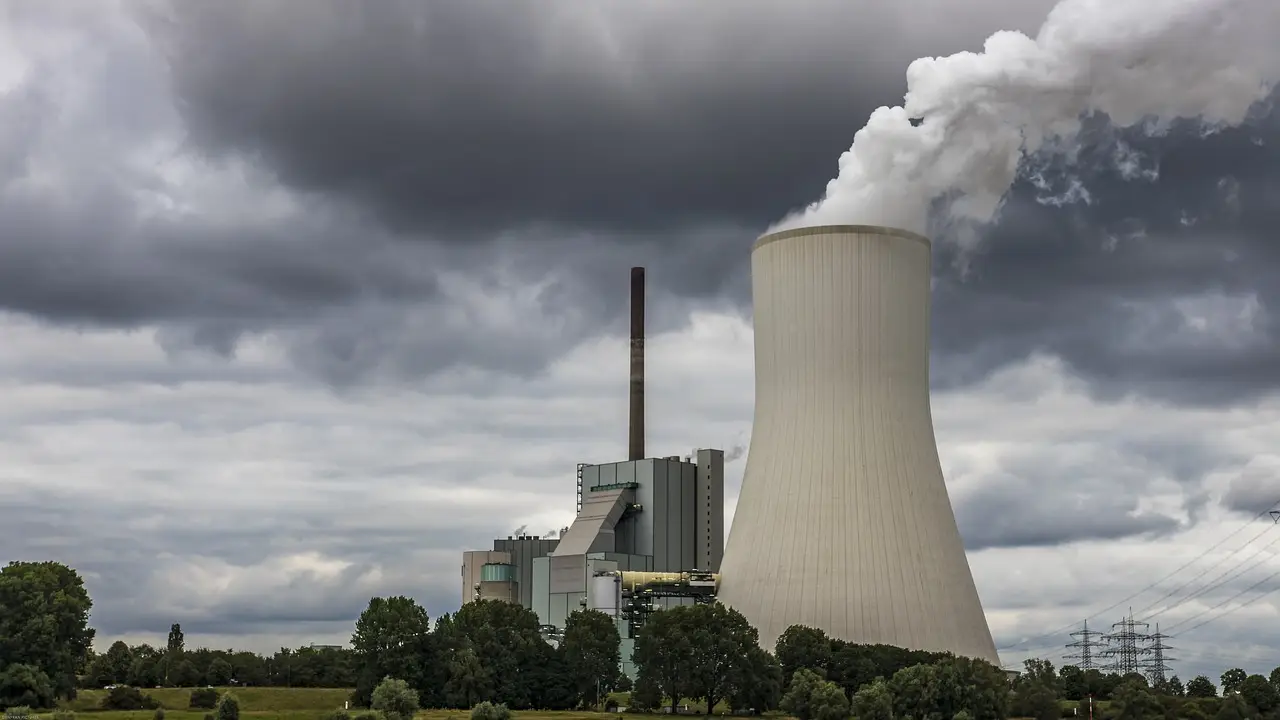
Venture Global lifted its 2026 profit outlook by more than a billion dollars on both ends of the range on November 11, 2026, and used the same announcement to pitch a second business: an "off-grid AI utility" for data centers. The company now expects 2026 Consolidated Adjusted EBITDA (a profitability measure excluding one-off items) of $10.0 billion to $10.3 billion, up from a prior range of $8.7 billion to $9.1 billion, Reuters reported.
What does the raised guidance actually say?
The low end rose $1.3 billion, roughly 15 percent. The high end rose $1.2 billion, about 13 percent. The midpoint climbed from $8.9 billion to $10.15 billion — a gain near 14 percent. Management also narrowed the band from $0.4 billion to $0.3 billion wide, which signals better visibility into the fourth quarter.
The raise rests on a clean quarter. Third-quarter adjusted EBITDA came in at $2.6 billion against a $2.5 billion analyst estimate — a beat of about 4 percent. Annualized, four quarters at $2.6 billion would total $10.4 billion, just above the new top end. That's a sanity check, not a forecast. The reporting does not break out volumes, pricing or contract mix behind the beat.
| Metric | Prior | New | Change |
|---|---|---|---|
| EBITDA low end | $8.7B | $10.0B | +$1.3B (~15%) |
| EBITDA high end | $9.1B | $10.3B | +$1.2B (~13%) |
| Midpoint | $8.9B | $10.15B | +$1.25B (~14%) |
| Range width | $0.4B | $0.3B | Narrower |
| Q3 EBITDA | $2.5B est. | $2.6B | +$0.1B (~4%) |
What is the off-grid AI utility?
The new business is the real news. Venture Global plans an island-mode power network — a system that runs on its own, separate from the public grid — to serve data centers without drawing on public electricity or water supplies.
CEO Mike Sabel said: "We are also excited about a potential new, additive line of business for the company: Expanding our existing and proven capabilities building and operating an island-mode power and infrastructure network to be able to offer an off-grid AI utility to support data centers."
Three words carry the weight. "Potential" means it's not finally sanctioned. "Additive" tells shareholders the core business stays intact. "Island-mode" removes two objections that have stalled projects nationwide: neighbors' fears of higher power bills and strained water systems.
Reuters named the planned sites as Cameron Parish and Plaquemines Parish, Louisiana. The sources don't say how many campuses are planned, whether land is secured, or how cooling would work. Gulf Coast parishes carry hurricane and flood risk, and an island-mode network has no grid to fall back on. Venture Global hasn't said how it handles those scenarios.
Can it hit 5 gigawatts by 2031?
The timeline: first compute capacity delivered in late 2028, roughly 5 gigawatts by end of 2031. For scale, SpaceX's reported Starbase gas plant plan runs 748 MW — Venture Global's target is more than six times that figure, though the two numbers measure different things.
Cautions apply. The sources don't define whether "compute capacity" means power delivered to data halls or installed IT load. And a target is not a contract. No customers have been named, no signed data-center contracts established, and no revenue is expected before late 2028.
| Milestone | Date | Status |
|---|---|---|
| Raised 2026 guidance | Nov 11, 2026 | Reported by Reuters |
| First compute delivery | Late 2028 | Company expectation |
| ~5 GW compute capacity | End 2031 | Company target |
| Turbine frameworks | Dates unstated | Up to 16 units, ~11.5 GW |
| Named customers | Not stated | Not established |
Where do the turbines come from?
Reports name GE Vernova and Baker Hughes as counterparties to framework agreements covering up to 16 turbine units, totaling approximately 11.5 GW — about 720 MW per unit by simple division. "Framework" reserves supply and sets terms but usually doesn't commit to every unit, and the sources don't say how much of the 11.5 GW serves the AI business versus existing operations.
Don't read 11.5 GW of turbines against 5 GW of compute and call it double coverage. Plants lose output to cooling, redundancy and efficiency limits, and the sources don't relate the two figures. Turbine access is a genuine bottleneck in the AI buildout — buyers have been hunting secondhand machines at $1.3 million per MW — so framework positions with two major makers are a real advantage.
What does this change for the market?
Venture Global isn't alone. Anthropic reportedly committed $3.4 billion for 1.7 GW of gas power — about $2 million per MW. SpaceX plans a $24 billion, 748 MW gas-and-compute site. Google took the Crusoe Wyoming site in a $17 billion deal. The difference: Anthropic buys power for itself, SpaceX builds for itself. Venture Global wants to sell utility service to others — a landlord of electrons, not a buyer.
Grid interconnection has become the slowest step in data-center development, with waits stretching years. An island-mode network skips that queue. Late 2028 delivery would arrive while grid-connected rivals still wait — a big if, since no facility is built.
Risks remain. Air permits draw legal challenges, state and federal agencies will review emissions, and environmental groups may sue. Execution risk is real: turbines arrive late, labor runs short, and AI demand is a moving target.
What's confirmed: the guidance, the Q3 beat, the 2028 and 2031 targets, the two parishes, the off-grid design intent and the turbine frameworks. What isn't: customers, revenue, final cost, any construction completion date. The profit forecast is a fact. The AI utility is a plan. The gap between them is where the next year of news happens.
via shattered.io (Source)
More from Grace Kim
Show full bio
Market editor covering regulation, policy and their impact on hardware layer of artificial intelligence at Die Signal.
565 articles
Same lot · LOT-3627
- DSG-744320nmAMD Guides $17 Billion Q4 as Data Center Revenue Nearly Doubles
- DSG-780528nmAMD Guides Data Center AI Revenue to More Than Double in 2027
- DSG-33897nmMicron Posts Record $54.23B Q4 Revenue, Stock Barely Moves
- DSG-64345nmAMD forecasts US$17 billion quarter as data center sales near-double
- DSG-913445nmArm Doubles AGI CPU Revenue Target to $2 Billion