Test report DSG-5620 · Rev C · tested October 10, 2026
Memory & StorageDevice under test
US Trails in Memory Chips as Tariff Plans Add New Pressure
The US has no leading position in DRAM or NAND production, and proposed tariffs would raise prices without adding domestic capacity, WSJ reports.
- Read
- 2 min
- Words
- 460
- Node
- 45nm
- Operator
- Priya Raman
Spec summary
- The United States has no top-tier domestic manufacturer of DRAM or NAND flash at scale apart from Micron
- Proposed Trump administration tariffs would raise costs for imported memory chips, WSJ reports
- Memory production is concentrated in South Korea (Samsung, SK Hynix), Japan (Kioxia) and Taiwan
- A leading-edge memory fab costs on the order of $20 billion and takes years to build
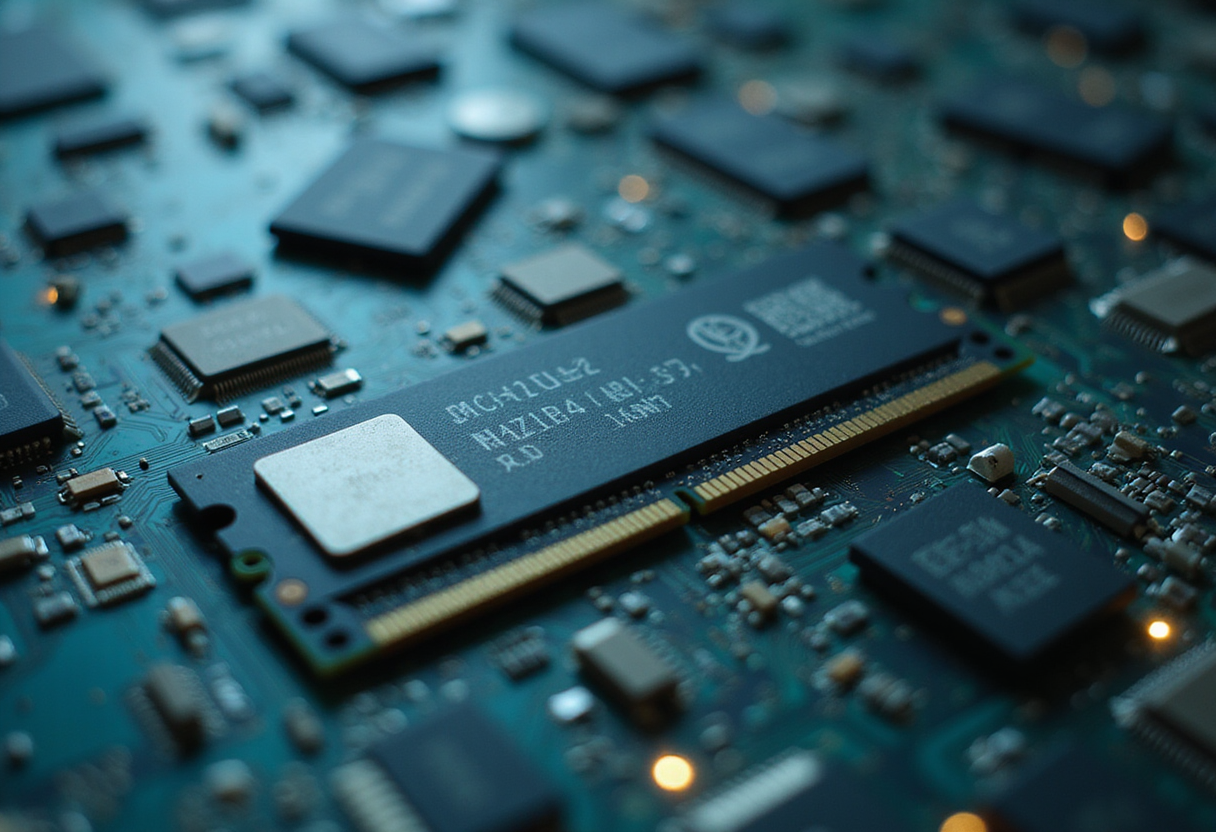
The United States lacks a meaningful position in memory-chip manufacturing, and proposed tariffs threaten to set back the effort to change that, the Wall Street Journal reports.
Memory chips — the DRAM and NAND flash components that anchor computing, smartphones and data-center storage — are produced overwhelmingly in East Asia. Samsung Electronics and SK Hynix dominate DRAM from South Korea; Kioxia and Samsung control a large share of NAND output in Japan and Korea. No US-headquartered manufacturer ranks among the leading producers of either memory type at scale today.
The report frames this as a structural gap rather than a temporary one. The United States exited commodity DRAM production decades ago — Micron is the sole American memory maker still operating at leading-edge volumes — and subsequent industrial policy has focused on logic chips, leaving memory largely untouched.
What do tariffs change?
Tariffs under discussion by the Trump administration would raise costs for imported memory and storage products. According to the Journal's reporting, this creates a specific problem: the United States does not currently have the domestic capacity to absorb demand if imports become more expensive.
The likely consequences the report points to include:
- Higher prices for DRAM and NAND-based storage sold in the US market
- Increased input costs for US server, PC and smartphone assemblers
- No near-term domestic alternative, since new memory fabs require years and tens of billions of dollars to build
Memory manufacturing concentrates in a handful of plants because the economics demand it. A single leading-edge fab costs on the order of $20 billion or more, and incumbents amortize that spending across global volume. Tariff walls do not, by themselves, change that arithmetic — they raise prices until someone builds capacity behind the wall.
Does the US have a path back?
The Journal's account notes the asymmetry: while the CHIPS Act era has pulled advanced logic fabrication to Arizona, Ohio, Texas and New York, memory has seen far less US investment. Micron has announced US expansion plans, but the bulk of global DRAM and NAND capacity remains in Korea, Japan, Taiwan and China.
The result is a policy tension. If Washington imposes tariffs on memory imports, buyers pay more in the short run. If it wants domestic supply, it needs sustained capital commitments measured in decades — not a single tariff cycle.
The report does not suggest the gap closes soon. Memory is a commodity business with brutal cyclical pricing, and no new entrant has broken into the top tier in years. For now, the US position remains what it has been: dependent on East Asian supply, with trade policy that raises the cost of that dependence rather than replacing it.
Die Signal will track tariff decisions affecting semiconductor imports as they develop.
via Google News: HBM memory (Source)
More from Priya Raman
Same lot · LOT-C1C6
- DSG-404514nmUS Trails in Memory Chips as Tariff Plans Raise New Risks
- DSG-42853nmCXMT Plans NAND Flash Entry as Global Shortage Reshapes Market
- DSG-96647nmMemory Boom Forecast to Run 3–4 Years, China a Key Variable
- DSG-44257nmMicron Closes Gap on SK Hynix in Global DRAM Rankings
- DSG-878265nmMicron's Quarterly Revenue Quadruples Year Over Year on AI Demand