Test report DSG-3421 · Rev D · tested October 8, 2026
Supply Chain & PolicyDevice under test
US Lawmakers Push Ban on Chinese Memory Chips
US lawmakers want a government ban on Chinese-made memory chips extended to allied supply chains, calling the components an unacceptable risk to national, economic and supply chain security.
- Read
- 2 min
- Words
- 493
- Node
- 28nm
- Operator
- Amara Osei
Spec summary
- US lawmakers are urging a government ban on memory chips made in China.
- The proposed ban would apply even within the supply chains of allied nations.
- Lawmakers cite an 'unacceptable risk' to national, economic, and supply chain security.
- The request targets memory chips specifically, a segment less covered by prior export controls.
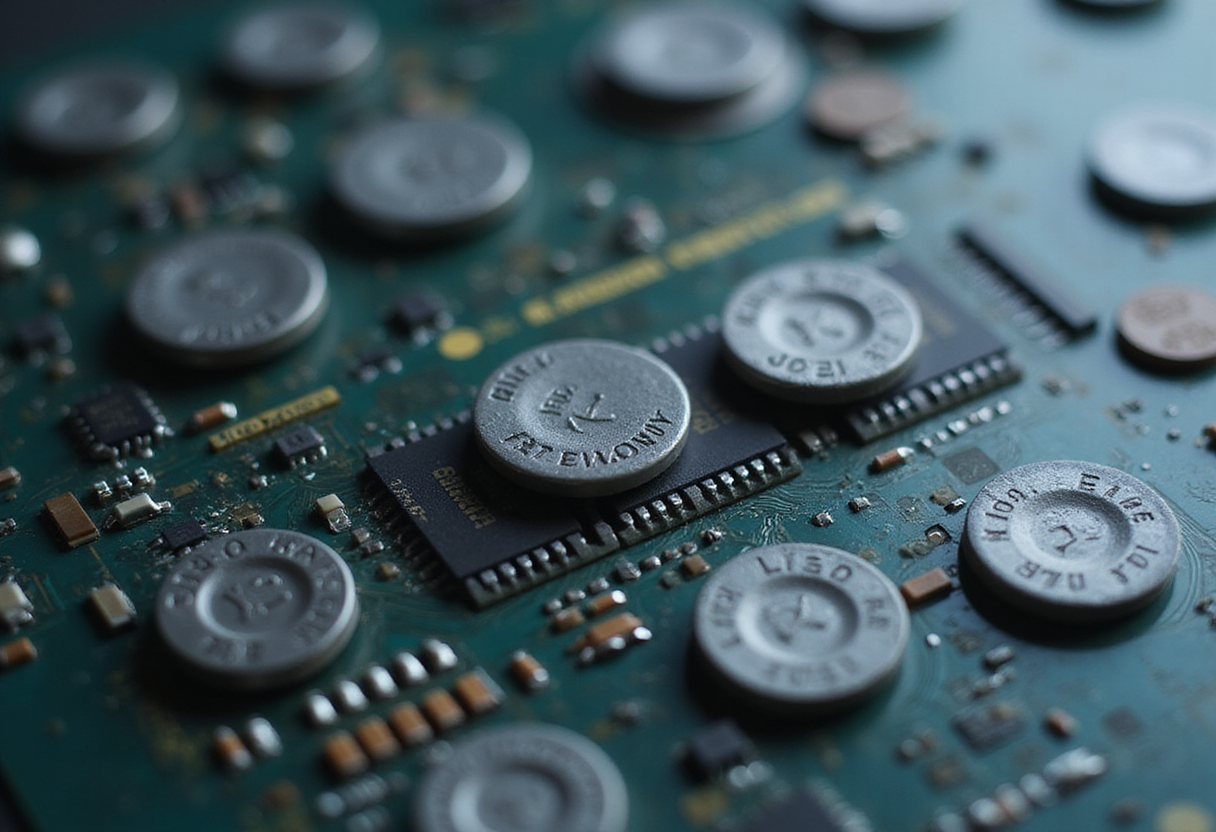
A group of US lawmakers is urging the federal government to ban memory chips manufactured in China, and to extend that restriction to memory components embedded in products moving through the supply chains of allied nations. The lawmakers describe the presence of Chinese-made memory chips in critical systems as an "unacceptable risk" to national security, economic security, and supply chain security.
The proposal, first reported by Tom's Hardware, targets a segment of the semiconductor market that has so far received less export-control attention than logic chips and advanced manufacturing tools. If adopted, a ban of this scope would reach beyond direct US imports and affect third-country products that contain Chinese memory.
What does the lawmakers' demand cover?
According to the report, the requested measures include:
- A government-wide prohibition on memory chips produced in China.
- Application of the ban even where those chips appear inside products assembled or shipped by allies of the United States.
- Justification grounded in three risk categories: national security, economic security, and supply chain security.
The phrase "unacceptable risk" appears in the lawmakers' own framing of the threat, and it anchors their argument that existing restrictions do not go far enough for memory products.
Why do memory chips attract this level of concern?
Memory components differ from processors in how they enter finished goods. They sit inside servers, networking equipment, consumer devices, and embedded systems, often several tiers below the original equipment manufacturer. A rule keyed to allied supply chains would be an attempt to catch those deeper tiers.
The US government has previously restricted Chinese semiconductor firms' access to advanced technology, but memory-specific measures that follow components through allied manufacturing routes would mark a broader application of export-control logic. The lawmakers argue that without such reach, Chinese memory could continue to enter US-linked systems indirectly.
What would the market impact be?
The proposal raises immediate questions for equipment makers that source memory from more than one country and for allied governments whose exporters would need to demonstrate compliance. Vendors selling into the US market could face verification requirements proving their products contain no Chinese-origin memory.
For Chinese memory manufacturers, a US-backed ban with extraterritorial effect would pressure third-party customers to choose between Chinese suppliers and access to the American market. For buyers, the likely consequence is renewed sourcing scrutiny across memory procurement, from commodity DRAM and NAND through specialized parts.
What happens next?
The demand is a legislative push, not yet enacted policy. It now moves into the standard machinery of US rulemaking and congressional oversight, where agencies would weigh feasibility, allied coordination, and the definitions needed to enforce a component-level ban across borders.
Industry observers will watch for two signals: whether the administration formalizes the request into a proposed rule, and whether allied governments cooperate with tracing requirements. Either step would determine whether this becomes a binding trade barrier or remains a statement of congressional intent.
via Google News: DRAM chip (Source)
More from Amara Osei
Same lot · LOT-C1AF
- DSG-599614nmBeijing Denounces US Chip Curbs as Threat to Global Supply Chains
- DSG-404514nmUS Trails in Memory Chips as Tariff Plans Raise New Risks
- DSG-310310nmChina Responds to US Semiconductor Export Controls, OECD Report
- DSG-457010nmU.S. Widens Semiconductor Export Bans to Chinese Firms Abroad
- DSG-32903nmUS Lawmakers Urge Tighter Rules on Contract Chipmakers Serving Chinese Firms