Test report DSG-4570 · Rev A · tested September 29, 2026
Supply Chain & PolicyDevice under test
U.S. Widens Semiconductor Export Bans to Chinese Firms Abroad
The United States has broadened its semiconductor export bans to include Chinese-linked entities operating overseas, widening the compliance perimeter for global chip suppliers.
- Read
- 2 min
- Words
- 343
- Node
- 10nm
- Operator
- Marcus Bennett
Spec summary
- The U.S. has expanded semiconductor export bans to Chinese overseas entities
- The extension brings Chinese-linked firms operating outside mainland China within the ban framework
- Suppliers of U.S.-origin chip technology face a wider screening and licensing perimeter
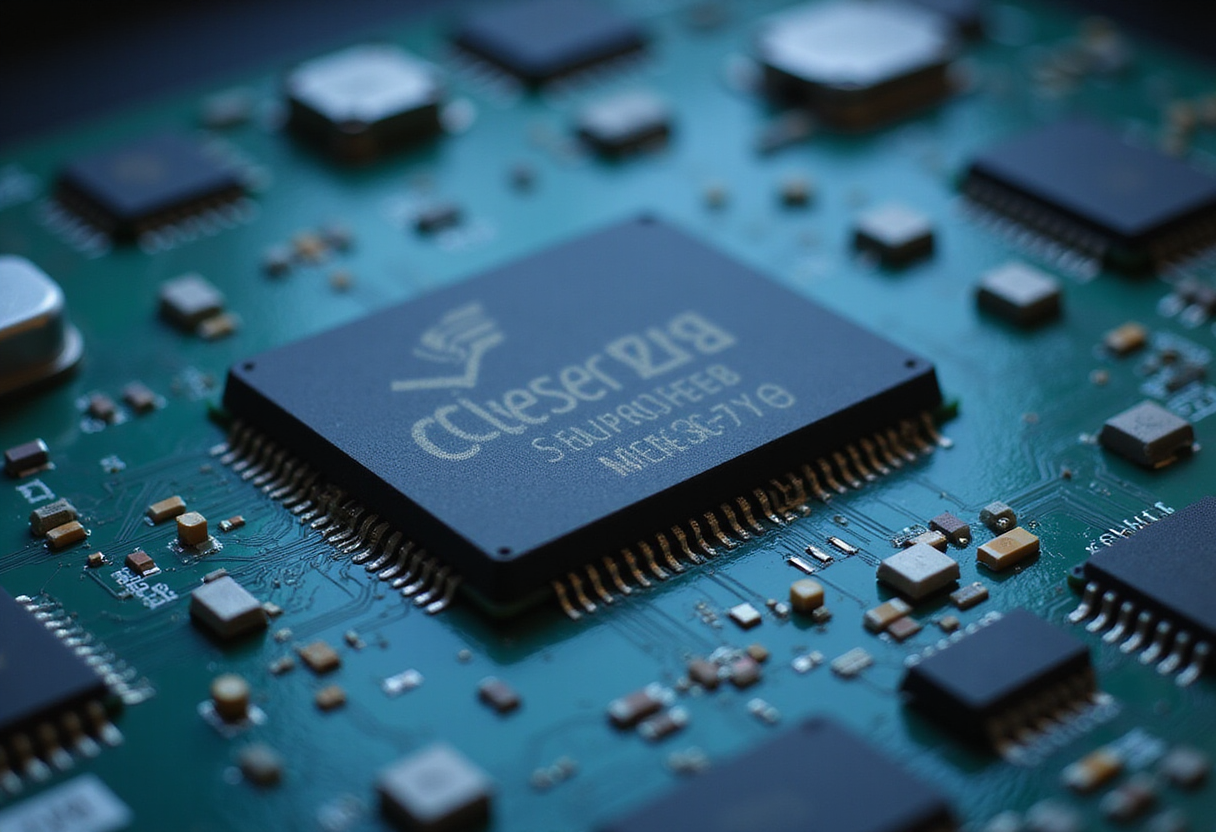
The United States has expanded its semiconductor export bans to cover Chinese overseas entities, extending the reach of its export control regime beyond companies domiciled in mainland China.
The move marks a further widening of the restrictions Washington has imposed on China's access to advanced chip technology. Under the expanded measures, Chinese-linked entities operating outside China now fall within the scope of the U.S. export ban framework.
The decision targets the structure through which Chinese firms have pursued access to semiconductors and semiconductor-related technology. By extending the bans to overseas entities, U.S. regulators aim to close off routes that operate outside the jurisdictional boundaries of earlier measures.
Under U.S. export control rules, American-origin technology, equipment, and software subject to the restrictions cannot be supplied to designated entities without a license. Expansion of the entity list and related ban mechanisms to Chinese overseas operations extends this licensing requirement to a broader set of counterparties.
For suppliers, the practical effect is a wider compliance perimeter. Companies that sell semiconductors, chipmaking tools, or related components must now screen not only mainland Chinese customers but also Chinese-linked entities registered or operating in third countries.
The expansion follows the broader pattern of U.S. policy toward China's semiconductor sector, which has sought to restrict access to advanced computing and chip manufacturing capabilities. Chinese firms have in response pursued alternative supply channels and overseas structures, and the latest measure directly addresses that adaptation.
Chinese companies affected by the bans face reduced access to U.S.-origin chips and chip technology. The measure also carries consequences for non-U.S. suppliers whose products contain American technology, since such items generally remain subject to U.S. export control rules.
For the global semiconductor supply chain, the expansion adds another layer of restriction to an industry already operating under extensive trade controls. Market participants must account for the widened scope when structuring sales, licensing, and distribution arrangements involving Chinese-linked counterparties abroad.
The report on the expanded measures was published by Chosun Ilbo.
via Google News: Semiconductor export controls (Source)
More from Marcus Bennett
Show full bio
News editor covering marketplaces and e-commerce at Die Signal.
58 articles
Same lot · LOT-C1BA
- DSG-32903nmUS Lawmakers Urge Tighter Rules on Contract Chipmakers Serving Chinese Firms
- DSG-599614nmBeijing Denounces US Chip Curbs as Threat to Global Supply Chains
- DSG-680545nmChina Considers Tighter AI and Chip Tech Export Controls
- DSG-310310nmChina Responds to US Semiconductor Export Controls, OECD Report
- DSG-123465nmUS Proposals to Tighten China Chip Tool Exports Hit Suppliers