Test report DSG-4619 · Rev D · tested October 10, 2026
Foundries & ManufacturingDevice under test
TSMC's Quarterly Chipmaking Tool Requirements Nearly Doubled in 2025
TSMC's quarterly chipmaking tool requirements have almost doubled this year, Bloomberg reports, tightening equipment supply chains industry-wide.
- Read
- 3 min
- Words
- 606
- Node
- 7nm
- Operator
- Priya Raman
Spec summary
- TSMC's quarterly chipmaking tool requirements almost doubled this year, per Bloomberg
- The surge signals a major acceleration in the foundry's capacity expansion
- Equipment suppliers ASML, Applied Materials, Lam Research and Tokyo Electron face tightened order books
- AI accelerator demand is the most visible driver of leading-edge capacity needs
- The tool demand increase will surface in TSMC capex and supplier backlog data in coming quarters
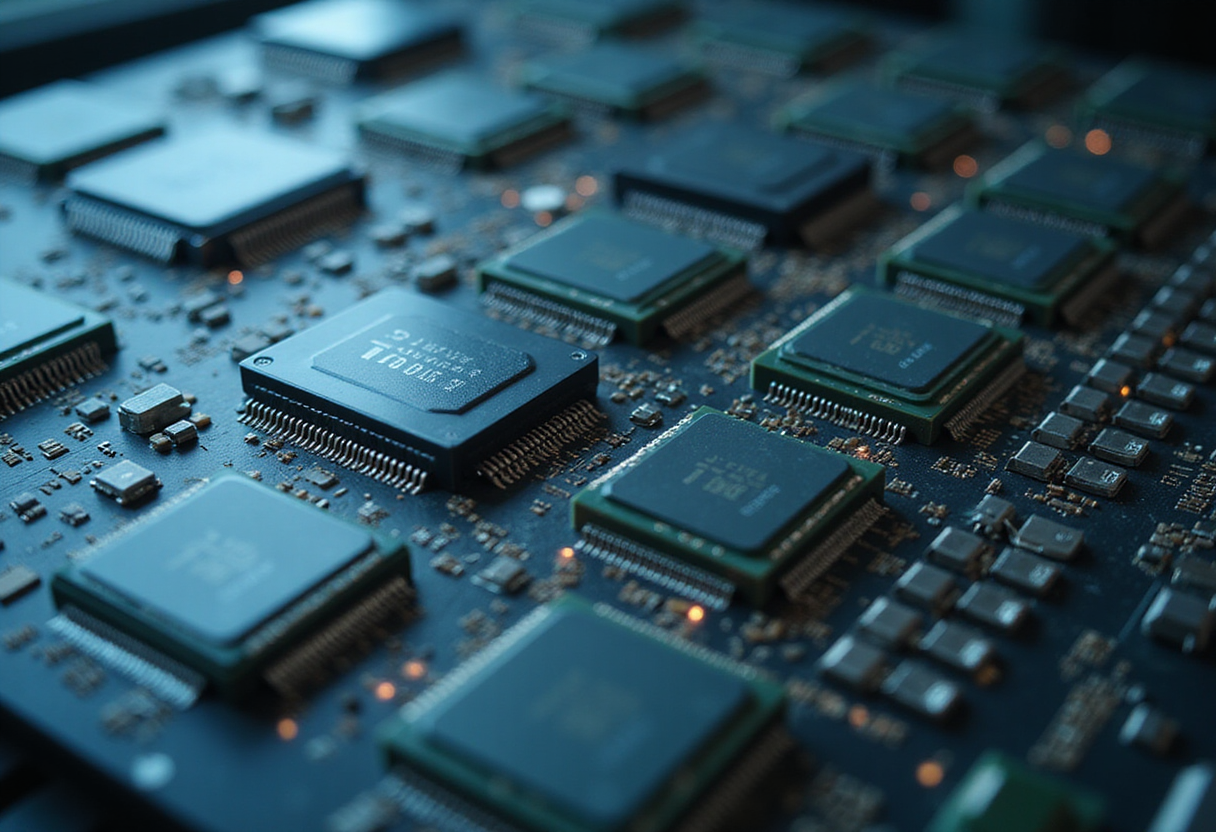
TSMC's quarterly requirements for chipmaking tools have almost doubled this year, according to a Bloomberg report — the clearest quantitative signal yet of how hard the world's largest contract chipmaker is pressing on capacity expansion.
The near-doubling of quarterly tool needs puts hard numbers on what equipment suppliers have experienced as a demand wave concentrated at a single customer. For the semiconductor tool industry — dominated by ASML in lithography, Applied Materials, Lam Research and Tokyo Electron in deposition and etch — TSMC's procurement trajectory functions as a leading indicator for the entire supply chain.
What does the escalation mean for the equipment market?
Chipmaking tools sit at the front of every capacity cycle. When a foundry scales its quarterly equipment intake, fabs under construction move from shell to tool-out phase, and supplier order books tighten across multiple quarters.
TSMC's demand carries outsized weight because of its market position. The company builds the advanced-node silicon for Apple, Nvidia and AMD, and its capital spending sets the tempo for the high-end segment of the equipment industry. A near-twofold increase in quarterly tool requirements implies that suppliers must deliver, install and qualify roughly twice the system volume per quarter that they planned for at the start of the year.
That creates pressure points downstream:
- Lead times for advanced deposition and lithography systems, already extended, face further stretching.
- Installation and service capacity — field engineers, cleanroom integration teams — becomes the bottleneck once boxes ship.
- Component sub-suppliers, from RF power generators to vacuum hardware makers, must scale in step or cap the entire chain's output.
Why does TSMC need the tools now?
The reported surge aligns with the foundry's known expansion programs across advanced logic nodes, high-performance computing silicon and packaging capacity. AI accelerators drive the most visible demand: the chips behind the current build-out require leading-edge process technology and advanced packaging, both tool-intensive steps.
Bloomberg's report does not break the tool demand down by category or node. The aggregate figure nonetheless indicates that TSMC is not merely replacing or upgrading lines — it is adding productive capacity at a pace that materially reshapes quarterly equipment industry shipments.
Who benefits, and who feels the squeeze?
Equipment makers stand as the direct beneficiaries. Each doubling of a top customer's quarterly intake flows into revenue with a lag of one to two quarters, depending on acceptance criteria and revenue-recognition terms. Suppliers with TSMC-qualified product lines capture the increase; those still in qualification miss the cycle window.
The squeeze lands on TSMC's competitors and on second-tier foundries. Tool allocation follows the largest orders, and manufacturers with thinner balance sheets face longer waits at the same suppliers. Memory makers planning their own upgrades compete for overlapping sub-component capacity even where the end tools differ.
What should buyers and investors watch next?
The quarterly tool-requirement figure will show up in three measurable places over coming quarters:
- TSMC's capital expenditure guidance, where equipment purchases represent the dominant share of capex.
- Supplier quarterly results, where book-to-bill ratios and backlog disclosures will reflect the order flow.
- Lead-time disclosures in supplier earnings calls, the earliest public sign of capacity strain.
A near-doubling of tool demand at the industry's largest foundry is not a routine procurement shift. It commits TSMC to fab capacity that must fill with customer wafers, and it commits suppliers to output levels that assume the demand holds. If AI-related orders soften, the same tooling surge becomes the industry's overhang. For now, the number says expansion — fast, concentrated and measurable.
via Google News: TSMC (Source)
More from Priya Raman
Same lot · LOT-C1C6
- DSG-379310nmTSMC Posts Record Quarterly Revenue of NT$1.49 Trillion
- DSG-644145nmTSMC Posts 54.6% Revenue Jump in September, Reaching $16B
- DSG-73177nmTSMC Raises 2nm Wafer Production Outlook by 20%
- DSG-43087nmTSMC Posts Record Q3 Revenue, Up 50% on AI Chip Demand
- DSG-24415nmTSMC Posts 54% Year-on-Year Revenue Growth for September