Test report DSG-3622 · Rev A · tested September 29, 2026
Foundries & ManufacturingDevice under test
TSMC Reportedly Evaluates Second U.S. Site for Chip-Making Hub
MarketWatch reports TSMC is evaluating a second U.S. location for a chip-making hub, extending its American buildout beyond Arizona's fab cluster.
- Read
- 3 min
- Words
- 589
- Node
- 7nm
- Operator
- Amara Osei
Spec summary
- TSMC is reportedly evaluating a second U.S. site for a semiconductor manufacturing hub, per MarketWatch.
- No final location, timeline, investment size, or target process technologies were specified in the report.
- A second hub would expand TSMC's U.S. footprint beyond its existing Arizona fabrication complex.
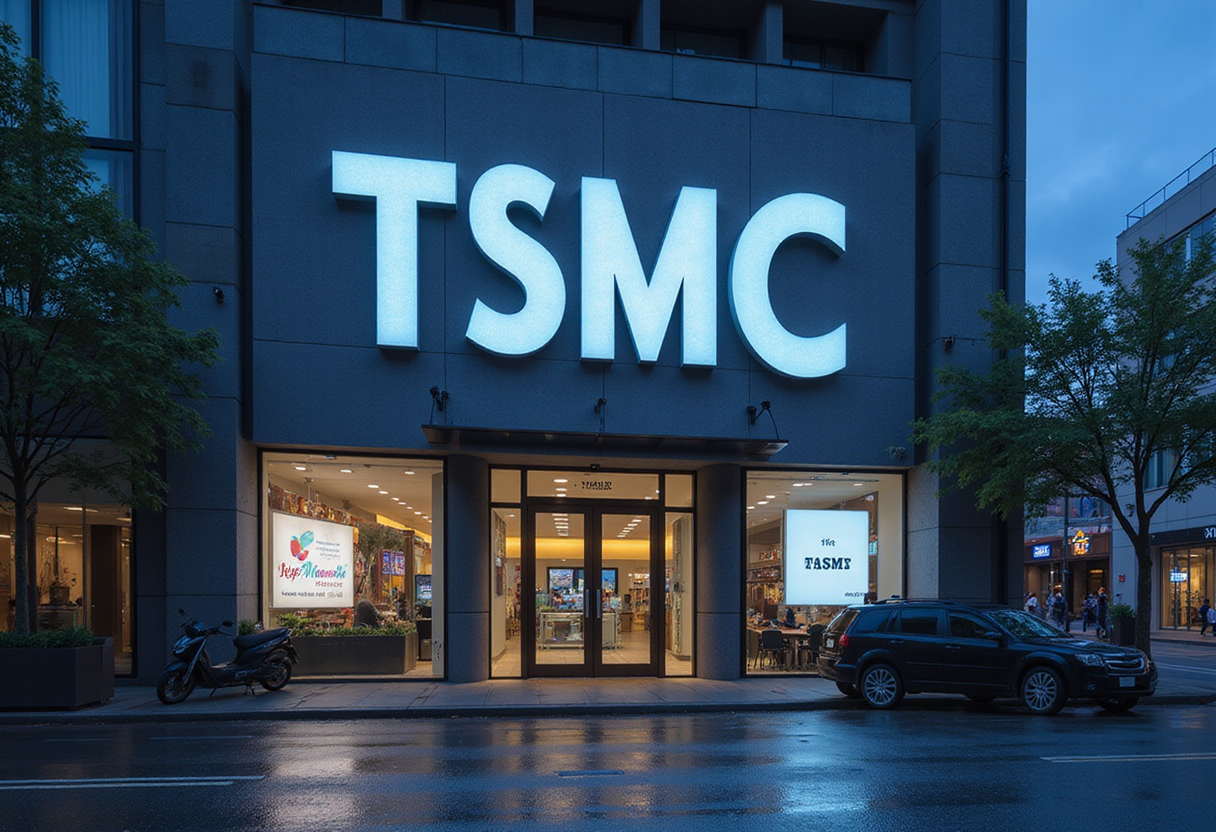
Taiwan Semiconductor Manufacturing Co. is reportedly weighing a second U.S. location for a semiconductor manufacturing hub, according to a MarketWatch report. The disclosure signals that the world's largest contract chipmaker may extend its American footprint beyond its existing Arizona operations.
The report does not name a finalized location. Instead, it points to TSMC's active evaluation of candidate sites as the company maps out the next phase of its U.S. capacity strategy. The move follows the foundry's multi-year commitment in Arizona, where it has been building out advanced fabrication facilities.
A second U.S. hub would mark a significant expansion of TSMC's overseas manufacturing base. The company has concentrated its most advanced production in Taiwan for decades, and its Arizona project already represents one of the largest greenfield semiconductor investments ever made on U.S. soil.
The report gives no timeline for a site decision. It also does not specify which process technologies a potential second hub would host, nor the investment scale under consideration. Those details would determine the project's footprint, staffing requirements and supplier network.
For equipment vendors, materials suppliers and construction contractors, any additional TSMC site in the United States would translate into new order volumes over a multi-year horizon. Semiconductor toolmakers in particular have treated TSMC's capital expenditure plans as a leading indicator, since the foundry's fabs drive demand for lithography, deposition, etch and metrology systems.
The strategic context matters. Washington has pushed to onshore advanced chipmaking through subsidies and export controls, and TSMC's Arizona facilities have been a centerpiece of that effort. A second site would deepen the company's integration into the U.S. manufacturing base and reduce its geographic concentration risk around its Taiwanese fab clusters.
It would also respond to customer pressure. U.S.-based designers, including major chip firms that depend on TSMC's leading-edge nodes, have sought supply arrangements that guarantee domestic capacity. Additional American fabrication capacity would give those customers more options for qualifying parts built outside Taiwan.
Site selection for a semiconductor hub involves a demanding checklist. Fab complexes require large plots of land, reliable supplies of water and power, a pipeline of process engineers and technicians, and transportation links for equipment and materials. State incentive packages and federal support typically shape the final calculus. Any TSMC decision would follow months of technical due diligence on these criteria.
The report does not indicate whether the second hub would focus on leading-edge nodes, mature processes, or advanced packaging. TSMC has diversified its technology portfolio across all three categories, and each carries different equipment and site requirements. Advanced packaging in particular has drawn growing investment as chip designers stack dies to improve performance.
TSMC has not confirmed the site search, and the company routinely declines to comment on what it describes as market rumors or speculation about unreleased plans. Investors and supply-chain partners will watch the company's upcoming earnings calls and capital expenditure guidance for signals about the scope of its U.S. ambitions.
The Arizona blueprint offers a reference point for what a second hub could involve. That project combined multiple fabs, sustained hiring of thousands of workers, and coordination with federal incentive programs. Replicating it elsewhere would require a comparable commitment of capital, labor and government support.
For now, the report establishes one concrete fact: TSMC is looking. Where the company lands, and how much it commits to build, will shape the geography of U.S. semiconductor manufacturing for years to come.
via Google News: TSMC (Source)
More from Amara Osei
Same lot · LOT-C1BA
- DSG-826728nmTSMC Reportedly Weighs Texas Expansion Alongside $265 Billion Arizona Plan
- DSG-483214nmTSMC Confirms It Is Evaluating Potential New Investment in Texas
- DSG-13445nmTSMC Evaluates Potential New Texas Investment, Sources Say
- DSG-92573nmTSMC Weighs Texas Investment to Expand U.S. Chip Production
- DSG-477165nmTSMC Considers Texas Investment to Expand U.S. Chip Production