Test report DSG-4411 · Rev D · tested October 14, 2026
Foundries & ManufacturingDevice under test
TSMC Lifts Planned US Investment to $165 Billion for AI
TSMC says it will expand its US investment to $165 billion, aiming the added capacity at AI demand and reshaping advanced-chip sourcing.
- Read
- 2 min
- Words
- 373
- Node
- 10nm
- Operator
- Elena Vasquez
Spec summary
- TSMC intends to expand its US investment to $165 billion
- The company ties the expanded commitment to powering the future of AI
- The figure covers TSMC's planned manufacturing footprint in the United States
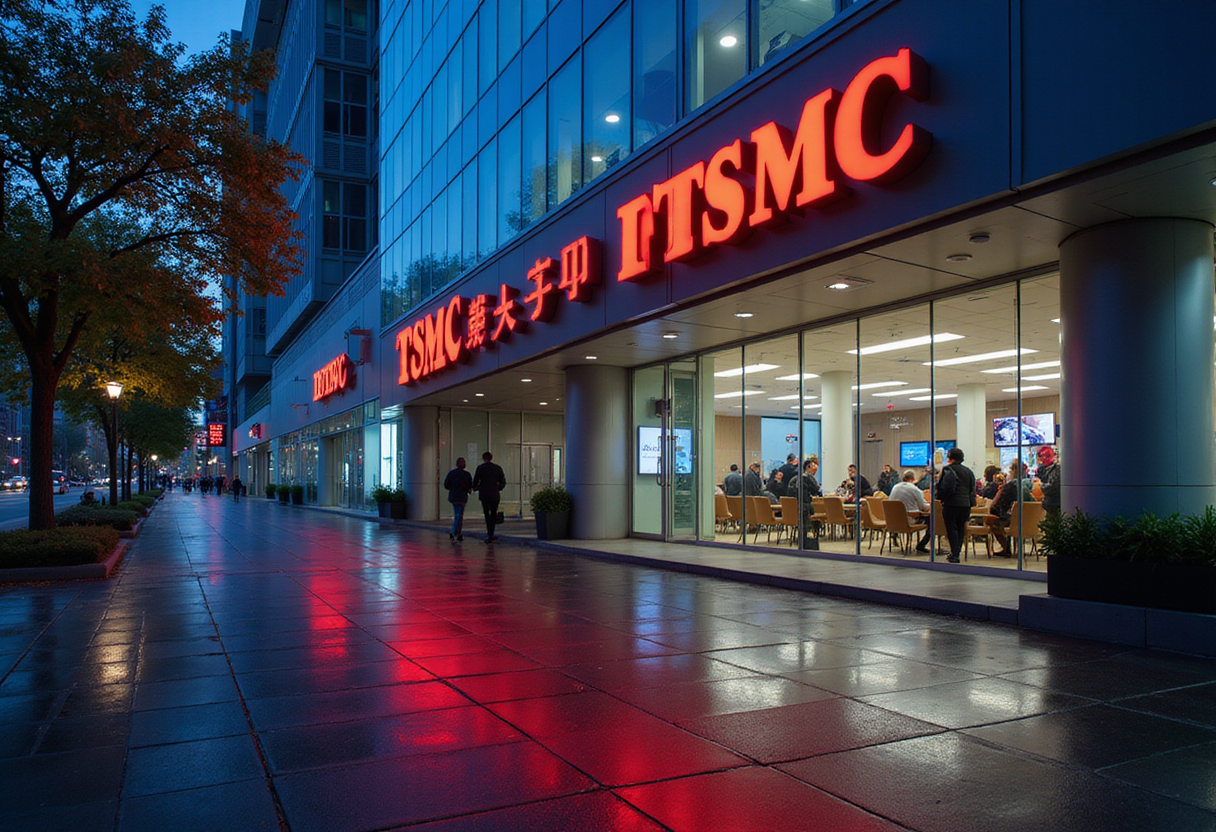
TSMC says it intends to expand its investment in the United States to $165 billion, a figure the company frames as the financial backbone for the future of AI computing. That's the headline number practitioners need: it covers the chipmaker's full slate of American manufacturing and capacity plans, aimed squarely at AI-driven demand.
To put $165 billion in perspective, that's more than the annual GDP of most EU member states — Hungary's, for example, runs roughly $210 billion — committed by a single chip foundry to one country. For fabs, toolmakers and supply-chain planners, a commitment at this scale signals long-horizon confidence in US-based advanced-node capacity.
What does the expansion mean for the supply chain?
The announcement positions TSMC as the central builder of AI silicon on US soil. If you're sourcing advanced logic — GPUs, AI accelerators, high-performance compute silicon — a bigger American footprint means more of that capacity sits outside Taiwan for future allocation cycles.
For equipment vendors and materials suppliers, it translates into sustained domestic order flow rather than one-off project spikes. For TSMC's customers, it means negotiating capacity against a larger, geographically distributed manufacturing base.
Why does the number matter now?
AI workloads are the demand driver behind the buildout, and the company explicitly ties the expanded figure to powering AI's future. Foundry capacity has been the tightest bottleneck in the AI hardware stack; commitments of this size are how that constraint eventually loosens.
It also lands amid ongoing policy pressure in Washington to onshore leading-edge semiconductor production. TSMC's stated intent keeps it aligned with those incentives rather than exposed to them.
What should readers watch next?
The word in the announcement is "intends" — that's standard for phased capital plans, but it means execution details will arrive in stages. Watch for:
- Concrete fab-site announcements and construction timelines
- Node assignments for the US facilities
- Customer commitments tied to the new capacity
If TSMC delivers on the $165 billion trajectory, the US will host a materially larger share of the world's most advanced chip production than it does today. That shift, more than the headline figure itself, is what changes sourcing math for everyone downstream.
via Google News: Semiconductor foundry (Source)
More from Elena Vasquez
Show full bio
Senior reporter covering people, launches and day-to-day practice in hardware layer of artificial intelligence at Die Signal.
333 articles
Same lot · LOT-C1CA
- DSG-977165nmTSMC Prepared to Commit $265 Billion to U.S. Operations
- DSG-37145nmTaiwan Firms Boost AI Capex Across US, Southeast Asia
- DSG-352514nmGlobalFoundries Secures $2 Billion TSMC Deal for US AI Chip Packaging
- DSG-688310nmUS Pushes to Cut Taiwan Chip Reliance, but Taipei Stays Central
- DSG-439665nmTSMC Posts $46.7 Billion Quarter; Investors Face One Open Question